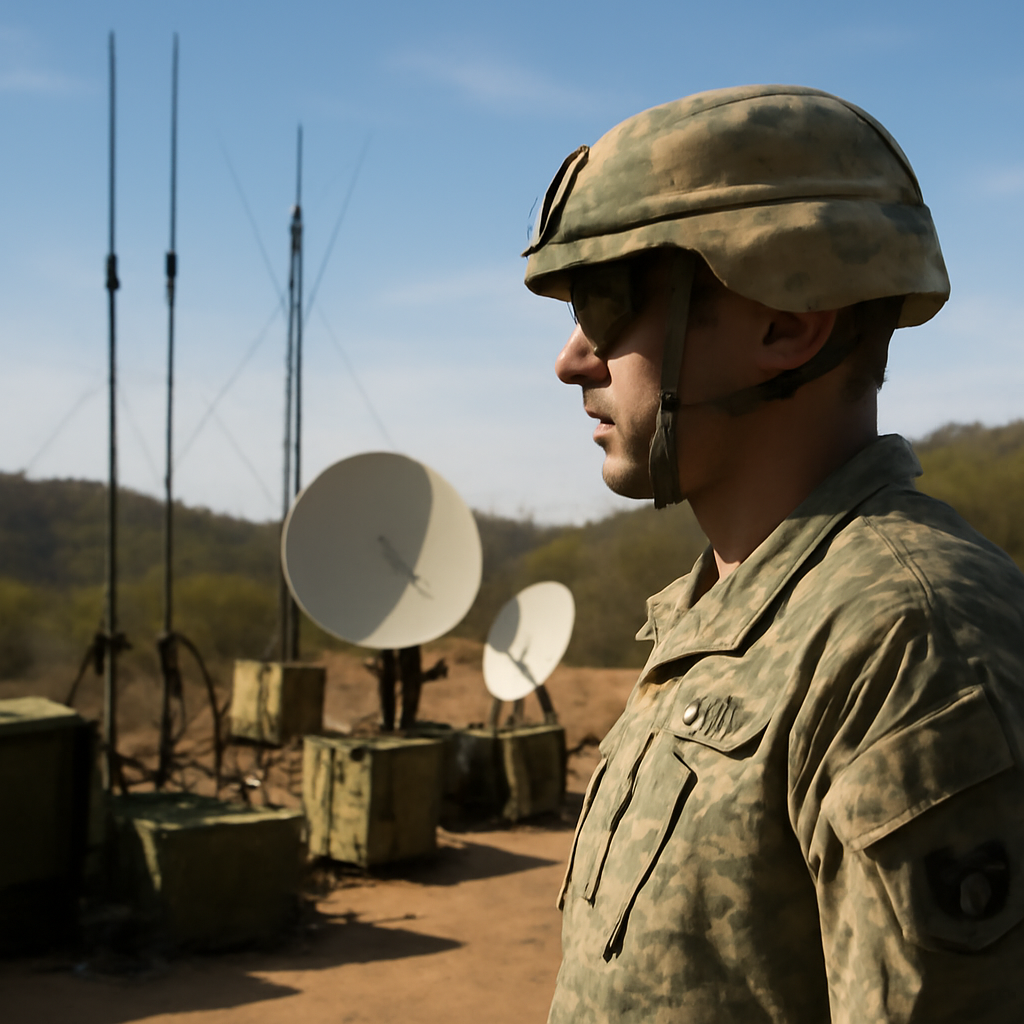
At AUSA, we spoke with Silvus Technologies’ Chris Abraham about how electromagnetic warfare is continually evolving.
Operating in the electromagnetic spectrum increasingly depends upon finding and tracking adversarial signals. That short, declarative observation sits at the center of the reporting: the task of detecting an opponent’s intentionally hidden transmissions is not an incidental technical problem but, as the source frames it, the Army’s next electromagnetic warfare challenge.
Finding the adversary’s hidden signals
The core fact reported is straightforward and stark: success in the electromagnetic domain increasingly turns on the ability to find and track adversarial signals. Whether those signals are brief, masked, low-power, or otherwise concealed, the source frames detection and tracking as the pivotal operational requirement. The phrasing elevates signal discovery from a tactical capability to a strategic constraint on operations in the electromagnetic spectrum.
Silvus Technologies and Chris Abraham at AUSA
The reporting comes from a conversation at AUSA with Chris Abraham of Silvus Technologies. That exchange anchors the assessment: a vendor representative and subject-matter interlocutor discussed the changing shape of electromagnetic warfare, and the observation that operations now rely more and more on finding adversarial signals reflects the themes raised during that conversation.

Audit-ready is a season. It shouldn't be.
Evidence in spreadsheets, controls drifting between audits, frameworks multiplying on flat headcount. Nubivance runs continuous compliance on Rapid7 Cyber GRC - SOC 2, HIPAA, ISO 27001, PCI, CMMC.
End the scrambleWhat “finding and tracking adversarial signals” demands
Placed bluntly, the assertion implies two linked functional needs. First, discovery: capabilities must detect transmissions that an adversary may try to hide. Second, tracking: once detected, those transmissions must be followed over time and space to support operational decisions. The source makes no claim about specific technologies, timelines, or budgetary decisions; it does, however, make clear that the detection-and-tracking problem is the axis on which electromagnetic operations increasingly rotate.
Electromagnetic warfare is continually evolving
That evolution is the subject of the conversation recorded at AUSA. The source repeats the phrase that electromagnetic warfare is "continually evolving," a characterization attributed to the discussion with Chris Abraham. Framing evolution as continuous suggests incremental change as well as periodic leaps in the electromagnetic contest, and it underscores that detection and tracking will not be a one-off procurement but an enduring operational requirement.
What this means for the Army, Silvus Technologies, and electromagnetic warfare practitioners
- The Army: The reporting positions the Army’s next named challenge in electromagnetic warfare as finding hidden adversary signals, indicating that operational planning must account for detection and tracking as core tasks.
- Silvus Technologies: Through the remarks by Chris Abraham at AUSA, Silvus Technologies is cast as a participant in the debate over how electromagnetic warfare is changing and what capabilities are prioritized.
- Electromagnetic warfare practitioners: Operators and planners are presented with an evolving problem set in which discovery and sustained tracking of adversarial transmissions are central to success in the spectrum.
The narrative delivered in the brief reporting is compact but pointed: modern electromagnetic operations increasingly hinge on unmasking and following the signals an adversary would prefer remain hidden. The detail is limited — the story does not catalogue methods, systems, or timelines — but it does supply a clear orientation for where attention is meant to shift. If electromagnetic warfare is, as the conversation at AUSA stressed, continually evolving, then finding and tracking adversarial signals is the practical and conceptual fulcrum of that evolution.