Tag: national security
2618 articles

DOT Rule Shields Airlines from Liability for Cyberattack-Related Delays
The Department of Transportation just gave airlines a get-out-of-jail-free card for flight delays and cancellations caused by cyberattacks, shielding them from liability and compensation requirements. Now, airlines can blame cyberattacks for disruptions and avoid providing amenities or refunds to affected passengers.

Cybersecurity Forum Opens Post-9/11 Reflection Thread
On 9/11, the somber mood still lingers - a feeling echoed in a recent Bunker Talk post: 25 years later, it's still somber waking up on 9/11. This poignant reminder sets the tone for a meaningful conversation.

US Air-and-Missile-Defense Systems Face Adaptation Test
Iran's recent attack showcased its ability to launch a multitude of multi-domain threats, including various classes of missiles and UAVs, designed to overwhelm defenders with a mix of low-cost and high-cost targets. This complex attack profile poses a significant tactical challenge, forcing defenders to adapt and find cost-effective ways to counter a wide range of threats.

Terrorism Thrives as Social Media Erodes National Unity
In the aftermath of 9/11, a sense of unity swept the globe, with leaders like George W. Bush and John Howard rallying nations to join the fight against terrorism, framing it as a universal battle for freedom and values. For a brief moment, differences were set aside, and the world seemed united in a common cause.

Pentagon Weighs European Force Cuts as Russia Tests NATO Limits
The Pentagon is reevaluating its military presence in Europe, but experts warn that further cuts could compromise US capabilities. With tensions rising with Russia, the US is facing tough choices about how to maintain its defenses without sacrificing strength.

Europe's Defense Sector Braces for Sabotage Threats
As sabotage threats escalate, Europe's defense sector must stay vigilant - and that's why industry leaders are calling for closer coordination among companies, governments, and security authorities to share information and stay one step ahead of evolving threats. By working together, they can anticipate and counter the growing risk of sabotage.

Canada Bolsters Ukraine's Defense with Joint Tech Production Pact
Canada and Ukraine are teaming up for a game-changing partnership that will unite Ukraine's battle-tested expertise with Canada's cutting-edge tech and manufacturing might to produce innovative defense solutions. This historic 100-year partnership is set to revolutionize the future of defense production.

France Accelerates Rafale F5 Upgrade Amid FCAS Collapse
France is fast-tracking the Rafale F5 upgrade, with the Direction générale de l'armement (DGA) ordering initial work on key components to mitigate technical risks, ahead of a major development contract expected by year-end. The upgrade targets critical systems, including navigation, propulsion, radar, and self-protection.

US Spy Agencies Face Evolving Threats 25 Years After 9/11
Twenty-five years after 9/11, US spy agencies face a new landscape of threats, but former CIA deputy director Michael Morell believes the country is significantly safer, having made notable gains against terrorist organizations. However, he also acknowledges that the US overreacted in its response, citing costly policy choices like the Iraq War and prolonged conflict in Afghanistan.

Mecca Pact Mirrors Cold War's Failed Defense Alliances
The Mecca Joint Defense Agreement, signed by Pakistan, Saudi Arabia, and Turkey, bears an uncanny resemblance to the Cold War's failed Central Treaty Organization (CENTO), sparking concerns about its potential for success. Can this new pact overcome the shortcomings of its predecessor and deliver meaningful defense cooperation?

Defense Firms Face New Pressures in Sustaining Major Weapons Systems
The sustainment of critical weapons systems like Patriot air-and-missile defense is under pressure, with growing operational demands testing the limits of defense firms and the industrial base that supports them. Can the industry keep up with evolving needs and ensure the long-term viability of these vital systems?

US Military Leaders Confront Budget Uncertainty Amid Iran War
US military leaders are facing a daunting challenge: securing a $1.5 trillion budget to sustain their priorities, but Congress has thrown a wrench into the works with a steep reduction in reconciliation funding, slashing the administration's $350 billion request to just $60 billion for Iran war operations.

Strategic Shocks Must Not Overshadow Long-Term Threats
The 9/11 attacks sparked a seismic shift in security policy, prompting the US to launch the Global War on Terror and Australia to stand shoulder-to-shoulder in the fight against terrorism, forever changing the domestic reality for both nations.

Israel Defense Forces Launches AI and Unmanned Systems Branch
The Israel Defense Forces is revolutionizing its approach to modern warfare with the launch of a new branch dedicated to unmanned systems and artificial intelligence, a move that promises to propel the military into a new era of innovation. By early December, this cutting-edge branch will be fully operational, harnessing the power of AI to stay ahead of the rapidly evolving battlefield.

Houthis Seize Key Port, Tightening Grip on Bab Al-Mandab Strait
The Houthi rebels have captured the strategic coastal city of Mokha, seizing control of its port and airport in a significant breakthrough under heavy fire. Footage shows Houthi fighters patrolling the city's seaport and airport runway, with videos and images of seized equipment and celebratory footage spreading across social media.

US Absence Disrupts Global Talks on Civilian Protections in Combat
As the US sits out crucial talks on protecting civilians in combat, a pressing question lingers: are we ready to tackle this problem and make a real difference? The absence of the US from a NATO meeting in Brussels has left many wondering when those who care about mitigating civilian harm can come together to find a solution.

US Tests Bunker-Busting Tech Amid Iran Strike Plans
The US is ramping up its military might with cutting-edge bunker-busting tech, even as President Trump hints at a potential strike, saying "we may hit Pickaxe Mountain very soon." This development comes alongside a secret contract awarded to Pate Construction for a top-secret project at the White Sands Missile Range.

Pentagon Leverages Polygraphs to Hunt Leakers, Despite Dubious Science
The Pentagon is ramping up its leak investigation tactics, using polygraph tests on dozens of military officers and civilian employees in a massive probe into press leaks about the Iran war and depleted US munitions. Roughly 50 personnel on the Joint Staff were subjected to the tests in August in an unprecedented move.

Democracies Scramble to Catch Up as China Advances in Quantum Research
China is pulling ahead in the quantum research race, leading in 69 of 74 technologies reviewed, and producing the most high-impact research in quantum communication and post-quantum cryptography. The US still leads in quantum computing, but China's rapidly catching up.

Pentagon Picks Indiana Base to Host Nuclear Microreactor
The Pentagon has chosen Crane Naval Surface Warfare Center in Indiana to host a cutting-edge nuclear microreactor, a decision driven by the need to meet a tight 2028 deadline to deploy the first military reactor. This strategic move aims to accelerate the development of this game-changing technology.

Pentagon Prepares to Realign FY27 Priorities Amid Funding Uncertainty
The Pentagon is gearing up to adjust its FY27 priorities due to funding uncertainty, with Comptroller Jules Hurst hinting that the department may revisit its requests with appropriators if the $350 billion reconciliation package isn't passed. This potential shift could impact high-priority programs like Golden Dome, munitions buys, and Defense Autonomy.

Terrorists Target AI for Lethal Attacks
We might be so busy worrying about AI-enabled catastrophes like asteroid impacts that we overlook a more immediate threat - terrorists using AI to launch lethal attacks right under our noses. The real danger may not be the Hollywood-style doomsday scenario, but the probable and more sinister misuse of AI that could be happening in plain sight.

US National Cyber Director Warns of AI-Driven Cybersecurity Time Crunch
National Cyber Director Sean Cairncross warns that the rapid spread of AI is creating a pressing cybersecurity time crunch, framing it as a high-stakes race between innovation and securing critical systems. Governments are scrambling to "buy time" to bolster defenses before AI-driven threats overwhelm them.
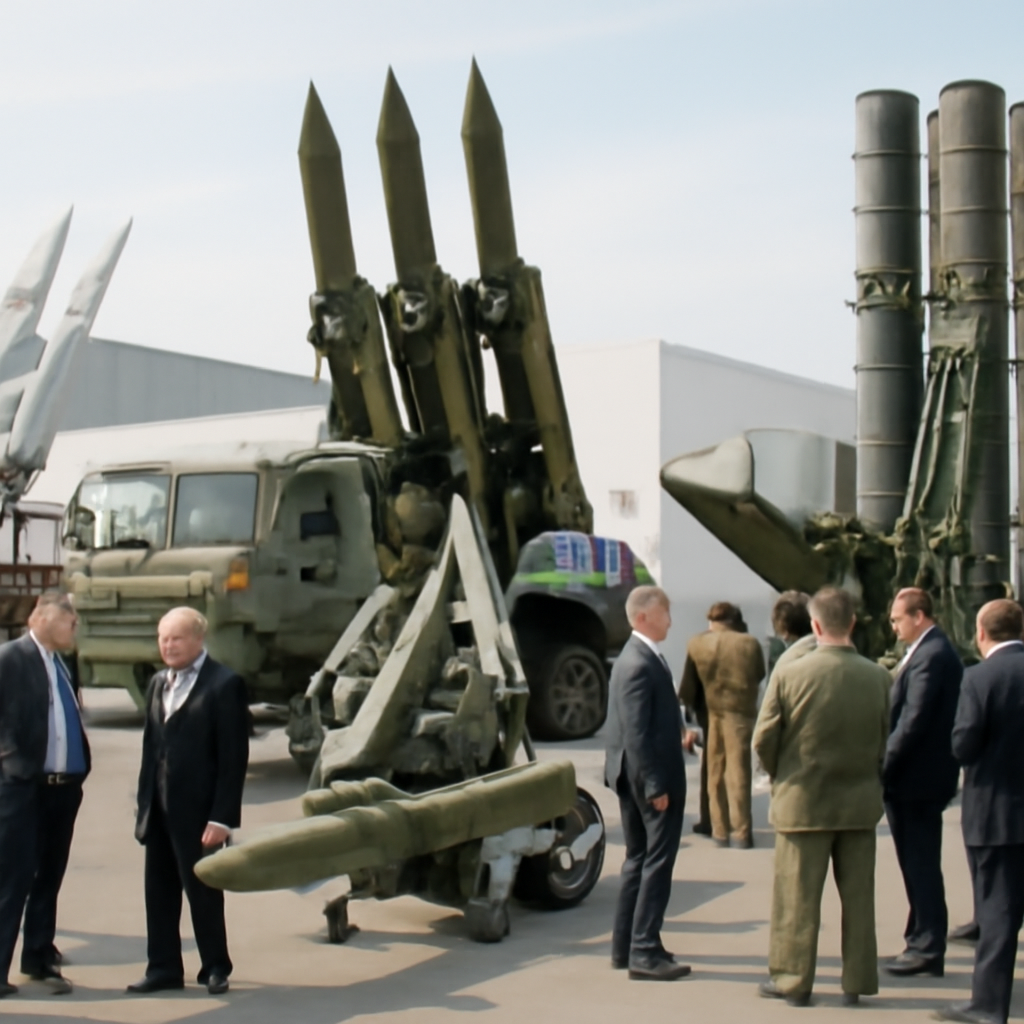
Europe's Low-Cost Air Defence Push Spurs Global Shift
Europe's defence industry is shifting towards low-cost air defence solutions, with a focus on scalable surface-to-air missiles that can take down drones and cruise missiles with equal effectiveness. This pivot is driven by the lessons of the Russia-Ukraine War, where Ukraine has seen Russia increasingly favour jet-powered Geran-4/5 drones over piston-powered Geran-3s.