Tag: electronicwarfare
22 articles

Three Urgent Challenges for Modern C2 Centers in Combat
Imagine the brain of a military under relentless attack—sensors jammed, feeds flooded with false reports, and allied systems that can’t talk to each other. Modern command-and-control centers now face three urgent, overlapping problems—resilient communications under fire, fast trustworthy human‑machine decisions, and secure coalition interoperability—and they need joined‑up solutions now.

Modern LVC Tools Essential to Meet NAVPLAN
When flight hours are scarce and threats grow more complex, NAVPLAN makes clear that integrating Live‑Virtual‑Constructive (LVC) training into daily practice is essential. LVC lets carrier air wings rehearse multi‑domain fights affordably and continuously while generating the data needed to prove and accelerate readiness.

US Air Force ACE Concept Prepares Aircraft for New Reality
Long-range threats have turned giant airfields into easy targets, so the Air Force is embracing Agile Combat Employment: a flexible mindset that disperses aircraft to improvised sites and leans on small, self-sufficient teams. It’s not a gadget but a way of operating—favoring mobility, redundancy and improvisation to keep airpower alive in contested skies.

Keeping F-35s Fighting When GPS Is Denied
When GPS is deliberately cut, jets can’t afford to go blind. Collins Aerospace’s delivery of the 1,000th anti‑jam GPS receiver is a practical win for a braided resilience strategy—CRPAs, beamforming, advanced signal processing and high‑grade INS—that helps keep F‑35s fighting when satellite signals are denied.

3 Major Challenges for Modern C2 Centers on Battlefield
What happens when a commander can’t see, speak to, or trust her staff? Ukraine has turned that question into a real-world test—jamming, cyberattacks, swarms and long-range fires are making information a weapon and forcing militaries to rethink how they protect and run C2 centers.

3 Urgent Challenges for Modern C2 Centers
The war in Ukraine turned a once-hypothetical risk into a harsh reality: modern C2 centers must now urgently sustain resilient communications in contested electromagnetic and cyber environments, turn massive data flows into fast, trusted decisions, and deliver secure, seamless interoperability across coalitions and diverse systems.
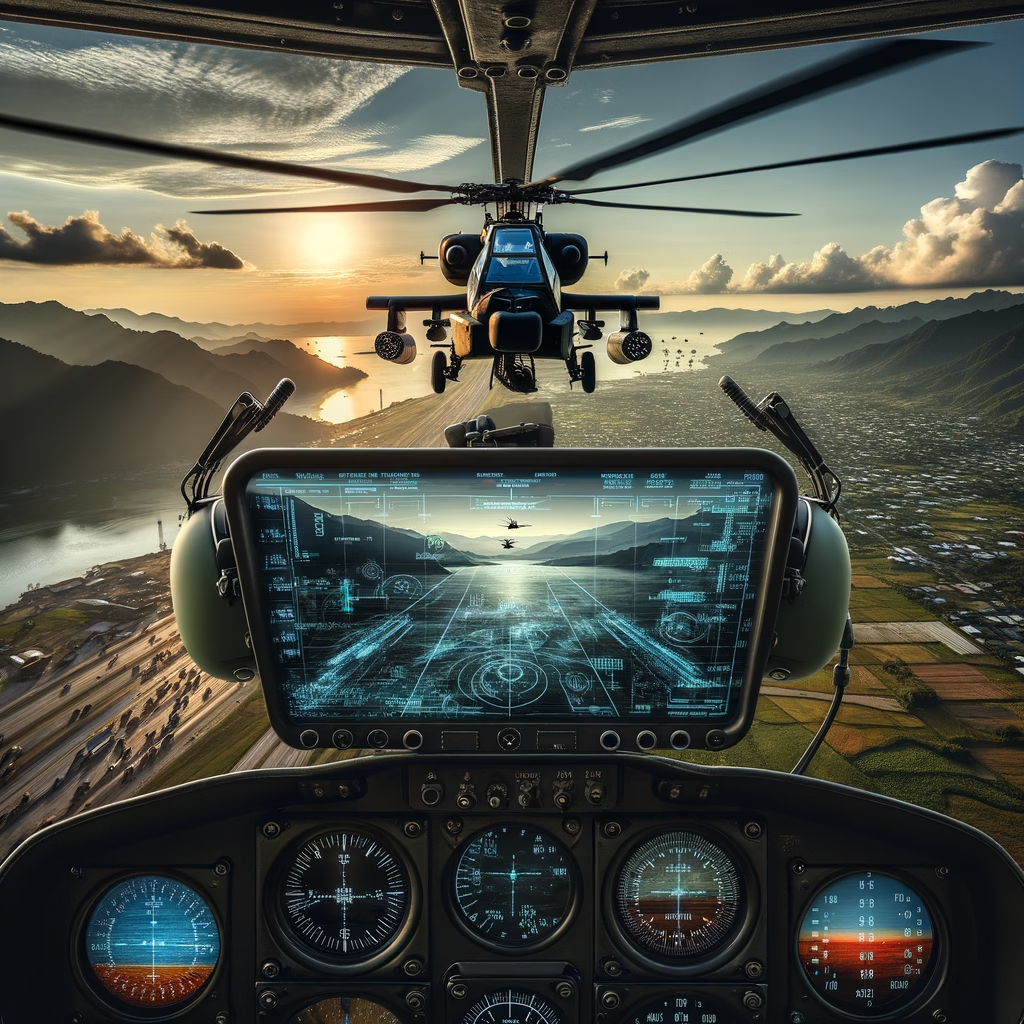
HMDs Close Rotary-Wing Situational Awareness Gap
When a helicopter pilot sees a threat but the crew doesn’t, head‑mounted displays (HMDs) are the game‑changer that puts the same real‑time battlefield picture into every crewmember’s eyes. By fusing sensors, stabilizing visuals, and trimming cockpit chatter, HMDs collapse delays and make rotary‑wing teams faster, safer, and far more effective in contested low‑altitude environments.

How the F-35 Keeps Fighting When GPS Is Denied
GPS jamming won’t ground the F‑35 — Collins Aerospace’s delivery of the 1,000th anti‑jam receiver proves the jet’s layered navigation system can keep it finding its way, fixing targets and staying in the fight even when satellite signals are denied.

Mysterious Russian Drone Spotted in Combat Zone
Imagine spotting a flying doughnut over the front lines — Ukrainian electronic‑warfare specialists say Russian units are testing an unusual annular ring‑wing drone that looks nothing like the usual quadcopters. Its circular design could trade wingspan for endurance, potentially changing how drones loiter, scout and strike.

Mysterious Russian Drone Spotted in Active Combat Zone
A mysterious ring‑wing Russian drone has been spotted over active Ukrainian battlefields — and experts say it could change the tactical calculus. Its unusual annular design hints at long loiter times, lower noise and a compact profile that could be used for surveillance, strike missions, or a hybrid of both.

France Unveils CALAMAR Range for Next-Gen Weapons Tests
Meet CALAMAR, France’s new multi‑domain test range at Cazaux where Rafales, Tigers, guided munitions and advanced sensors are run through realistic, integrated trials to prove they work together in contested air and electromagnetic environments. By centralizing those tests, the DGA speeds development, cuts technical risk and strengthens France’s ability to certify and field cutting‑edge systems independently.

Startup Reinvents Battlefield Medicine in the Drone Era
Imagine a field hospital that keeps running even when the sky above it is a battlefield—this startup is building hardened, networked mobile hospitals with redundant power, mesh comms, counter-drone defenses and unmanned resupply. Their goal: move beyond the golden hour to sustained, survivable care when evacuation and logistics are no longer guaranteed.

Inside Europe’s Race to Build a Drone Wall
Europe is racing to build a drone wall — not of stone but of sensors, software and beams of light — to blunt swarms of cheap, lethal drones made painfully real over Kyiv and Kharkiv. A patchwork of emergency programs, private innovation and military improvisation is rethinking air defenses for a world where small, smart, low‑cost unmanned aircraft can swarm, loiter and strike with impunity.

A-PNT: Essential for USV Maritime Mission Success
When GPS goes dark or is spoofed, USVs can’t rely on lookouts — they need Assured PNT. By fusing multi‑GNSS, inertial navigation and real‑time anomaly detection, A‑PNT keeps unmanned vessels safe and mission‑capable in contested seas.

helmet-mounted displays: Exclusive, Best Tactical Edge
Helmet‑mounted displays are no longer niche pilot toys but powerful force multipliers that merge sensors, targeting, and comms into a pilot’s line of sight—while also creating new vulnerabilities to jamming, spoofing, and human error. Keeping the tactical edge means hardening systems, training for degraded conditions, and designing HMDs pilots can trust.
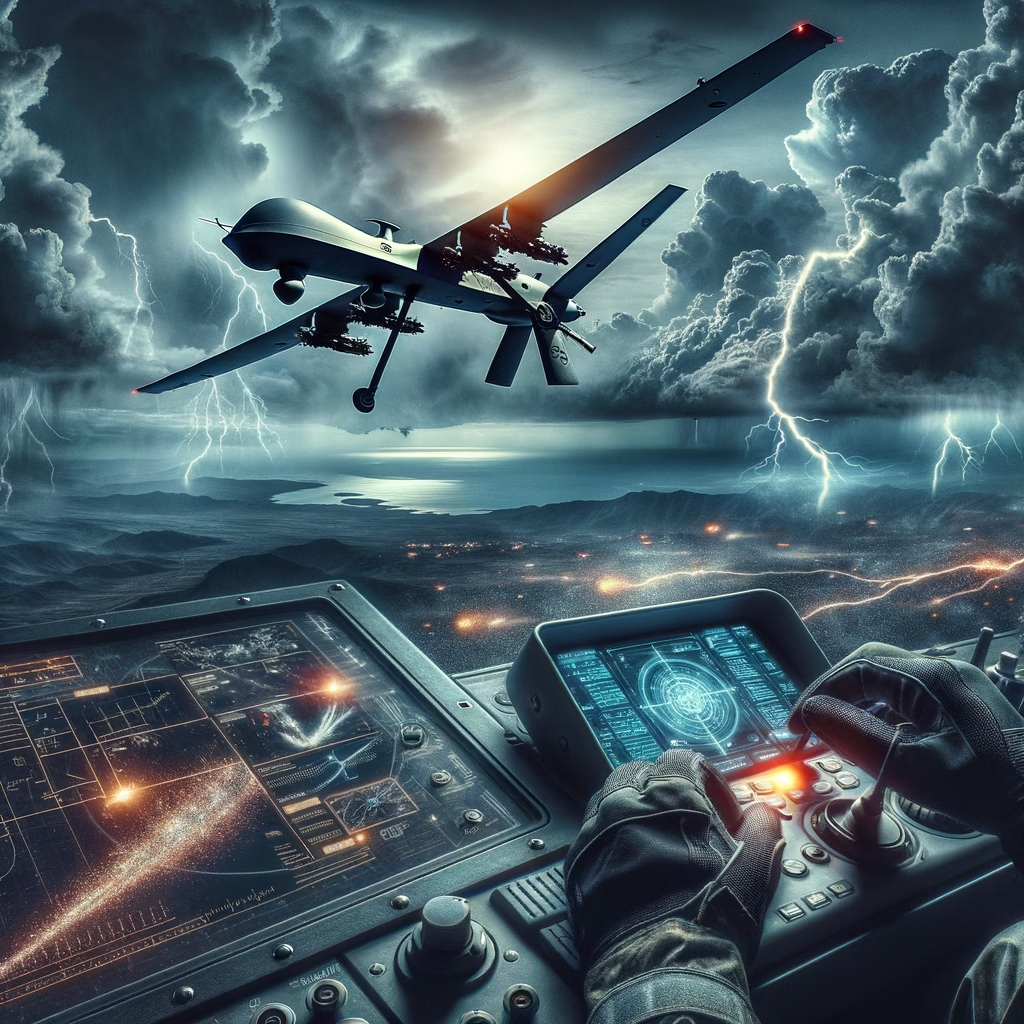
drone defenses: Must-Have Yet Risky Solutions
As autonomous drones shrink the window for decisions to seconds, militaries face a stark choice: build defenses that act instantly or risk catastrophic delay — but rushing automation without legal, ethical and technical guardrails could hand machines the power to make life-or-death calls. We must move fast to protect people, and smarter still to ensure those protections never become irreversible harms.

attack drones: Must-Have School for U.S. Dominance
Think Top Gun—but for cheap, nimble attack drones: the Pentagon is creating a hands-on school to turn Ukraine’s gritty drone tactics into formal doctrine, training, and interoperable tools for U.S. and allied forces.

C2 centers: Must-Have Resilience for Best Survival
When the map is incomplete, radios go quiet, and drones, jammers and deception probe your nerve centers, modern C2 centers face three linked challenges—information overload and trust, contested communications, and coalition interoperability—that will decide whether commanders can see, decide and act faster than the enemy. The Ukraine war shows we must prioritize explainable data fusion, layered resilient comms, and federated interoperability now, or risk losing the advantage on tomorrow’s battlefields.

Agile Combat Employment: Essential & Risky Shift
Can a force built for big bases learn to fight from improvised strips under missile, cyber, and electronic attack? Agile Combat Employment (ACE) answers with small, mobile teams, palletized maintenance, and decentralized command to make aircraft harder to find, faster to move, and far more resilient in a contested world.

situational awareness gap: Must-Have HMDs for Best Safety
Could a visor really save lives? Helmet‑mounted displays bring pilots and crews the same real‑time picture—cutting radio clutter, speeding decisions, and closing the situational‑awareness gap that can mean the difference between mission success and disaster.

F-35 GPS denial: Must-Have Resilience Boost
Collins Aerospace’s delivery of the 1,000th anti‑jam GPS receiver for the F‑35 is a big, practical win in the race to keep pilots and weapons on target when satellites go silent. It’s a crucial step toward resilient navigation—but real safety will come from layered tech, training, and fast integration across the fleet.

improved radar capabilities: Must-Have, Best Defense Boost
The Navy is giving aging destroyers a high-tech eyesight upgrade—modernizing radars with smarter software and electronics to spot stealthy missiles and jamming from China and Russia. These retrofits buy time and boost fleet relevance while new ships and sensors are developed, helping sailors see farther, react faster, and stay one step ahead.