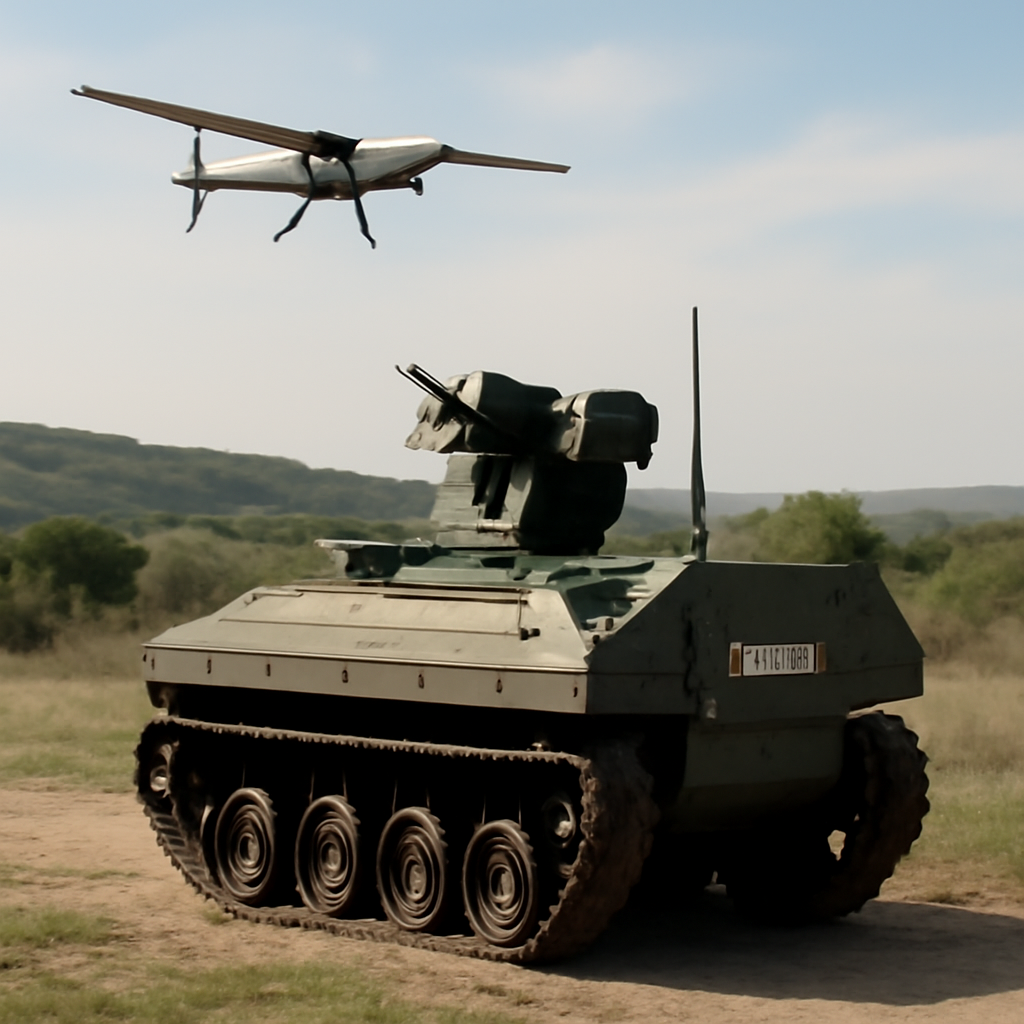
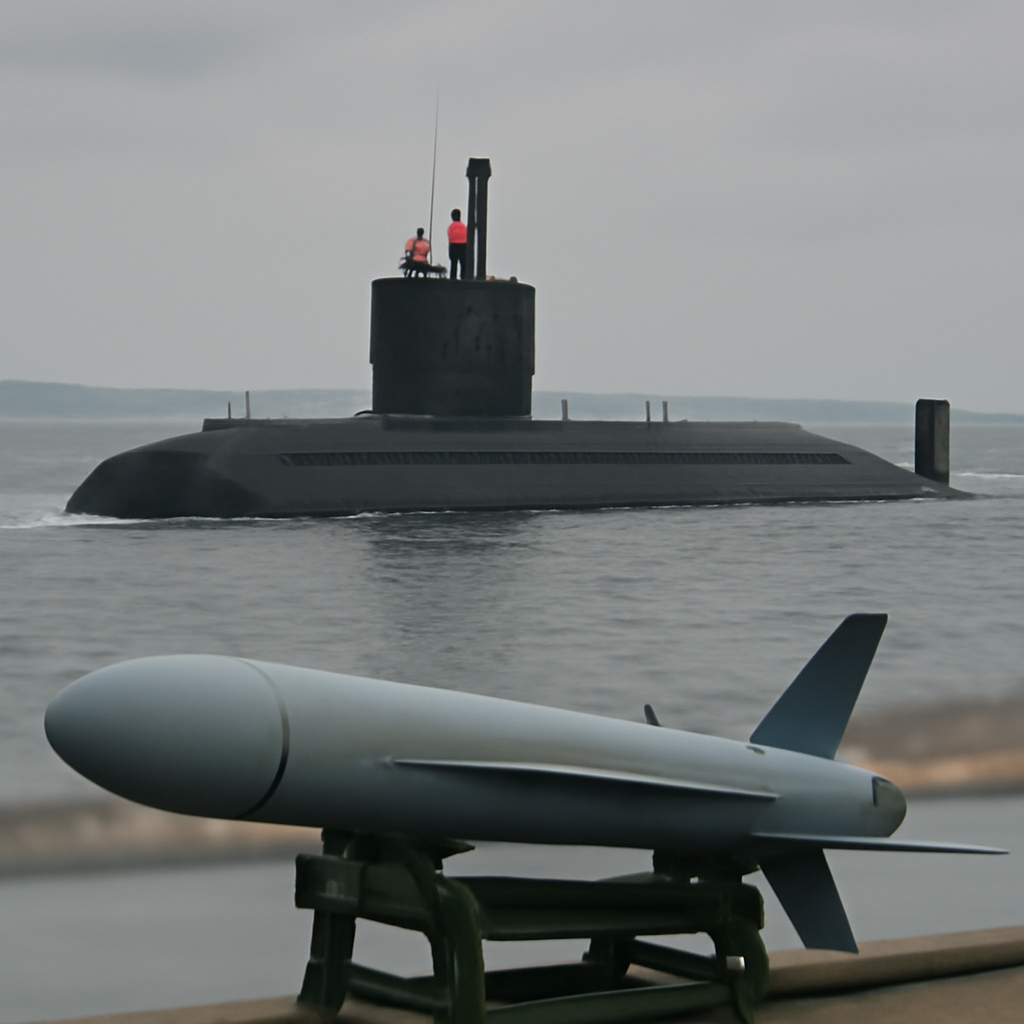
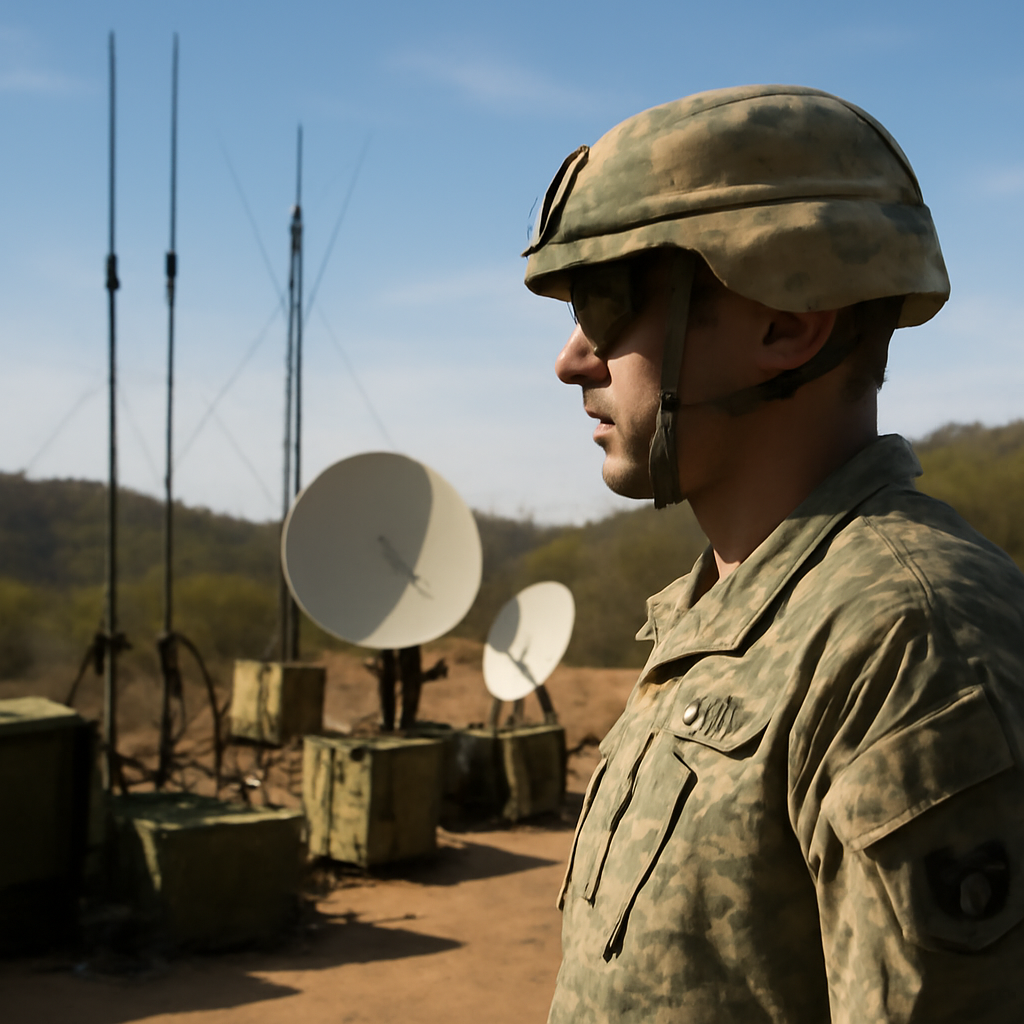
What do you do when the brain of a military finds itself under sustained attack — its eyes clouded by jamming, its ears flooded with false reports, and its limbs spread across nations that do not speak the same technical language? That is the dilemma modern command-and-control centers face on today’s battlefields, a reality the war in Ukraine has made uncomfortably plain.
Operational experience in Ukraine has turned theoretical risks into immediate problems: congested electromagnetic and cyber environments, torrents of sensor data that must be turned into trustworthy decisions, and the wrenching difficulty of making multinational forces operate as one coherent instrument of power. These pressures have exposed three urgent, overlapping challenges for contemporary C2 centers: resilient communications under attack; decision speed and trust at the human-machine boundary; and secure, seamless interoperability across coalitions and heterogeneous systems. Each of these problems is technical and institutional, tactical and political — and each demands urgent, joined-up responses .
Background: the old assumptions no longer hold. For decades militaries planned for limited disruption, with layered but fairly predictable networks. Today’s adversaries fuse low-cost drones, electronic warfare, cyber intrusions, long-range fires and traditional airpower into a single, congested battlespace that blurs front and rear, military and civilian infrastructure. Commercial satellites and ubiquitous civilian communications increase both visibility and vulnerability, creating single points of failure that can be exploited at decisive moments. Allied initiatives such as the U.S. Joint All-Domain Command and Control (JADC2) and NATO’s multi-domain integration efforts reflect recognition of this new reality — but concepts on paper must perform under fire, when networks are jammed and sensors are contested .
Challenge 1 — Resilient communications in contested electromagnetic and cyber environments. Connectivity is the lifeblood of C2; adversaries now aim to choke that lifeblood. The combination of jamming, GPS and satellite disruption, cyberattacks, and kinetic strikes against nodes produces denied, degraded and intermittent (D-D-I) conditions far more often than planners once assumed. The practical response is a layered, heterogeneous communications architecture: mesh and line-of-sight links that can route around damage; resilient satellite and high-frequency options; electromagnetic spectrum management; and hardened tactical radios and waveforms. But technology alone is not enough. Procurement inertia, legacy systems and supply-chain vulnerabilities mean gaps persist between capability and need. In short: resilience requires hardware, doctrine and logistics to be designed together, not in separate stovepipes .
Challenge 2 — Speed, trust and the human-machine boundary in decision-making. Modern C2 centers confront an avalanche of data — satellite imagery, ISR feeds, signals intelligence, and even open-source social media — each stream arriving with different latency, resolution and trustworthiness. Turning noise into action requires automation and AI-assisted decision support, but automation raises thorny questions: whose judgment prevails, how do operators understand algorithmic recommendations, and how do systems behave under adversarial manipulation? The answer lies in human-centered automation: explainable AI, human-machine teaming that preserves clear human authority, rigorous testing under realistic and adversarial conditions, and training that builds distributed decision-making muscle memory as much as digital literacy. Otherwise faster sensor feeds will simply accelerate flawed choices rather than improve outcomes .
Challenge 3 — Seamless, secure coalition interoperability across heterogeneous systems. Modern operations are rarely unilateral. Coalitions bring political benefits and military reach, but they also bring diverse command structures, data formats, classification rules and procurement cycles. The result: technical and policy friction that slows information sharing and complicates synchronized action. Achieving effective coalition C2 means aligning standards, managing trust across classification boundaries, and building translation layers that allow different systems to exchange intent and fires safely. It also requires political agreements on data-sharing, legal frameworks for automated targeting support, and continuous multinational exercises that stress-test those arrangements before crises do.
Why this matters. Failure in any one of these areas is not an abstract shortcoming — it translates into lost tempo, misallocated fires, fratricide risk, and missed opportunities. A resilient communications architecture without decision-quality data is brittle. Speedy decision aids without explainability can undermine commanders’ trust. Interoperability without clear governance can lead to paralysis in coalition operations. In aggregate, these shortcomings diminish deterrence and increase the chance that a localized crisis will escalate through misperception or error.
Different perspectives frame the problem different ways. Technologists emphasize architectures: distributed edge processing, resilient waveforms, mesh networks, and explainable machine learning. Policymakers worry about procurement reform, information-sharing agreements, and export controls that both enable cooperation and protect sensitive technologies. Users — commanders and operators — want tools that reduce cognitive load, provide clear indications of uncertainty, and leave ultimate authority where the law and ethics require. Adversaries, meanwhile, seek asymmetric levers: cheap drones to saturate sensors, cyber hits to sever links, and electronic attack to sow doubt. Any effective solution must thread these perspectives together.
Promising approaches are already visible. Investments in survivable tactical radios, resilient satellite constellations, and hardened waveforms aim to mitigate D-D-I conditions. Research communities and industry are prioritizing explainable AI and adversarial testing, and militaries are expanding live, multi-domain exercises to build muscle memory for distributed, coalition decision-making. Yet institutional friction remains: long procurement cycles, siloed budgets, and a gap between concept development and operational validation mean the battlefield may expose flaws faster than institutions can fix them .
What should leaders do now? Prioritize cross-domain resilience in acquisition, require explainability and realistic adversarial testing for automation, and invest in multinational standards and exercises that harden interoperability before conflict. Those tasks are neither cheap nor easy, but the alternative — a C2 apparatus that fails when it is needed most — is far costlier in blood and strategic consequence.
The war in Ukraine has given planners a costly but candid laboratory: the problems are real, interlinked, and solvable — but only if technologists, policymakers and operators stop treating each shortfall as someone else’s problem. If C2 is the brain of modern military power, the time to inoculate it against noise, deception and fracture is now. Otherwise, who will be left to decide when the battlefield itself is trying to decide for us?
Source: https://modernbattlespace.com/2025/07/10/three-major-challenges-modern-c2-centers-must-overcome-on-the-battlefield/