“The way I’ve approached this — knowing how smaller companies work — is fast yeses and fast nos,” Emil Michael, the Defense Department’s Chief Technology Officer, said at the SOF Week exposition in Tampa, Fla.
Emil Michael’s “fast yeses and fast nos” approach
At the annual SOF Week exposition, Emil Michael described a procurement posture aimed at removing multi-year uncertainty for smaller vendors. Michael, who previously served as a top executive at Uber and at the small software company Klout, said the “worst thing for a small company is to be dragged through a multi-year process.” He framed the objective plainly: create “one big front door” where companies can present technology and learn quickly whether the Defense Department is a buyer.
Bringing services in early to test vendor technology
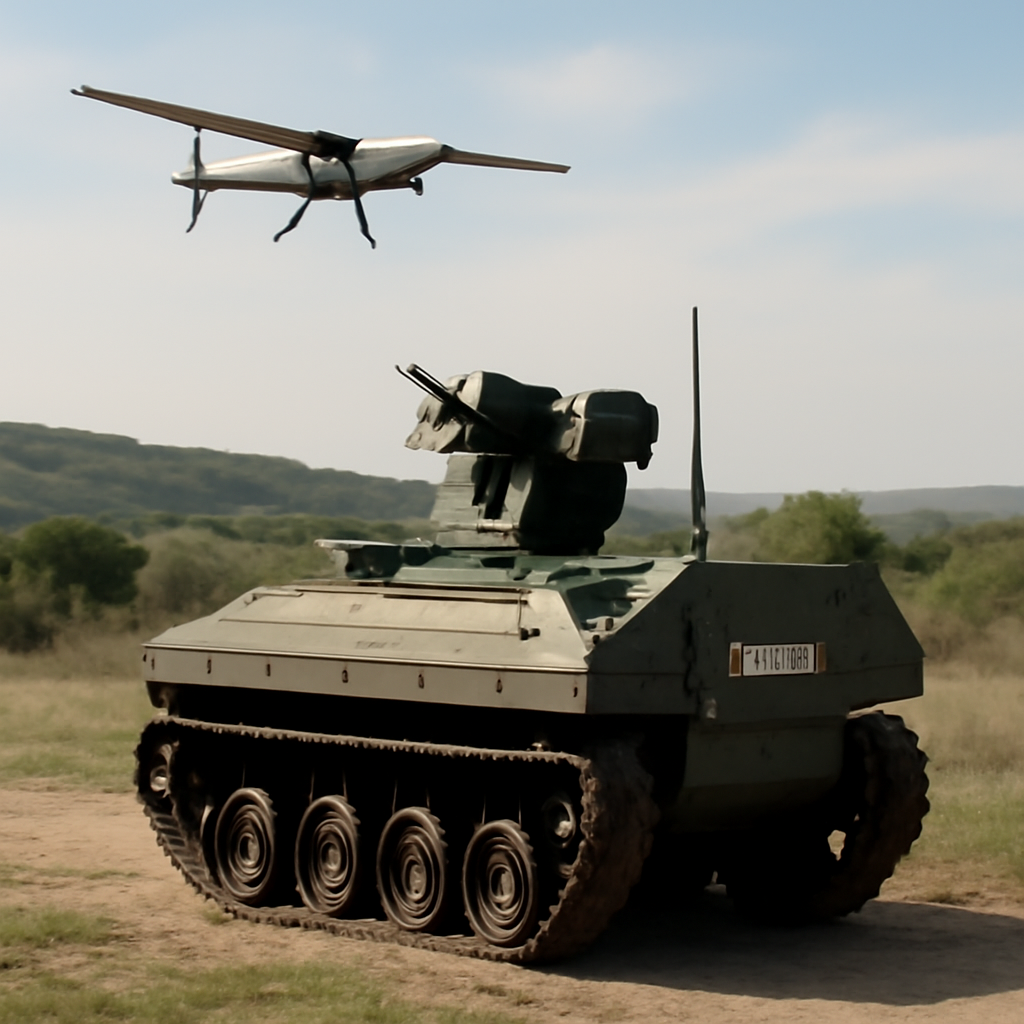
Michael said his method to deliver “fast” decisions is to bring services in very early to test vendor offerings and to tell companies “right away if it’s something they are interested in.” He did not provide implementation specifics in his remarks. The concept he outlined resembles an Army effort he cited by example — the Transformation in Contact initiative — which brings companies in to test technologies that may not be tied to a program of record or a set requirement, with the goal of evaluating how they operate in a tactical environment.

Your town's IT department is one person. Maybe.
Ransomware crews target small municipalities because nobody's watching. Nubivance gives Maine and New Hampshire towns a security program sized to a town budget.
Protect the town officeInteroperability and drone swarms as measurable goals
Michael also said he is trying to build interoperability into almost all future requirements. He highlighted collaborative autonomy and drone swarms as demonstrable outcomes of that push. “When you see the adversary, these great drone swarms they do at concerts, I say, ‘Holy Cow!’” Michael said, adding that if adversaries are doing collaborative autonomy, “we better be doing it better than them.” He said he is “pretty motivated to ensure that everyone who participates in this space gets that message, and knows that it is required to do.”
SOCOM Acquisition Executive Melissa Johnson on AI and cognitive workload
Before Michael spoke, Acquisition Executive for Special Operations Command (SOCOM) Melissa Johnson told an audience on Tuesday that products sold to SOCOM need built-in interoperability and must be enabled by artificial intelligence. “It should be reducing the cognitive workload on mundane tasks,” Johnson said. She framed that requirement around increasingly complicated operational scenarios: “The more complicated that operational scenario is, the more complicated and complex the environment gets to be. That means there’s more software, there’s more tasks for the operator. Those mundane tasks have to be reduced, so that he or she can focus on the most important decisions.”
What this means for small companies, acquisition teams, and adversaries
- Small companies: Michael’s stated aim for “fast yeses and fast nos” targets startups and small vendors that typically “knock on 100 doors” without finding a buyer. Under the model he described, such companies could expect earlier, clearer feedback on whether their technology aligns with Pentagon needs.
- Acquisition teams and program managers: The CTO’s emphasis on early, service-led testing and on baked-in interoperability would shift evaluation work upward in the acquisition timeline. Michael pointed to an Army-style testing model — Transformation in Contact — as a possible analogue for how those tests might be organized.
- Adversaries and operational competition: Michael explicitly referenced adversary demonstrations of drone swarm capabilities at public events and framed collaborative autonomy as a performance benchmark the department must meet or exceed. That comparison underscores why interoperability and autonomy are being elevated as requirements.
Michael portrayed his approach as blunt and candid: he said entrepreneurs will appreciate “hard conversations” when technology is not a match because it gives them a clear path — either to “double down on something else, or they’ll fix what they’ve got to meet your needs.” Whether the department’s promise of faster binary decisions will translate into faster contracts, or simply faster feedback, was not specified in his remarks. The immediate next steps he identified are procedural — bringing services in earlier for testing and making interoperability a near-universal requirement — while citing the Army’s Transformation in Contact as a precedent that could inform how those tests are run.
Link to the original story: Pentagon CTO wants to give vendors ‘fast’ decisions on buying tech