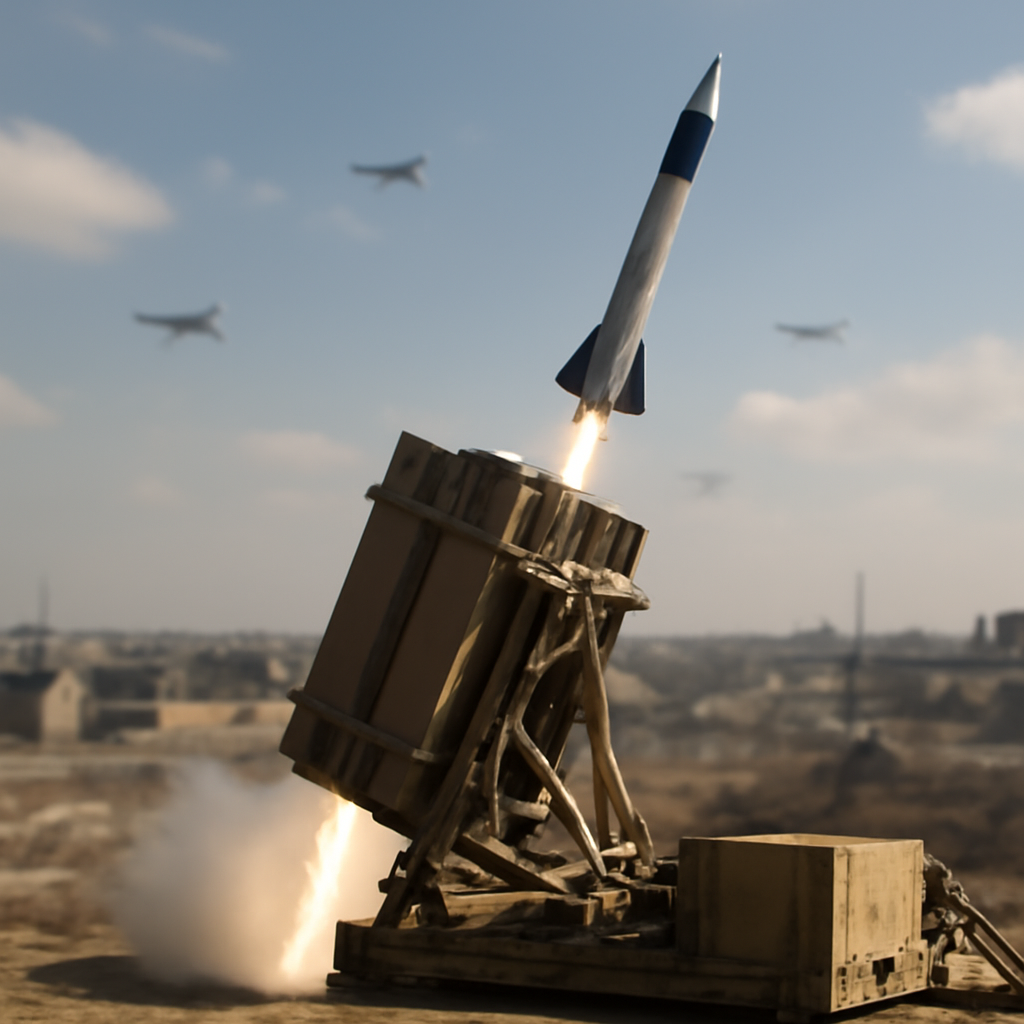
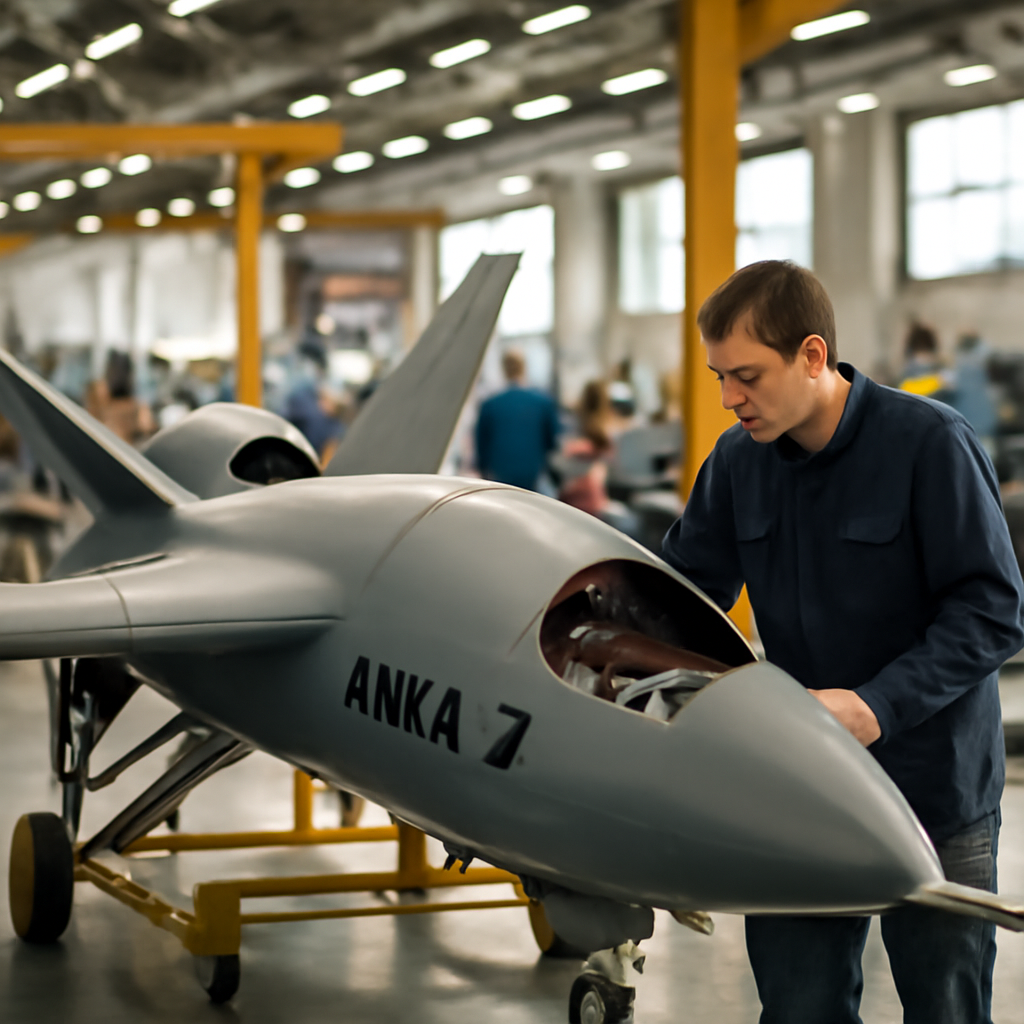
When a $50 microelectromechanical sensor can steer a $50,000 weapon to within meters of its target, the implications ripple far beyond procurement spreadsheets. The recent government purchase of roughly 300,000 MEMS IMUs, reported by Modern Battlespace, forces hard questions about deterrence, escalation and the rules of engagement. Are we witnessing a new normal in which inexpensive precision becomes ubiquitous — or should policy and strategy change to manage the risks that follow?
MEMS IMUs: Why 300,000 Units Matter
MEMS IMUs—tiny packages of accelerometers and gyroscopes—measure motion and orientation and provide the inertial backbone of navigation when GPS is unavailable or degraded. Found in smartphones and guided munitions alike, they have steadily improved in performance while dropping dramatically in cost. That combination has made it practical to embed reliable navigation into large fleets of weapons, sensors and logistics assets.
The drivers behind mass procurement are straightforward: resilience, ubiquity and economics. High-end navigation systems like ring-laser or fiber-optic gyros still outperform MEMS in pure accuracy, but they are bulky and expensive. MEMS IMUs are compact, rugged and cheap enough to be deployed widely. Buying in bulk lowers unit prices and secures supply in crises where global supply chains may be contested. Simply put, MEMS IMUs let militaries harden entire inventories against GPS-denial without replacing whole weapons families.
From Commodity Sensor to System Enabler
The raw physics of MEMS sensors include bias instability and scale-factor errors that make inertial navigation drift over time. Yet three trends have narrowed the gap between low-cost MEMS and tactical-grade systems. First, improvements in MEMS fabrication and materials have reduced noise and drift. Second, smarter sensor fusion algorithms — Kalman filters, visual-inertial odometry and other estimators — extract far more reliable states from imperfect sensors. Third, hybrid navigation architectures combine MEMS IMUs with GNSS, magnetometers, barometric altimeters, vision or lidar to reset drift and maintain accuracy in contested environments. In other words, the commodity sensor is rarely used alone; it is an element in a navigation stack that preserves performance when GNSS is denied or spoofed.
Real-world conflicts in recent years, notably in Ukraine, have demonstrated both the benefits and limits of relatively inexpensive precision. Drones, guided artillery and loitering munitions have reshaped urban and semi-urban fighting. GPS jamming and spoofing have made resilient navigation essential. MEMS-based solutions represent the most pragmatic path to hardening large inventories against these challenges.
Strategic and Operational Consequences
Widespread access to affordable guidance changes several strategic calculations. First, it lowers the entry cost for precision, increasing lethality and accuracy across more platforms. That can reduce collateral damage by enabling discriminate targeting, but it can also encourage rapid, deniable or low-cost strikes with limited escalation risk — a potentially destabilizing effect.
Second, the force-structure calculus compresses. Planners can field smaller, cheaper platforms that nonetheless deliver precise effects. Air-defense mixes, ammunition stocks and logistics plans must adapt to the prospect that precision will migrate down the force structure. Stockpiling tens of thousands of smart munitions or retrofit kits becomes a strategic hedge rather than a luxury.
Third, proliferation and supply-chain security become pressing policy issues. MEMS fabrication sits within a global semiconductor ecosystem — foundries, design houses and packaging facilities spread among allies and adversaries. Governments increasingly link procurement to industrial policy: onshoring production, coordinating ally-shore manufacturing, and tightening export controls. The boundary between benign commercial MEMS and militarized IMUs is blurring, complicating longstanding export regimes and controls.
Technological Opportunity and Countermeasures
Technologists see a path for continued gains. Improvements in MEMS lithography, on-chip processing and algorithmic innovation mirror Moore’s Law-like progress. Sensor fusion that combines visual, lidar and radio-based positioning can compensate for MEMS imperfections, yielding navigation solutions that approach tactical-grade accuracy at a fraction of the cost. This is attractive to drone developers, guided-rocket designers and makers of precision small arms.
Adversaries will respond with counters: improved electronic warfare, decoys, infrastructure hardening and attempts to disrupt the sensing and targeting chain upstream. Each advance in guidance begets a cycle of countermeasures and investment, a dynamic familiar from previous military revolutions.
Policy, Doctrine, and Training
Policymakers face acute trade-offs. Stockpiling large numbers of IMUs improves resilience but risks fueling an arms race in precision munitions. Export controls meant to keep high-performance IMUs out of adversary hands can also constrain allies and domestic industry. Navigating the tension between restricting capabilities and sustaining industrial-scale manufacture is politically charged.
Operationally, end users benefit from more reliable navigation under GPS denial, but training, doctrine and maintenance must adapt. More guided rounds necessitate updated tactics for target selection, battle damage assessment and logistics. Command-and-control systems will need to allocate effects across a larger palette of capable shooters, and integrating millions of new data points from fleets of guided systems will stress identification and control networks.
Normative and Legal Questions
There are broader normative questions. Democracies and alliances must decide how to balance battlefield discrimination against the risk that cheaper precision normalizes limited strikes with strategic consequences. Legal frameworks, rules of engagement and target vetting processes will be tested as precision becomes routine in scenarios where previously only area fires were available.
Conclusion: Managing the Risks of Ubiquitous MEMS IMUs
The purchase of roughly 300,000 MEMS IMUs signals a decisive shift: precision is no longer the exclusive province of expensive strategic platforms. It is becoming pervasive, embedded across the mass of weapons and sensors that make up modern militaries. That diffusion will change tactics, logistics and geopolitics in ways both predictable and surprising. The question for governments, militaries and citizens is not simply whether to procure these sensors — procurement will occur in a crisis — but how to manage the consequences: from supply chains and industrial policy to export controls, doctrine and the laws of armed conflict. Who will set the guardrails for a battlefield increasingly defined by ubiquitous precision thanks to MEMS IMUs?