Tag: loiteringmunitions
16 articles

Why 300K MEMS IMUs Were Needed for Guided Weapons
When every shot must count, governments quietly ordered roughly 300,000 tiny MEMS IMUs — thumb‑sized accelerometer/gyro “navigation brains” that, when fused with GNSS or vision cues, let cheap rockets, drones and mortar kits stay on target even under GPS jamming. That bulk buy isn’t a gadget fad but a strategic shift: commodity sensors plus smarter software are turning low‑cost munitions into scalable precision tools, reshaping tactics, logistics and geopolitics.

Why 300K MEMS IMUs Were Deployed to Guide Global Weapons
When every shot must count, governments quietly bought roughly 300,000 tiny MEMS IMUs — cheap inertial sensors that turn rockets, drones, and retrofit kits into precise, GPS‑resilient weapons. That bulk buy marks a battlefield shift: better ISR, cheaper effectors, and smarter sensor fusion are making ubiquitous, low‑cost guidance the new normal.

300K MEMS IMUs: Global Shift to Guided Weapons
A thumbnail-sized MEMS IMU is quietly reshaping the battlefield: these tiny sensors can turn cheap rockets and mortar rounds into precision-guided weapons. The global buy of 300,000 units shows militaries are favoring affordable, mass-produced accuracy over sheer volume.

U.S. Army Accelerates AV Use for Drone Interceptor Missile
When enemy drones cost less than the missiles that try to stop them, you need a smarter, cheaper solution. The U.S. Army is fast‑tracking purpose‑built interceptors—tapping AeroVironment to build the Next‑Generation C‑UAS Missile and a Long‑Range Kinetic Interceptor to make airspace denial precise and affordable.

U.S. Army Selects AV for Drone Interceptor Missile
When the sky stopped feeling safe, the Army turned to AeroVironment — makers of the Raven and Puma — awarding $95.9M to build a Next‑Gen interceptor missile that brings kinetic punch to stop swarming quadcopters, fast drones and loitering munitions.

Mysterious Russian Drone Spotted in Combat Zone
Imagine spotting a flying doughnut over the front lines — Ukrainian electronic‑warfare specialists say Russian units are testing an unusual annular ring‑wing drone that looks nothing like the usual quadcopters. Its circular design could trade wingspan for endurance, potentially changing how drones loiter, scout and strike.

Inside Europe’s urgent push to build a drone wall
Europe is racing to build a drone wall — a layered, networked shield to detect and defeat swarms of cheap, self-flying drones that have rewritten the rules of war and now threaten cities. Born from hard lessons in Ukraine, the effort blends new tech, cross-border policy and legal limits to stop nimble, low-cost threats before they strike.

Inside Europe’s Race to Build a Drone Wall
Europe is racing to build a drone wall — not of stone but of sensors, software and beams of light — to blunt swarms of cheap, lethal drones made painfully real over Kyiv and Kharkiv. A patchwork of emergency programs, private innovation and military improvisation is rethinking air defenses for a world where small, smart, low‑cost unmanned aircraft can swarm, loiter and strike with impunity.

Ukraine Drones Avert Defeat, Fail to Secure Victory
Swarming, low-cost drones have repeatedly kept Ukraine in the fight—disrupting logistics, shortening kill chains, and preventing routs—but their impact has been largely tactical, buying time rather than delivering a decisive, war-ending breakthrough.

Ukraine’s Drone Milestone: Defense Held, Victory Uncertain
A wave of cheap, internet‑connected drones has given Ukraine game‑changing eyes and strike power—blunting offensives and keeping the country afloat—yet despite reshaping the battlefield, mass UAS have so far prevented defeat without delivering a decisive victory.

Russias drone sector: Stunning, Risky Expansion
Russia’s drone industry has surged from prototypes to mass-produced battlefield systems by prioritizing simple, low-cost designs and decentralized manufacturing. That rapid, pragmatic growth is forcing Kyiv, Washington and NATO to rethink sanctions, air defenses and how to counter cheap, attritable aerial threats.

manned-unmanned teaming: Must-Have, Risky Future
Picture a soldier stepping ashore while drones and robots weave a single tactical picture into their helmet—manned‑unmanned teams could soon boost reach and protect troops across the Pacific, but they also raise tough challenges in communications, AI reliability, logistics, and the ethics of who pulls the trigger.
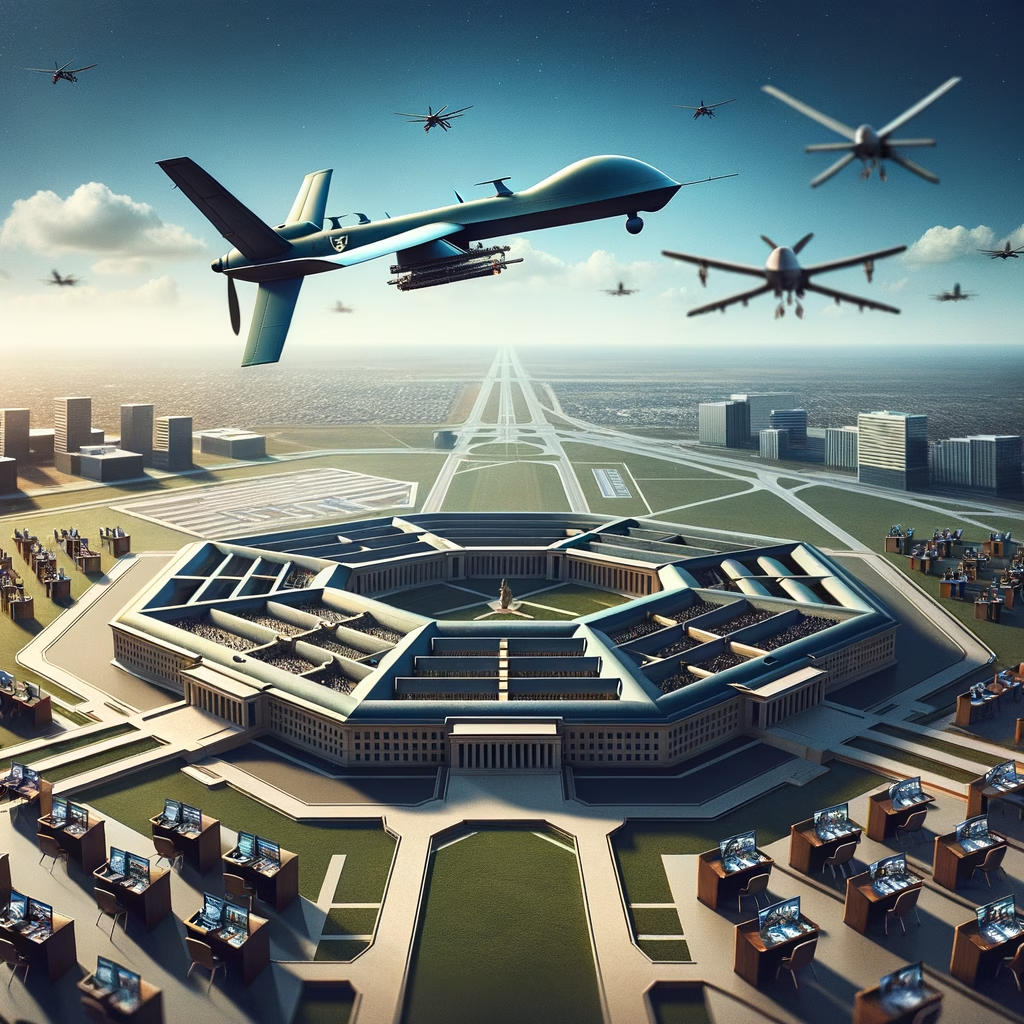
attack drones: Must-Have School for U.S. Dominance
Think Top Gun—but for cheap, nimble attack drones: the Pentagon is creating a hands-on school to turn Ukraine’s gritty drone tactics into formal doctrine, training, and interoperable tools for U.S. and allied forces.

Ukraine-style attack drones: Must-Have, Risky Advantage
The Pentagon wants to turn Ukraine’s gritty, make-do drone tactics into a repeatable advantage with a “Top Gun” style school teaching pilots, maintenance crews and commanders how to field small attack drones—yet translating battlefield improvisation into doctrine will demand fixes to policy, logistics and ethics as much as curriculum.

MEMS IMUs: Must-Have Precision, Risky Consequences
A $50 MEMS IMU turning a $50,000 weapon into a pinpoint munition forces us to rethink deterrence, escalation, and the rules of engagement. Buying 300,000 of these tiny sensors makes precision pervasive — reshaping tactics, supply chains, and policy in ways both stabilizing and risky.

MEMS IMUs Must-Have: Best Precision Weapon Upgrade
Tiny, cheap MEMS IMUs are quietly transforming battlefields by turning unguided rounds into precision weapons at scale, letting militaries retrofit arsenals affordably and strike faster with fewer shots. That boost in accuracy can reduce collateral damage—but it also raises supply-chain, proliferation, and ethical risks that demand thoughtful policy and training.