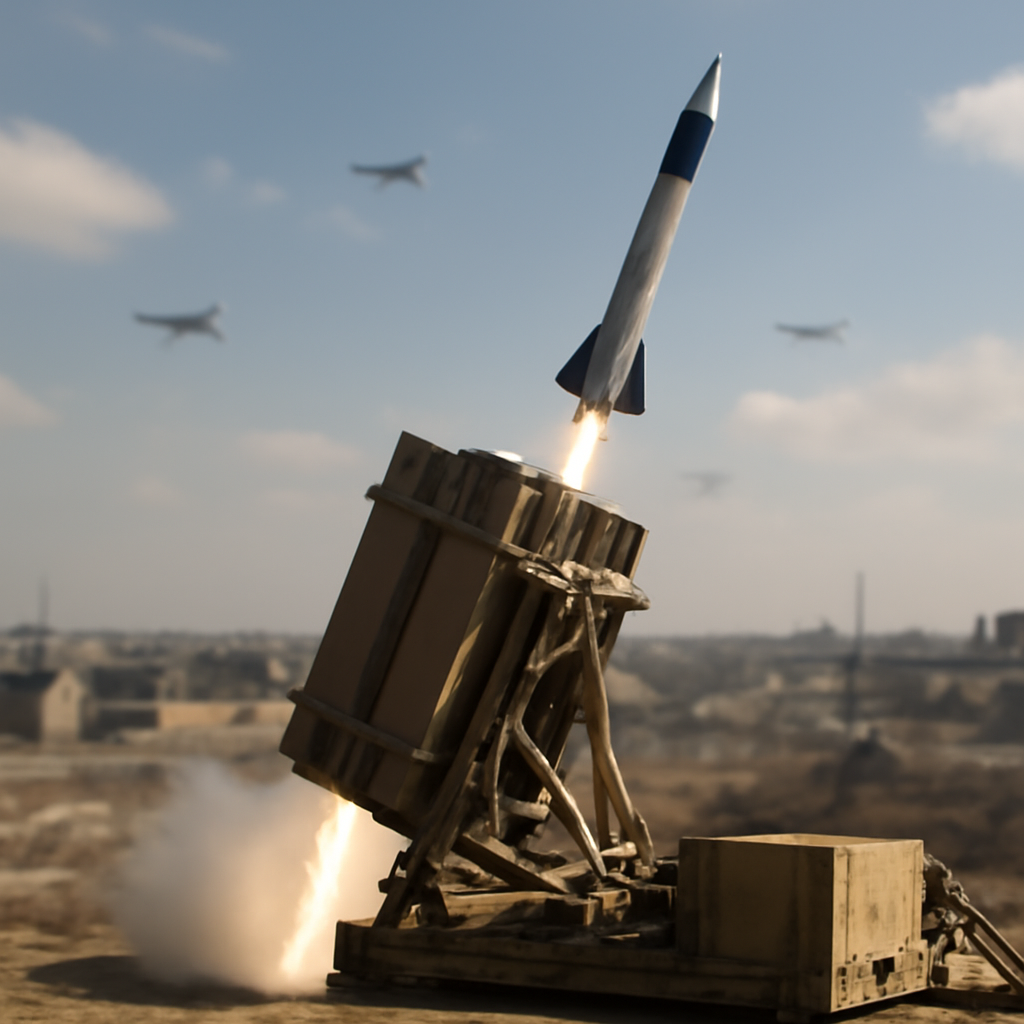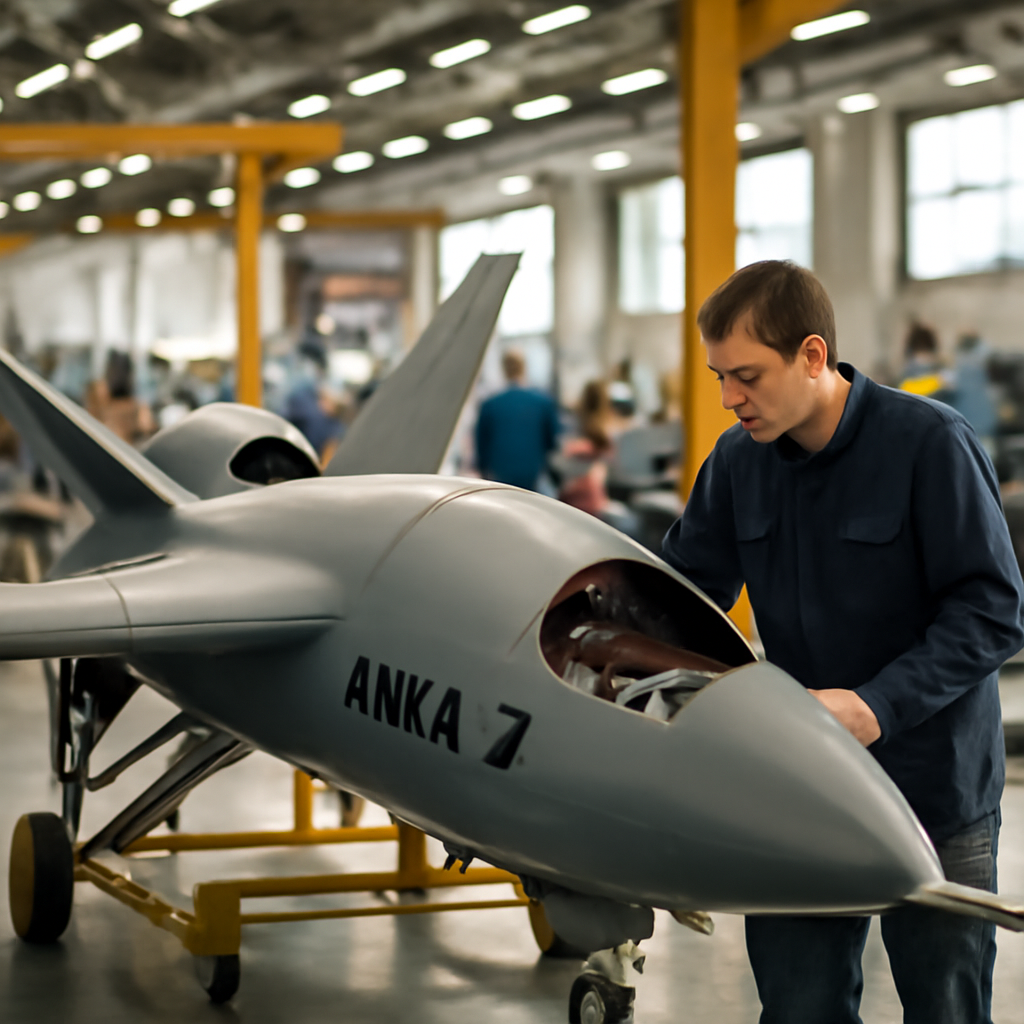
The drone discovered inside the secured area of Leipzig/Halle Airport on the night of August 4–5 was carrying approximately 1.3 pounds of explosives, German authorities say.
Leipzig/Halle: an attempted explosive-drone strike on an Antonov An-124
German investigators have formally accused the Russian state of directing an attempted explosive-drone attack at Leipzig/Halle Airport aimed near a Ukrainian-operated Antonov An-124 heavy cargo aircraft. Officials say the device included military-grade explosives—investigators later found traces of hexogen (RDX)—and that the detonator apparently failed, averting what authorities warned could have been a catastrophe. The drone was discovered in the secure area close to the Antonov on the night of August 4–5; authorities also recovered a second drone and initially thought it might have been part of the planned operation, though investigators have since expressed doubts about that assessment.
Attribution: state expertise, local operatives, and Moscow’s denial
Interior Minister Alexander Dobrindt and Foreign Minister Johann Wadephul said the Russian state had apparently provided the equipment and technical know-how for the Leipzig operation while locally recruited “low-level agents” were allegedly tasked with carrying it out. German officials now say they have sufficient evidence to attribute the attempted operation to Russia; Moscow rejects that accusation. The German Embassy in Washington summarized Berlin’s position: “We now know that Russia is responsible for the attempted explosive attack at Leipzig airport. Russia's repeated hybrid attacks on Germany and Europe are unacceptable.”

Audit-ready is a season. It shouldn't be.
Evidence in spreadsheets, controls drifting between audits, frameworks multiplying on flat headcount. Nubivance runs continuous compliance on Rapid7 Cyber GRC - SOC 2, HIPAA, ISO 27001, PCI, CMMC.
End the scrambleTurnow-Preilack and Jänschwalde: sabotage at a critical power node
On the same day Germany announced the Leipzig attribution, authorities in Brandenburg described a separate, sophisticated sabotage attack on the Turnow-Preilack substation—a high-voltage node linking the Jänschwalde power plant to the 50Hertz transmission network. Brandenburg Interior Minister Jan Redmann said rockets carrying conductive material were fired into extra-high-voltage transmission lines, producing two short circuits. Investigators recovered more than a dozen devices at the site; Redmann said the design and deployment of the devices required substantial preparation. The attack caused a brief power interruption, triggered an automatic shutdown of one generating unit at Jänschwalde, and forced temporary local outages, though 50Hertz said all affected lines had returned to operation and the general electricity supply was never disrupted.
Pattern and reach: similar incidents across Europe under review
German intelligence sources cited by German media have reportedly identified possible links between drone, explosive, and weapons incidents in Germany and other European countries, including Bulgaria, Italy, Poland, Romania, and the United Kingdom. Investigators are understood to be examining those incidents in parallel. German officials described the Leipzig operation as combining familiar elements of an emerging hybrid model: inexpensive uncrewed systems, military-grade explosives, strategically significant targets, and use of local operatives to distance the operation from its suspected state sponsor—tactics that increase deniability while widening the field of potential attack vectors.
What this means for technologists, policymakers, and operators
- Technologists and security teams: the incidents underscore the operational challenge posed by inexpensive drones paired with military-grade explosives and simple but effective sabotage methods—traces of RDX at Leipzig and rockets carrying conductive material in Brandenburg are concrete forensic leads investigators will continue to use.
- Policymakers and regulators: Berlin is already preparing stepped measures—scheduling the Russian consulate in Bonn to close later this month, removing the Russian House in Berlin, pursuing additional sanctions and tighter border controls for Russian nationals, and supporting the European Commission’s proposed 22nd sanctions package reportedly covering approximately 1,600 additional companies and organizations linked to Russia.
- Airport and power-plant operators: the incidents highlight that disruption need not be catastrophic to be damaging—temporary shutdowns, forced security responses, and symbolic attacks against high-value assets such as Antonov An-124 aircraft can have outsized operational and political effects.
NATO and EU officials publicly backed Germany after the Leipzig attribution. NATO Secretary General Mark Rutte said Berlin had presented clear evidence supporting its assessment, and European Commission President Ursula von der Leyen pledged European solidarity. Russian Foreign Ministry spokeswoman Maria Zakharova said Russia would respond to what she called Berlin’s “anti-Russian action.”
Taken together, the facts reported by German authorities describe two different forms of disruption—an attempted terrorist-style drone strike on a prominent cargo aircraft and a methodical sabotage of a critical electricity node. Both demonstrate the range of vectors available to actors willing to operate below the threshold of overt military conflict. The central operational question the record leaves on the table is not whether Germany will respond—that is already happening—but how many apparently isolated incidents could actually be pieces of a larger campaign across Europe.