"Jet-powered Shaheds are very difficult to defeat because of how fast they are," Brett Velicovich, cofounder and president of Powerus, told Defense One.
How Shahed drones have changed the intercept problem
Newer versions of Shahed drones propelled by jet engines have increasingly appeared on the Russian‑Ukrainian battlefield in recent months, forcing defenders to retool. The jet‑propelled models travel at roughly 600 kilometers per hour (about 370 miles per hour); other Shahed variants fly just over 100 miles per hour. That speed difference is the central technical hurdle Powerus and others say must be addressed to protect urban centers and military infrastructure that are being targeted now.
Powerus’s technical response: rocket and jet‑powered interceptors
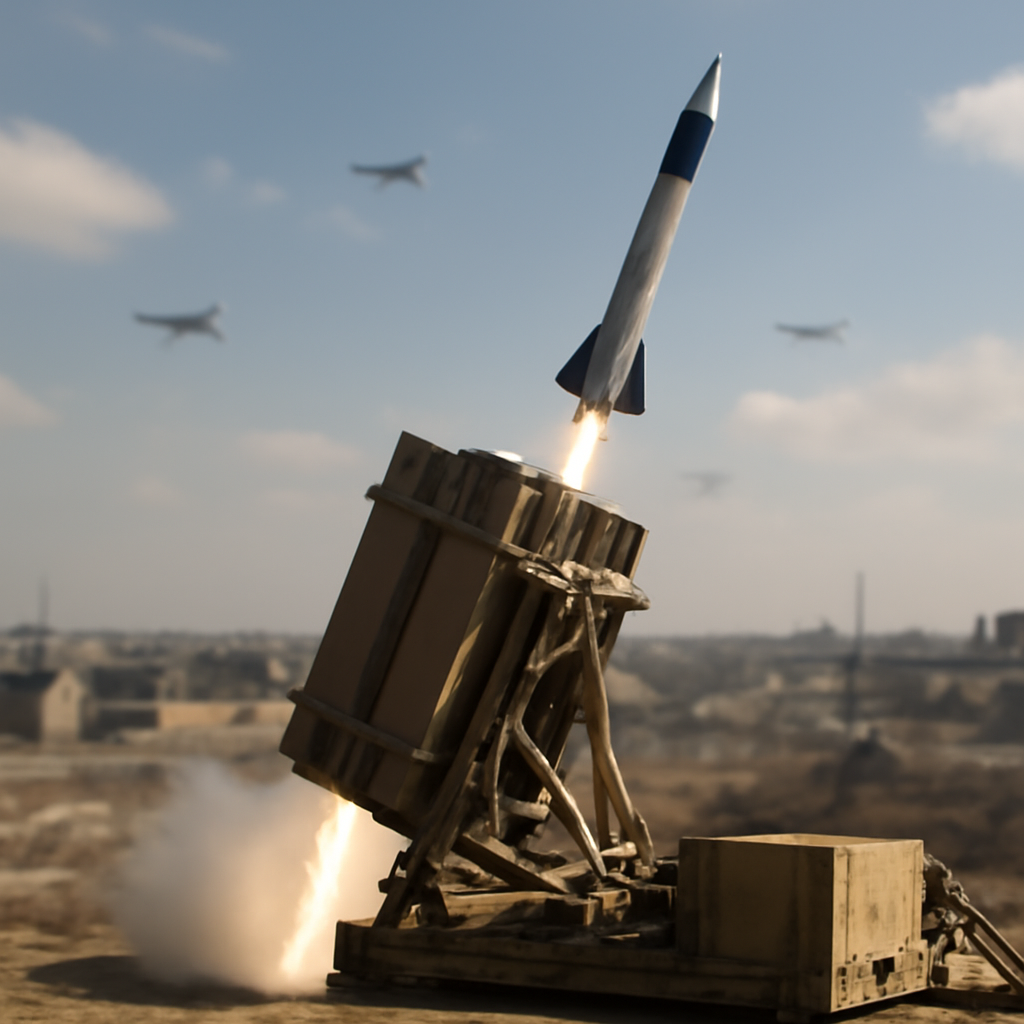
Powerus, a U.S. dronemaker based in Rock Hill, S.C., is positioning rocket‑ or jet‑propelled interceptors as its next product target. Velicovich said interceptors capable of flying at "600 kilometers per hour, 700 kilometers per hour" will require "a lot more automation" and "a lot more R&D." He declined to give a firm target date for a rocket‑ or jet‑powered interceptor but said the company intends to move quickly to meet what it views as an urgent operational need.

Audit-ready is a season. It shouldn't be.
Evidence in spreadsheets, controls drifting between audits, frameworks multiplying on flat headcount. Nubivance runs continuous compliance on Rapid7 Cyber GRC - SOC 2, HIPAA, ISO 27001, PCI, CMMC.
End the scrambleThe Guardian family: autonomy, scale, and production goals
Powerus introduced its fully autonomous interceptor, Guardian 3, at the Association of the U.S. Army’s annual conference in Washington. Guardian 3 joins a family that also includes the semiautonomous Guardian 2 and the remotely piloted Guardian 1. "Guardian 3 takes that final terminal phase of a manual operator out of the loop, and it is fully automated, similar to how you might fire a Patriot missile," Velicovich said, drawing a direct distinction between traditional air‑defense interceptors and the mass‑produced counter‑drone devices Powerus is pitching.
On scale, the company set near‑term production goals it described as ambitious: producing 5,000 interceptors per month by November, with "an ultimate goal of being able to deliver 10 times that." Velicovich framed the requirement for volume starkly: "We want to get to that point where it's just massive, massive scale because these things are a lot like artillery rounds, and we need to build them like artillery rounds." He argues mass production is essential because the upgraded Shaheds are inexpensive and can be fielded in large numbers.
Contracts, partnerships, and corporate posture
Powerus is about a year old, recently went public, and has former Pentagon and first Trump administration officials on its board. Earlier this year the Air Force selected Powerus in an $82 million deal for counterdrone systems that includes the Guardian family of interceptors. Internationally, Powerus has struck a deal with the Pakistan army for unmanned aerial systems; the terms were not specified in the reporting.
At the same conference where Guardian 3 debuted, Powerus signed a deal with Parsons to pair Parsons’s radar systems with Guardian interceptors to provide detection linked to interception. Velicovich described the integration of sensors and interceptors as part of a push to field automated, scalable counter‑drone defenses.
What this means for the Air Force, Ukrainian defenders, and manufacturers
- Air Force and other purchasing agencies: the service has already invested in Powerus through an $82 million counterdrone deal; the service and other buyers will be watching whether rocket‑ or jet‑powered interceptors can match the speed and cost constraints posed by jet Shaheds.
- Ukrainian defenders and cities such as Kyiv: Velicovich said he spends a lot of time in Ukraine and warned there is "a good chance that by the end of this year, the majority of Russian drones that are sent into downtown Kyiv will be jet‑powered," underscoring the compressed timeline for fielding higher‑speed interceptors.
- Manufacturers and industrial partners: Powerus has set production targets that rely on broader industrial capacity. Velicovich called for more companies with industrial scale to "turn these things out" and noted the economic pressure of countering drones that cost "$20,000‑$30,000" apiece and can be produced "in massive, massive quantities."
The central tension in the report is clear and concrete: defenders must close a speed, automation, and production gap against a class of low‑cost, fast, jet‑powered attack drones. Powerus has moved from remotely piloted systems to fully autonomous interceptors, won an $82 million Air Force award, signed a sensor partnership with Parsons, and set aggressive monthly production targets. Yet the company also acknowledges technical and industrial barriers—no target date for rocket‑ or jet‑propelled interceptors, and the challenge of making interceptors cost‑effective against $20,000–$30,000 adversary drones.
The immediate questions are operational and industrial: can new interceptors match jet Shahed speeds with sufficient automation, and can they be produced at the volumes Powerus and others say are necessary? Powerus’s timeline and its production pledges will be the concrete markers to watch as defenders attempt to keep pace with the evolving Shahed threat.