[SPONSOREDNUBIVANCE]
Know a small business winging it on security?
No IT department, no security budget, real exposure. Nubivance builds right-sized security foundations for small companies. Send them this.
Send it along
The EU has made a significant move to bolster Ukraine's defence capabilities, allocating the full €28.3 billion defence component for 2026, with a clear plan for equipment, suppliers, and implementation schedules. This development marks a major step forward in linking immediate defence needs with long-term industrial capacity to sustain production.

The Supreme Court has shut down Trump's bid to revamp mail ballot rules, with a 7-2 decision rejecting the administration's emergency petition as "arbitrary and capricious". This move effectively blocks changes to USPS mail-in ballot handling for the 2026 midterm elections.

The Mecca Joint Defense Agreement, signed by Pakistan, Saudi Arabia, and Turkey, bears an uncanny resemblance to the Cold War's failed Central Treaty Organization (CENTO), sparking concerns about its potential for success. Can this new pact overcome the shortcomings of its predecessor and deliver meaningful defense cooperation?

As the US sits out crucial talks on protecting civilians in combat, a pressing question lingers: are we ready to tackle this problem and make a real difference? The absence of the US from a NATO meeting in Brussels has left many wondering when those who care about mitigating civilian harm can come together to find a solution.

The Pentagon is ramping up its leak investigation tactics, using polygraph tests on dozens of military officers and civilian employees in a massive probe into press leaks about the Iran war and depleted US munitions. Roughly 50 personnel on the Joint Staff were subjected to the tests in August in an unprecedented move.

The Pentagon is gearing up to adjust its FY27 priorities due to funding uncertainty, with Comptroller Jules Hurst hinting that the department may revisit its requests with appropriators if the $350 billion reconciliation package isn't passed. This potential shift could impact high-priority programs like Golden Dome, munitions buys, and Defense Autonomy.

The FBI is taking a bold new approach to combating cyber threats, shifting from a reactive to an active disruption strategy that aims to proactively disrupt and impose costs on cyber adversaries. This move marks a significant departure from traditional law enforcement methods, embracing a more interventionist posture in cyberspace.

The FBI is taking a bold stance against cyber threat actors with its first-ever Cyber Strategy, aiming to disrupt and hold accountable those who target the US. By taking decisive action and investing in cutting-edge tools, the agency promises to stay one step ahead of cyber threats.
No IT department, no security budget, real exposure. Nubivance builds right-sized security foundations for small companies. Send them this.
Send it along
The US Treasury is cracking down on overseas scammers, sanctioning Chinese marketplace Xinbi Guarantee for facilitating over $24 billion in illicit transactions, and taking aim at two key service providers that helped it operate. This move is part of a broader effort to dismantle criminal enterprises that steal billions from American victims each year.

US lawmakers are calling on the Treasury Department to take action against Indian hack-for-hire groups that have been targeting American citizens and businesses for over 15 years. By adding these firms to the Entity List, they aim to restrict their access to US software, tools, and infrastructure.

President Donald Trump fired a fresh warning shot across Bombardier's bow, declaring on his Truth Social platform that the US should no longer sell the Canadian company's jets. This bold statement revives a contentious trade dispute that could impact US military aerial surveillance plans.
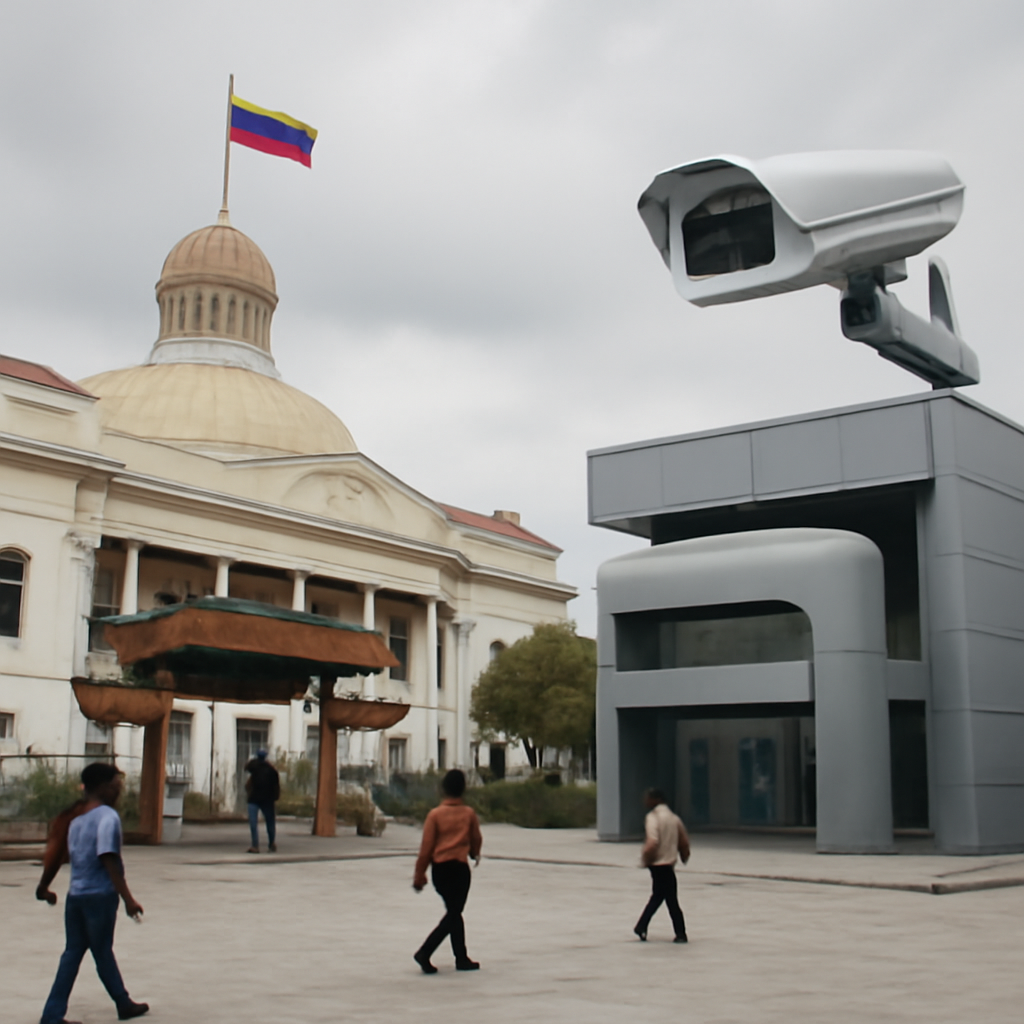
Venezuela is turning to China to upgrade its AI surveillance capabilities, with Vice President Delcy Rodriguez praising China's ability to provide AI for development, not domination. The country's existing surveillance infrastructure, built over two decades with significant Chinese tech support, includes a digital identity system, public-security cameras, and internet-control technology.

Poland and Canada are taking their defense partnership to the next level with a new pact that cements their commitment to joint exercises, military training, and stronger ties. The agreement was sealed by Poland's Minister of National Defence, Władysław Kosiniak-Kamysz, and his Canadian counterpart, David J. McGuinty, ahead of a major defense trade show.

Australia and Japan are forging a powerful model for middle-power cooperation, leveraging their combined economic, political, and security strengths to drive institution-building in the Indo-Pacific region. By championing principles like the rule of law, open markets, and freedom from coercion, these two leading democracies are setting a compelling example for others to follow.

Imagine a future that's already here, but only in glimpses - and discover how science fiction can help policymakers and analysts better prepare for what's to come. By challenging traditional predictive methods, science fiction offers a powerful tool to widen our aperture and anticipate the uneven arrival of future challenges.

As the UN General Assembly convenes, a pressing question looms: will institutions like the UN assert their authority to interpret their own rules, or will external forces dictate the terms? The fate of Taiwan's status hangs in the balance, tied to the interpretation of Resolution 2758.
Evidence in spreadsheets, controls drifting between audits, frameworks multiplying on flat headcount. Nubivance runs continuous compliance on Rapid7 Cyber GRC - SOC 2, HIPAA, ISO 27001, PCI, CMMC.
End the scramble
Rep. Rosa DeLauro slammed the Pentagon for a secretive attempt to divert NIH funds meant for lifesaving medical research, sparking a heated debate over the true intentions behind the proposed interagency agreement. The disputed deal would have transferred NIH dollars to the Defense Department, but ultimately no funds were transferred.

The European Parliament is cracking down on Serbia's alleged use of spyware, with 29 MEPs slamming it as a "direct state attack on democracy". They've called out the Serbian government for infecting phones of student activists with spyware, including evidence pointing to government involvement in NoviSpy infections.

President Trump has announced that Adam Telle will take the reins as acting Secretary of the Army, effective immediately, praising him as a "Great Patriot, who is respected by all". This move comes as the Army is navigating a period of significant transformation and modernization efforts.

Congress is racing against the clock to secure funding for the E-7 Wedgetail program after the Trump administration's surprise move to save it from the chopping block. With the program's future now in their hands, lawmakers are turning to budget amendments to keep the critical early-warning aircraft program flying high.

Federal health agencies are revolutionizing their approach to IT success, shifting focus from mere deliverables to real-life outcomes that make a tangible difference to citizens. By setting mission-aligned metrics, they're now measuring success by the problems solved and lives improved.

With China's Communist Party's national congress just over a year away, all eyes are on Xi Jinping as China watchers refresh their knowledge on the country's enigmatic leader. This pivotal event, held every five years, sets the stage for a major power transition in China.

US commercial space firms are rethinking their attendance at an international summit in France after being warned that it could be used to promote policies that undermine US interests. The cautionary message, delivered by a White House official, has sent ripples through Washington and Europe.

Get ready for a game-changer in cybersecurity: the Pentagon is set to unveil its new cyber strategy, promising to make the US the most capable, lethal, and agile cyber force on the planet. The highly anticipated plan, crafted by Katie Sutton's office, will outline a bold vision for integrating cyber capabilities, outsmarting adversaries, and reorganizing the cyber force.