"is unlikely to succeed on the merits of its challenge to the District Court’s preliminary injunction," Justice Kentaji Brown Jackson wrote, rejecting the Trump administration’s bid to implement changes to how the U.S. Postal Service handles mail-in ballots for the 2026 midterm elections.
The Supreme Court's 7-2 decision and its immediate effect
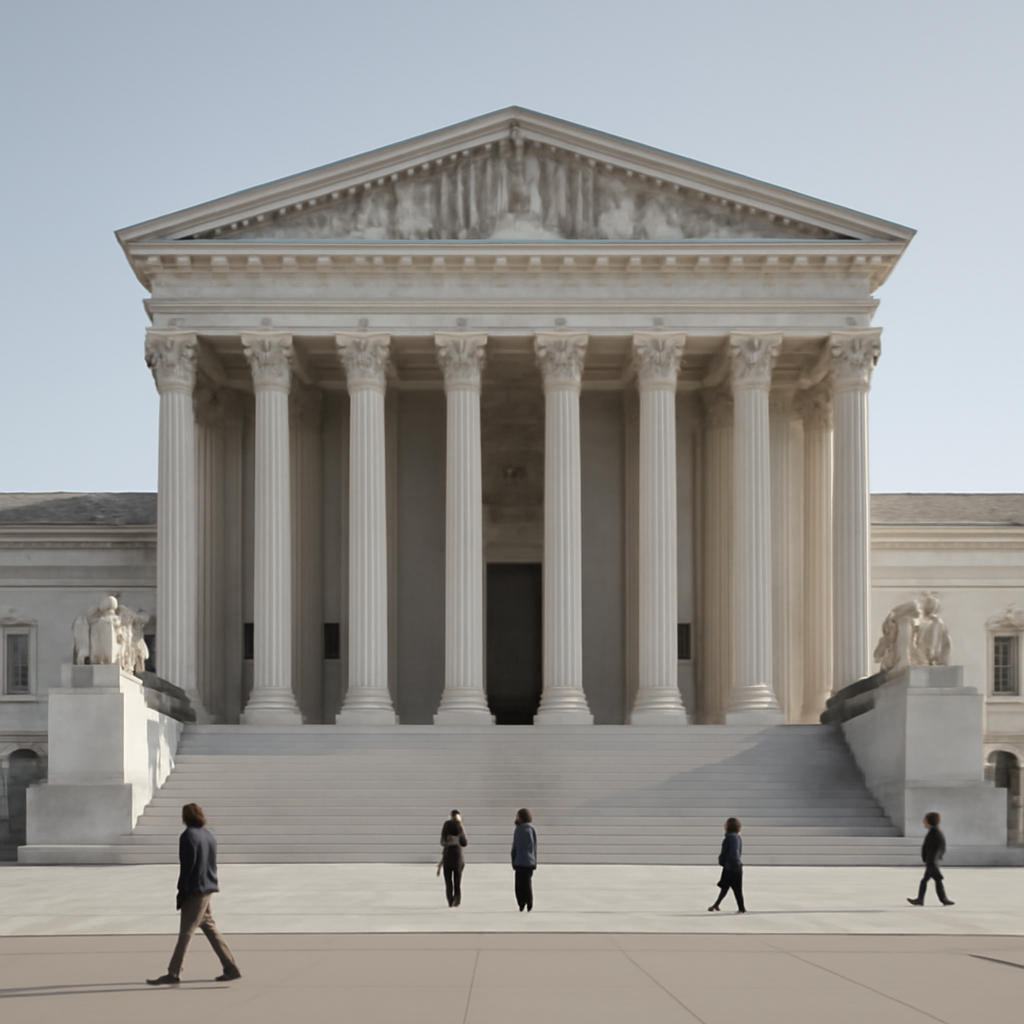
The Supreme Court on Monday issued a 7-2 decision denying the administration’s emergency petition to allow a new USPS regulation to take effect for the 2026 elections, calling the request “arbitrary and capricious.” The court offered little explanation in the majority opinion, but Justice Kentaji Brown Jackson wrote that the administration “is unlikely to succeed on the merits of its challenge to the District Court’s preliminary injunction” and had failed to show a valid reason for emergency relief. The decision, in practical terms, left in place the lower-court orders that had previously blocked the executive order and related USPS actions from being implemented before November.
Justice Brett Kavanaugh’s concurrence
Justice Brett Kavanaugh issued a separate concurrence. He said he believed there was “a fair prospect” that the final USPS final regulation would be within the government’s legal authority, but he focused his rationale on timing. Kavanaugh wrote that “applying the rule in the 2026 elections would be arbitrary and capricious and in violation of the Administrative Procedures Act because state and local election officials do not have sufficient time to reasonably implement the rule before the elections.” In other words, his denial of the stay rested not primarily on the substance of the rule but on the compressed timeline facing election officials.

Audit-ready is a season. It shouldn't be.
Evidence in spreadsheets, controls drifting between audits, frameworks multiplying on flat headcount. Nubivance runs continuous compliance on Rapid7 Cyber GRC - SOC 2, HIPAA, ISO 27001, PCI, CMMC.
End the scrambleJustice Samuel Alito’s dissent, signed by Justice Clarence Thomas
Justice Samuel Alito wrote a dissent exceeding seven pages and was joined by Justice Clarence Thomas. Alito said he would have granted the administration’s request for a stay, allowing the order to be implemented in time for the 2026 elections. He wrote that the states and organizations suing the government lacked standing and dismissed their concerns that implementing the USPS order ahead of the 2026 elections would impede voter education about mail-in voting, calling those concerns “abstract social interests.”
The executive order, the USPS rule, and the whistleblower allegation
The executive order at issue would have required the U.S. Postal Service to verify voter citizenship and validate ballot materials, and would have created a barcode tracking system for mail ballot envelopes and “State Citizenship Lists” compiled by the Department of Homeland Security. The White House defended the order by asserting the federal government has “an unavoidable duty” under Article II to maintain confidence in election outcomes by preventing violations of criminal law, including noncitizen voting.
As the administration pursued relief in the courts, it finalized the USPS rule. Separately, a whistleblower complaint alleged that a “rushed” effort by the White House and the U.S. Postal Service sought to install three new restrictive IT systems intended to verify citizenship — systems the complaint said could potentially deny thousands of mail-in ballots if the federal government and a state disagreed about a voter or a ballot’s eligibility.
How the White House, states, and voters are positioned
- The White House and the administration: Continued to assert a federal duty under Article II and moved ahead with finalizing the USPS rule even while litigation proceeded; the Supreme Court petition was described as the administration’s “best and final hope for judicial relief.”
- States and voting rights organizations: Challenged the executive order, arguing the executive branch lacked constitutional authority to dictate how states maintain voter rolls; lower courts had blocked the order from taking effect before November.
- Voters and election officials: Faced potential disruption had the rule been imposed on short notice — a concern explicitly cited by Justice Kavanaugh and echoed by outside observers who warned of chaotic implementation if changes were forced in the months leading up to balloting.
Outside of the courtroom, David Becker, executive director of the nonprofit Center for Election Integrity and Research, told reporters he doubted members of the Supreme Court majority “want to own the chaos that would ensure” as USPS, states and voters tried to navigate late changes, and he noted past Supreme Court decisions have tended to recognize state authority in election administration: “When they consider issues related to the administration of elections, the casting and counting of ballots, they have sided with the states every time,” Becker said.
The court’s denial does not resolve the underlying disputes about federal authority to validate voter eligibility, the legality of the new USPS rule, or the whistleblower’s allegations about rushed IT systems. For now, the lower-court injunctions that prevented the executive order and its implementing steps from taking effect before November remain in place, and further litigation and administrative action are the next steps to watch.