




Your town's IT department is one person. Maybe.
Ransomware crews target small municipalities because nobody's watching. Nubivance gives Maine and New Hampshire towns a security program sized to a town budget.
Protect the town office

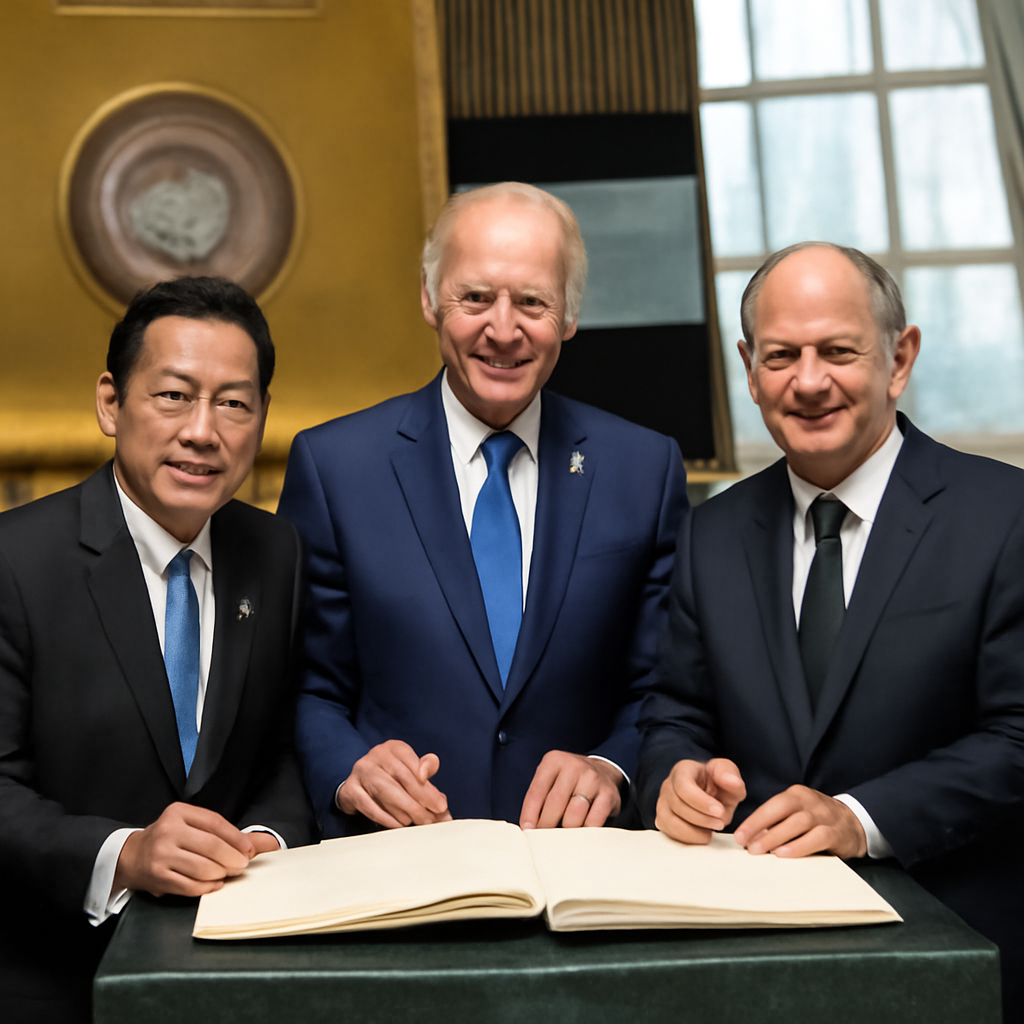
In a move with far-reaching implications, Saudi Arabia, Pakistan, and Turkey have inked the Mecca Joint Deterrence Agreement, pledging to consider an attack on any one of them as an attack on all three. This bold pact, signed by the leaders of the three nations, cements their unity and shared commitment to strategic interests.

The Mecca Joint Defence Agreement brings together Pakistan, Saudi Arabia, and Türkiye in a groundbreaking pact, but can it live up to its promise of regional security - or will it fall prey to the same pitfalls as its historical predecessors? The answer lies in the logistics, industry, and political will of its signatories.

The US has just given private cyber firms the green light to take bold action against foreign adversaries, allowing them to manipulate, degrade, disrupt, and even destroy malicious computer networks. This game-changing move marks a new era in cybersecurity, where private companies can play a key role in defending the nation's digital interests.

The US government has taken a bold step in the fight against cybercrime, enlisting the help of the private sector to tackle transnational criminal organizations in a newly signed presidential memorandum. This move has sparked reactions ranging from cautious optimism to alarm, as experts weigh the potential benefits and risks of this unprecedented collaboration.

President Trump just signed a game-changing memo that lets private cyber firms join forces with the government to take down transnational cybercrime gangs. This bold move aims to harness the power of the private sector to supercharge the fight against online crime.

The Pentagon has just awarded Palantir $244M in no-bid contracts, further solidifying the company's role in boosting efficiency within the defense industrial base with its software. Deputy Defense Secretary Steve Feinberg has directed DOD departments to explore even more ways to utilize Palantir's products through 2028.

The US has taken a bold step in the fight against cybercrime, granting private firms the authority to hack foreign cybercrime groups in a bid to combat the staggering $20.8 billion lost by US consumers to cyber-enabled crime in 2025. This new power, enabled by a presidential memorandum, allows private security companies to apply for approval to conduct cyber operations against these malicious organizations.

The White House is taking a bold stance against transnational cyber threats, authorizing the private sector to join forces with federal law enforcement on offensive cyber strikes to disrupt foreign cyber actors targeting the US. This new public-private program unlocks every available tool to protect Americans from cyber-enabled crime.

Ransomware crews target small municipalities because nobody's watching. Nubivance gives Maine and New Hampshire towns a security program sized to a town budget.
Protect the town office

New Prime Minister Andy Burnham is hitting the ground running, affirming Britain's commitment to AUKUS and hosting Ukraine's President Volodymyr Zelensky as his first international visitor, a move that signals continuity on defence and diplomacy. By doing so, Burnham is framing global issues as inextricably linked to domestic concerns, setting the tone for a joined-up approach to governance.

The Pentagon is shaking things up by asking defense company boards to come in for in-person briefings, a highly unusual move that's got industry insiders talking. Deputy Defense Secretary Stephen Feinberg's request has raised eyebrows, as top executives typically handle these conversations, not entire boards.

A federal judge has once again blocked President Trump's executive order on mail-in voting, reaffirming that the executive branch has no authority to regulate elections. Judge Indira Talwani issued a second injunction, providing clarity for the millions of citizens who rely on mail voting ahead of the midterms.

Australia is being urged to join the Defence Security Bank, a proposed multilateral lender that will boost allied defence capabilities by mobilising private finance for defence manufacturers and their suppliers. By backing the bank, Australia can help strengthen its own defence industry and play a key role in supporting global security.

The UN's quiet absence from major diplomatic crises has become the new norm, leaving a void that's being filled by unexpected regional players like Oman, Qatar, Turkey, and Pakistan, who are stepping up to mediate global conflicts. They're proving to be surprisingly effective, with Oman acting as a trusted backchannel between the US and Iran, and Qatar brokering high-stakes talks between the US and the Taliban.

The US military's Golden Dome program is staring down a funding crisis, with development potentially grinding to a halt as early as October if Congress doesn't step in with extra cash. Without swift action from lawmakers, the program's future is uncertain.

The government's sudden halt of a voting system security review has left experts stunned, with the CEO of Mojave Research, Jason Wareham, calling it one of the worst decisions of his life. The six-week federal engagement, which had grown to involve around 60 people, was abruptly shut down just as the team was set to press forward.

In 1978, Deng Xiaoping's groundbreaking "reform and opening" of China's economy sparked hopes for gradual political liberalization, but Minxin Pei argues that Deng's true intention was to preserve the Communist Party's grip on power, not pave the way for democracy.

Evidence in spreadsheets, controls drifting between audits, frameworks multiplying on flat headcount. Nubivance runs continuous compliance on Rapid7 Cyber GRC - SOC 2, HIPAA, ISO 27001, PCI, CMMC.
End the scramble
Congress is reworking the FY27 defense budget, taking a cautious approach by endorsing a $1.1 trillion topline while rejecting the administration's request to funnel $350 billion through reconciliation, a move Senator Susan Collins warned posed a "terrible risk". This pivotal decision comes as lawmakers navigate the complexities of defense funding with the fiscal year just around the corner.

The Mecca Joint Defense Agreement marks a significant shift in regional dynamics, as Pakistan, Saudi Arabia, and Türkiye unite under a collective-defense clause that could redefine the rules of engagement in West Asia. This bold move challenges US influence, signaling that traditional power players are no longer the only game in town.

The US Air Force's secure network is hindered by sluggish procurement timelines, with the Government Accountability Office finding that major federal acquisitions can take years to complete, stifling efforts to modernize connectivity and keep pace with rapidly evolving technologies and mission demands. It's a contracting conundrum that's causing friction, with one expert noting that the speed of acquisition simply isn't keeping up with mission requirements.

The US Treasury Department has cracked down on crypto sanctions, targeting Shelbit, a shadowy crypto conduit, and its founder Siavash Kayvanpour in a $6bn blow to Iran's financial apparatus. This move underscores the Treasury's determination to disrupt Tehran's reliance on digital assets and secret banking networks.

In a historic move, Pakistan, Saudi Arabia, and Türkiye have joined forces to sign a groundbreaking trilateral defence pact, committing to mutual defence in the face of armed attacks. The Makkah Joint Defence Agreement marks a major milestone in regional cooperation, with leaders hailing it as a shield of peace for generations to come.

Vietnam's top leader, To Lam, is in Australia for a strategic state visit, seeking to supercharge his nation's growth by diversifying partnerships and unlocking new opportunities for trade and investment. He's on a mission to turn friendly ties into tangible benefits, leveraging Australia's strengths to fuel Vietnam's economic transformation.

The Senate has just approved a stopgap funding bill, passing it with a strong bipartisan vote of 90-6-1 to keep federal agencies funded until December 11. This temporary measure averts an immediate shutdown risk, but sets a new deadline for September showdowns.

The Senate has finally confirmed key leaders for the Pentagon, Space Force, and National Reconnaissance Office, including Jules "Jay" Hurst as Pentagon comptroller, ending an 18-month wait and setting the stage for critical budget decisions. With a narrow 51-47 vote, Hurst and 74 other nominees, including Erich Hernandez-Baquero and Roger Mason, are now cleared to take on their new roles.