“Canada’s presence as an exhibitor, a country showcasing its capabilities, skills, and companies, but also a country that wants to purchase Polish military equipment, demonstrates how our position on the international stage has changed in recent months and years,” Władysław Kosiniak-Kamysz said in a statement.
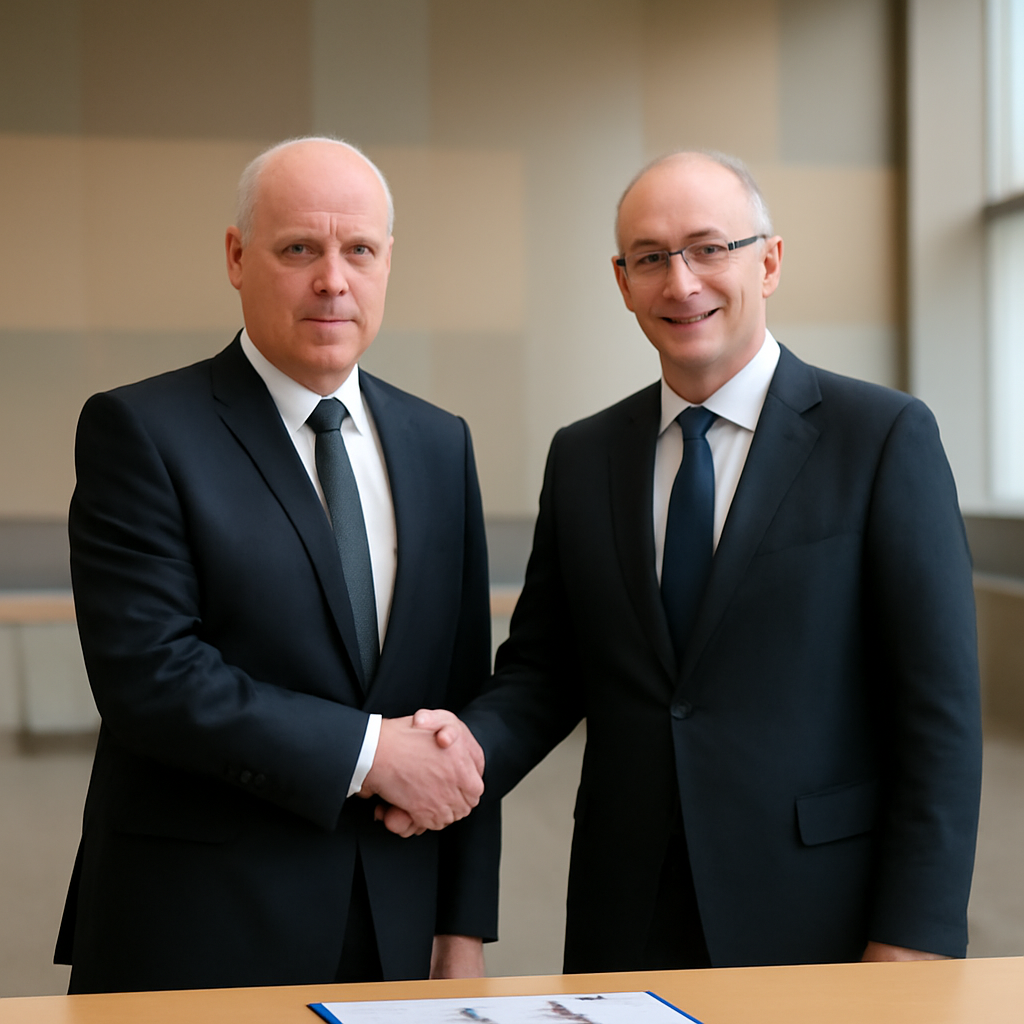
Władysław Kosiniak-Kamysz and David J. McGuinty sign Memorandum of Understanding
On Monday in Kielce, Poland’s Minister of National Defence Władysław Kosiniak-Kamysz and his Canadian counterpart David J. McGuinty signed a Memorandum of Understanding designed to deepen bilateral defence cooperation. The signing took place ahead of the MSPO trade show, scheduled for Sept. 8–11, and frames cooperation around joint exercises, military training and closer ties between the two countries’ local defence industries.
Training emphasis: Arctic drills and NATO deployments
Kosiniak-Kamysz said Polish soldiers will travel to Canada to take part in Arctic drills, describing the arrangement succinctly: “We will learn, cooperate, and exercise together.” He also pointed to existing interoperability and presence in the Baltic region, citing Canada’s deployment of an estimated 2,000 personnel in Latvia and noting that “the Polish contingent is also present there as one of the leading contingents securing the [NATO] Alliance’s eastern flank.” The MoU anchors those training links and signals a ramp-up in bilateral personnel exchanges.

The cyber insurance questionnaire just landed. Now what?
SOC 2, HIPAA, insurance renewals - someone has to own security strategy. Nubivance provides fractional CISO leadership without the full-time salary.
Get a security leadDrone package to be finalized: FlyeEye, Warmate and Gladius
Alongside the training agreement, Kosiniak-Kamysz said both countries would finalize a drone deal “today.” The package reportedly centers on platforms produced by WB Group, specifically FlyeEye mini-drones, Warmate loitering munitions and Gladius strike and reconnaissance aircraft. Kosiniak-Kamysz framed the planned acquisition as proof of shifting roles: the deal “shows that Poland is moving from a country that purchased defense equipment worldwide to [now being] a producer as well.”
Canada as MSPO lead partner and industrial presence
Canada is the lead partner nation of MSPO in Kielce and, according to show organizers, is represented by nearly 200 local companies spanning aerospace and space, artificial intelligence, cybersecurity, and land and maritime systems. Kosiniak-Kamysz’s remarks and the breadth of Canadian exhibitors underline a two-way relationship at the exhibition floor: Canadian firms are showcasing capabilities while also signalling interest in purchasing Polish equipment.
What this means for Polish and Canadian defence industries, soldiers, and procurement officials
- Polish and Canadian defence industries: The MoU plus the pending WB Group sale creates new commercial pathways. Polish producers are positioned to move from buyer to exporter, and Canadian exhibitors at MSPO are signaling both market opportunities and industrial partnerships.
- Soldiers and training planners: Planned Arctic exercises send Polish troops to Canadian environments, while existing deployments — including Canada’s estimated 2,000-personnel presence in Latvia and Poland’s role among leading contingents on NATO’s eastern flank — point to expanding joint training and operational interoperability.
- Procurement officials: The simultaneous commercial activity at MSPO and the declared intent to finalize the WB Group package foreground procurement choices tied closely to industrial cooperation and to political commitments made in Kielce.
The Polish–Canadian move in Kielce sits atop a prior political and financial thread: in May, the two sides signed a Letter of Intent to leverage the European Union’s Security Action for Europe (SAFE) loan mechanism. SAFE, a €150 billion (174 billion) facility, is described as designed to increase the production capacity of the European defence industry as the continent attempts a large-scale rearmament process in the face of Russian aggression and tries to lessen its dependence on US weapon systems. The MoU and the expected drone deal are tangible, near-term steps within that broader effort.
Taken together, the agreements signed in Kielce map a constellation of activity: exhibition halls full of potential partners, joint training on cold-weather operations, deployments already contributing to NATO deterrence posture, and a manufacturer’s product line poised for export. The immediate question now is execution — whether the drone package will be finalized as planned and how rapidly the training exchanges and industry linkages signed into a memorandum will translate into lasting, interoperable capability.