"It turns out that raw scale—more compute and more data—drives capabilities far more powerfully than complex algorithmic inventions or hand-crafted architectural changes," Dario Amodei said — a sentence the new White House tech strategy effectively endorses by putting foundation models at the center of its AI priorities.
Priority areas: undersea, space, AI and autonomy
The strategy names three explicit priority areas for military research and spending: undersea, space, and AI and autonomy. It explicitly ties those priorities to "deterrence in the Indo-Pacific" and singles out "multi-agent systems and swarm intelligence" and a range of autonomy applications — from robotics to command and control — as "critical." The emphasis signals a push toward distributed, technology-driven approaches to fighting and deterring in contested theaters.
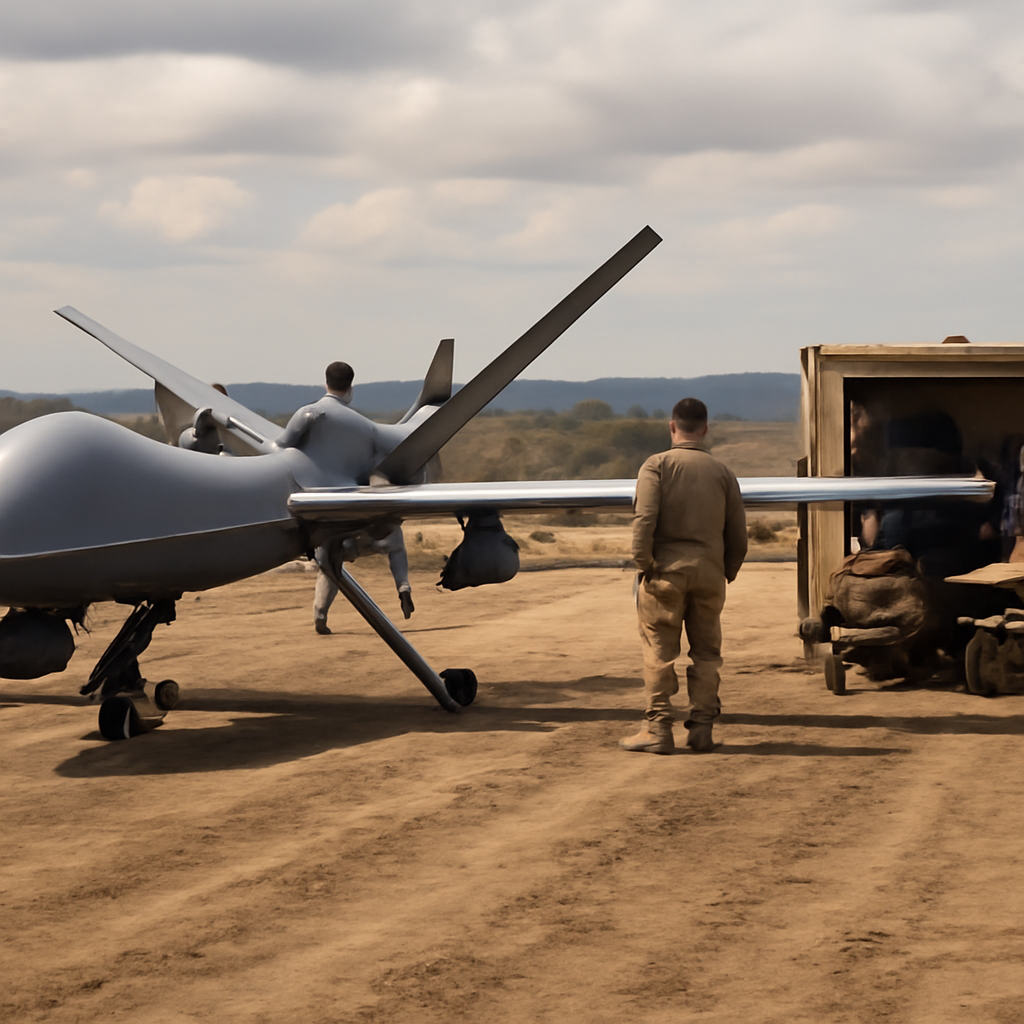
But the document also highlights previous shortfalls. The Replicator program, a pathfinder for fielding autonomous aircraft and similar systems, is cited not as a completed success but as underfunded — receiving only $1 billion in funding — underscoring the gap between rhetoric about large numbers of low-cost platforms and the budget realities that have constrained them.
Swarms, faster buying, and a broader market for small defense firms
The strategy moves beyond describing new concepts and toward reshaping how the government buys and sells them. It directs Pentagon buyers to favor a "mix" of contract types — including performance-based contracts and other transaction authorities (OTAs) — and to adopt "faster non-traditional approaches that may involve higher risk but offer high potential reward." That language aligns with long-standing pressures from commanders, younger defense tech leaders, and some lawmakers for speed and experimentation.
It also seeks to expand markets for emerging defense companies by reexamining foreign military sales rules and export controls that have limited early-stage firms' ability to sell to allies. The strategy asks other federal agencies to create "streamlined pathways" for small companies to gain access to federal infrastructure through mechanisms such as Cooperative Research and Development Agreements (CRADAs) and Agreements for Commercializing Technology (ACTs).

This site is the portfolio.
OSINTSights runs on Cloudflare Workers, D1, R2, and Vectorize, with an AI pipeline on Hetzner ARM. Nubivance designed, built, and operates it. We do the same for clients.
See what we buildFoundation models prioritized; open-weight models omitted
Where the strategy chooses winners, it is explicit: the list of "critical technologies for support" includes "Foundation models, including large language, multimodal, and world systems." It makes no mention of open-weight models or open-source model development — approaches that use freely available model parameters and alternative, more energy-efficient architectures.
The distinction matters. The strategy's framing leans toward an AI future driven by very large, compute-heavy models backed by major cloud providers — the approach Amodei described as driven by "raw scale." The source notes that a small number of frontier AI labs and their large cloud compute backers are in a literal race for scarce compute resources and chips, concentrating capability among a few players and their infrastructure partners.
That concentration has political and public-opinion consequences: "just 18 percent of Americans believe it will be a positive force for the United States, one new poll found." Michael Schiffer, partner at Scalare Advisors and former Deputy Assistant Secretary of Defense for East Asia, argues the strategy’s omission of open-weight AI is "a huge oversight and a potential gift to China."
Operational realities: compute, connectivity, and battlefield strain
The strategy’s preference for large, centralized models creates operational tensions. Troops and units "in the field can’t count on the connectivity that tools based on large models need," the source warns. Jake Steckler, in a Carnegie Endowment for International Peace report, is cited describing Ukraine’s computational architecture — Western cloud access, domestic data centers, and forward-deployed compute nodes — as "already straining as it integrates more AI into targeting and coordination."
That strain highlights a practical mismatch: models that excel with vast cloud compute and data may perform well in labs, but their requirements can make them brittle or unusable in contested, bandwidth-constrained environments where distributed, energy-efficient approaches could be more resilient.
How younger defense tech companies, Pentagon buyers, and frontier AI labs will respond
- Younger defense tech companies and entrepreneurs: The strategy expands pathways to federal infrastructure and export markets via CRADAs, ACTs, and export-rule changes — moves that could improve early-stage firms' access to customers and capital if implemented.
- Pentagon buyers and commanders: They are being encouraged to adopt non-traditional contracting (OTAs, performance-based contracts) and accept higher program risk in exchange for faster fielding — a policy reset intended to loosen procurement bottlenecks that previously constrained programs like Replicator.
- Frontier AI labs and large cloud providers: By prioritizing foundation models and the scale-oriented approach to AI, the strategy effectively underwrites the path preferred by those labs and their cloud partners, reinforcing a compute-and-data competitive model even as alternative, open-weight approaches gain traction among researchers.
The strategy is consequential because it does two things at once: it pushes the military toward more distributed, attritable platforms and faster buying authorities while anchoring the U.S. AI approach to a scale-intensive model that sidelines open-weight and energy-efficient alternatives. As Michael Schiffer put it in the source: China’s advances in open-weight AI "have exposed the limits of a U.S. strategy built too heavily on the idea of denying them access to American technology and American markets." Whether the policy's procurement reforms and export adjustments will offset the strategic risks Schiffer identifies — and whether the Pentagon will be able to field the kinds of resilient, low-connectivity AI systems commanders need — remains the immediate test the strategy sets.