“reducing equipment weight by 130,000 pounds per platoon.” That figure, offered in GA‑ASI’s description of its modernized ground systems, signals the company’s pitch: lighter, simpler logistics and longer endurance can be decisive when access to runways, ports, and intact supply chains is uncertain.
Mojave STOL: expeditionary access and runway independence
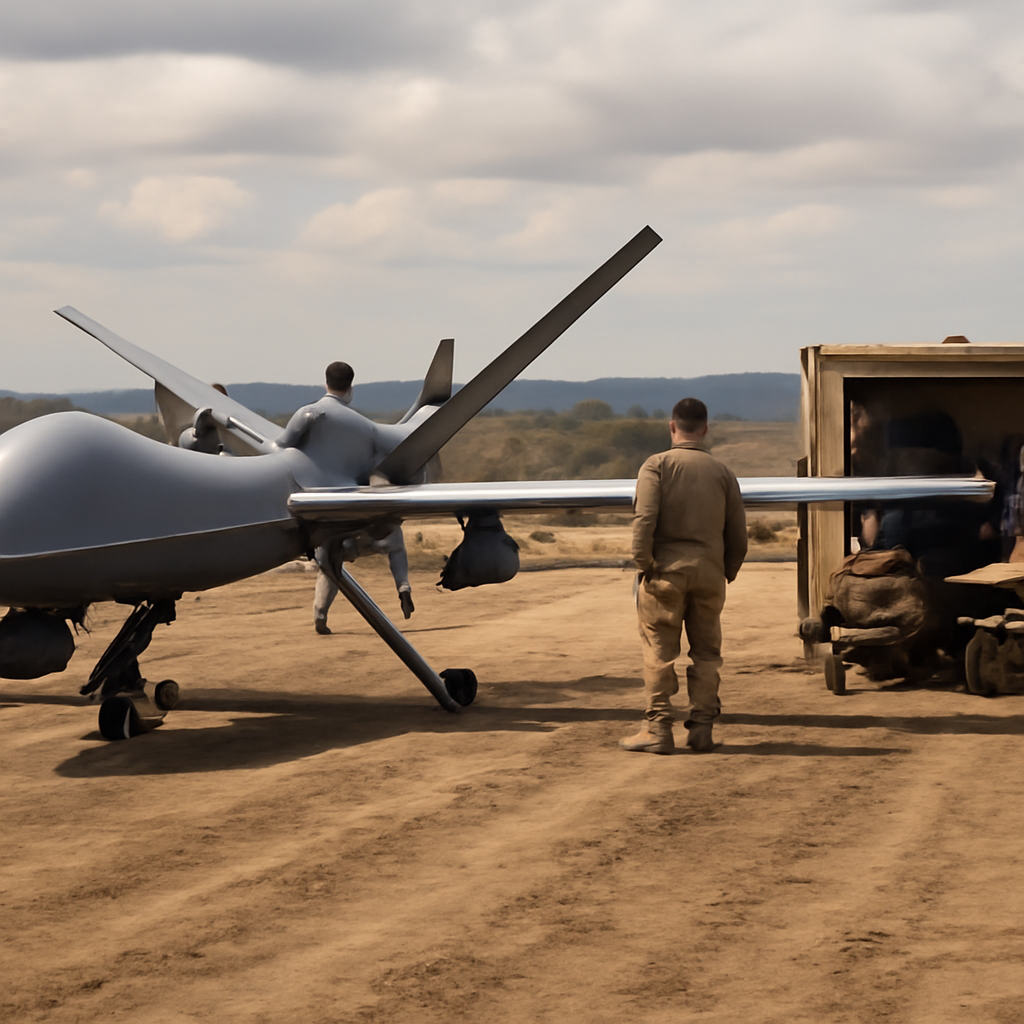
Mojave Short Takeoff and Landing (STOL) is presented as a purpose-built answer to operations “where runways are undesirable, unavailable, damaged, or vulnerable.” The design emphasizes runway independence: the aircraft can operate from unimproved surfaces such as roads and dirt tracks and can launch from amphibious vessels. That mobility, GA‑ASI argues, lets commanders put aviation closer to distributed forces, take on fuel and munitions at austere locations, and “return to the fight” without relying on airfield infrastructure.
GA‑ASI positions Mojave STOL as a pragmatic, lower‑complexity complement to high‑cost electric and vertical‑lift concepts. The company points to the platform’s “straightforward, time‑tested aircraft” design, an established production and sustainment philosophy, and the ability to provide “overwhelming mass at the right time and place” while retaining key sensor and payload capabilities. The aircraft can also operate from smaller naval vessels, creating potential applications for maritime, contested logistics, and special operations missions.
Gray Eagle® 25M: endurance, sensing, and contested‑environment design
Gray Eagle 25M is described as an extensively modernized version of the MQ‑1C Gray Eagle, configured for long‑endurance missions in complex threat environments. GA‑ASI frames its roles around persistent, real‑time threat detection and identification, plus support for long‑range targeting operations. Key improvements include the EagleEye® multi‑mode radar, which the company says provides “substantially greater range” — an increase of up to five times compared with legacy systems.
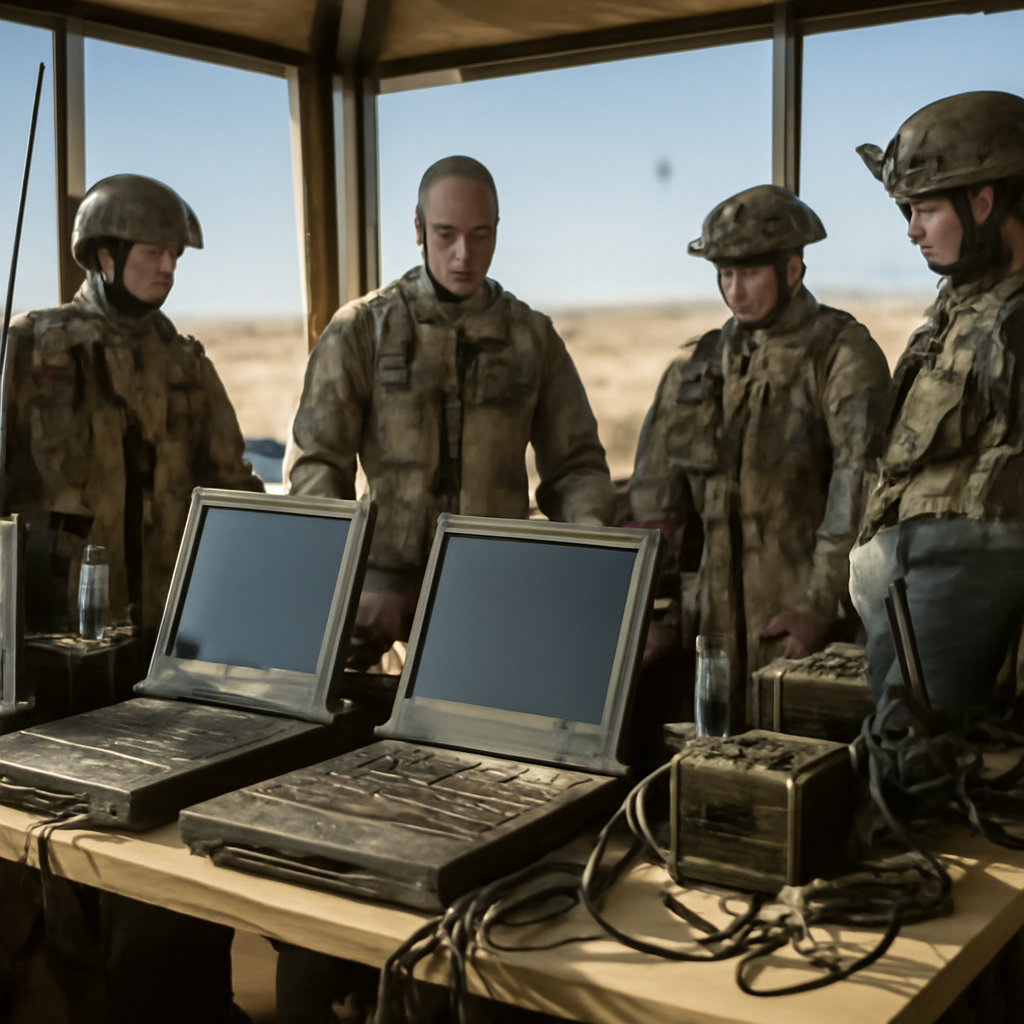
The platform pairs sensor advances with powerplant and sustainment upgrades. A new turbo‑diesel Heavy Fuel Engine (HFE) 2.0 and an expeditionary, laptop‑based ground control station and ground support equipment are central changes. The portable ground control approach eliminates the need for large, containerized GCS satellite systems, transport vehicles, and traditional ground support gear, a change GA‑ASI quantifies as a 130,000‑pound equipment weight reduction per platoon. Those shifts are also linked to decreased field service representative and soldier workload, longer maintenance‑free operational periods, and an asserted sustainment cost savings of roughly $200 million annually.

This site is the portfolio.
OSINTSights runs on Cloudflare Workers, D1, R2, and Vectorize, with an AI pipeline on Hetzner ARM. Nubivance designed, built, and operates it. We do the same for clients.
See what we buildModular Open Systems Approach (MOSA) and upgradeability
Both platforms are built, GA‑ASI says, to evolve. Gray Eagle 25M is explicitly organized around a Modular Open Systems Approach (MOSA) architecture. GA‑ASI presents MOSA as a way to use defined interfaces and modular components “to help integrate new technologies more quickly and affordably,” reducing time and cost for future upgrades. Mojave STOL is likewise described as accommodating expanded payload options, including electronic warfare systems and air‑launched effects. Taken together, the open architectures are meant to keep the platforms relevant across a spectrum of operations, from peacetime missions to large‑scale combat operations.
Manufacturing scale: Hanwha Aerospace collaboration and existing capacity
To support scaled production, GA‑ASI points to manufacturing and engineering investments and a collaboration with Hanwha Aerospace that is “expanding production facilities and research and development activities.” The partnership, the company says, is aimed at advancing Mojave STOL’s capabilities while supporting more affordable production so “the Army will not necessarily have to choose between capability and mass.” GA‑ASI also notes its “millions of square feet of manufacturing infrastructure, skilled in‑house workforce, and available capacity” as reasons it can begin building and delivering aircraft today.
GA‑ASI invited visitors to Booth 6619 at the Association of the United States Army’s Annual Meeting and Exposition to discuss how the systems are prepared to support Army operations in high‑threat environments and adapt to future challenges.
What this means for the Army, naval forces, and procurement leaders
- The Army: Mojave STOL offers runway‑independent aviation to operate closer to distributed forces and, GA‑ASI argues, to enable “overwhelming mass” with simpler sustainment; Gray Eagle 25M aims to supply long‑range sensing and persistent awareness for contested‑environment decision‑making.
- Naval forces and special operations: Mojave’s ability to operate from smaller naval vessels is presented as creating “potential applications for maritime, contested logistics, and special operations missions.”
- Procurement and sustainment leaders: The laptop‑based ground control approach, MOSA architecture, factory capacity, and the Hanwha collaboration are framed as lower‑cost paths to scale, with GA‑ASI citing roughly $200 million in annual sustainment savings and a 130,000‑pound per‑platoon equipment reduction as concrete metrics.
GA‑ASI’s message is consistent: pair a rugged, straightforward STOL platform with a modernized, long‑endurance unmanned system to cover both expeditionary access and contested‑environment sensing. The company pitches Mojave STOL and Gray Eagle 25M as complementary tools — one to bring aviation closer to the fight from austere locations, the other to keep commanders persistently aware across long distances — and says its manufacturing investments and partnerships make rapid, scalable delivery feasible. For decision‑makers weighing access, endurance, and sustainment, the figures GA‑ASI offers — 130,000 pounds of equipment reduction and about $200 million in annual sustainment savings — are the specific claims that will shape further scrutiny and procurement debate.