“The U.S. has probably used between one-half and two-thirds of its inventory of certain interceptors since June 2025, spanning both conflicts; rebuilding those inventories would probably take at least five years,” the Congressional Budget Office reported today.
Congressional Budget Office: $38.1 billion to date and $2–3 billion per month going forward
The CBO concluded that combat operations in Iran have cost the Department of Defense roughly $38 billion as of Aug. 1, 2026, with the agency’s formal estimate listed as $38.1 billion. The report projects continuing monthly costs of roughly $2 billion at “the level of violence seen in May and June” and as much as $3 billion at July’s level of intensity. It cautions that monthly costs would rise if the conflict intensified or if the DoD used additional expensive munitions.
Munitions bill: $21.7 billion to replace expended interceptors, cruise missiles, and other rounds
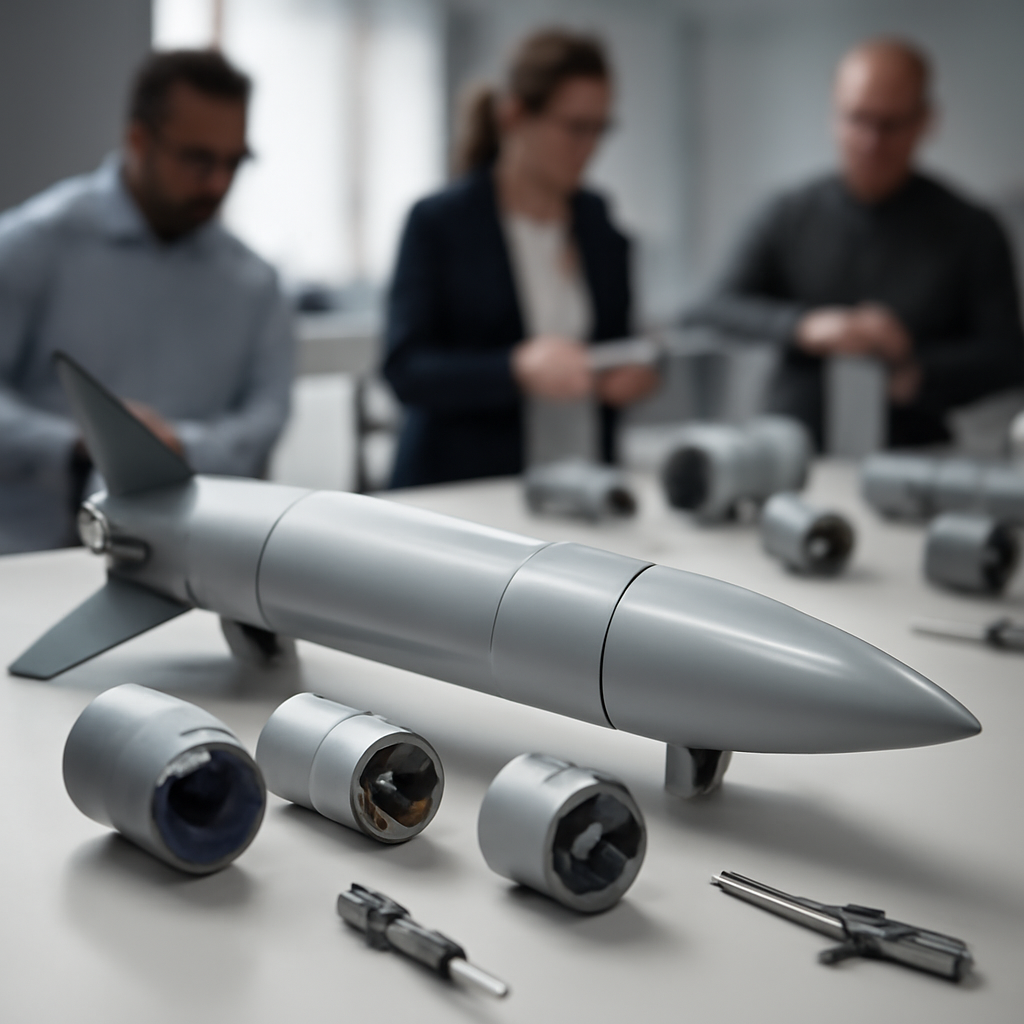
Munitions account for the largest single portion of the CBO’s tally — an estimated $21.7 billion to replace expended rounds. The report breaks that total down into $13.1 billion for interceptors, $7.3 billion for land-attack cruise missiles, and $1.2 billion for “other munitions.” The analysis names specific systems among those expended, including Tomahawks, Joint Air-to-Surface Standoff Missiles, Terminal High Altitude Area Defense systems, Patriot systems, and Standard Missile 3 and Standard Missile 6 interceptors.
Because of the pace of use, the CBO warns the United States has likely consumed between one-half and two-thirds of its inventory of certain interceptors since June 2025, across both Operation Epic Fury and Operation Midnight Hammer. Even with the Pentagon’s ongoing efforts to speed production, the report estimates that rebuilding those interceptor inventories would probably take at least five years.

Audit-ready is a season. It shouldn't be.
Evidence in spreadsheets, controls drifting between audits, frameworks multiplying on flat headcount. Nubivance runs continuous compliance on Rapid7 Cyber GRC - SOC 2, HIPAA, ISO 27001, PCI, CMMC.
End the scrambleOperational expenses and equipment losses: flying hours, fuel, and roughly $3.3 billion in aircraft and radar replacement estimates
Beyond munitions, the CBO attributes the remaining costs to routine but large operational expenses: $10.4 billion for increased flying hours, $2.7 billion from higher fuel use, $1.9 billion attributed to equipment lost in battle, and $1.5 billion categorized as “other operational costs.”
In a table toward the end of the report, researchers estimated that replacing 42 planes and one AN/TPY-2 radar would cost about $3.3 billion if those systems were replaced with new equivalents. The CBO notes there is no guarantee the Pentagon will pursue one-for-one replacement, making that dollar figure somewhat speculative.
Pentagon Inspector General tally and the administration’s supplemental request
The CBO report was published hours after a Pentagon Inspector General report that put war costs through the end of June at $33.4 billion. Adding two months at $3 billion each to the IG figure roughly aligns with the CBO’s $38.1 billion estimate.
Earlier this year, the Trump administration submitted a supplemental request totaling $87.6 billion, of which $67.1 billion was earmarked for defense funds related to the Iran conflict. The CBO cautions that the administration’s request is not directly comparable to the agency’s estimate because the supplemental includes other defense priorities and funding for other departments. Still, the CBO observes the estimate and the administration’s request are “broadly similar in their costs for replacing expended munitions and for fuel.”
What this means for policymakers, the Department of Defense, and procurement leaders
- Policymakers and Congress: The CBO report, prepared at the request of Rep. Brendan Boyle, ranking member of the House Budget Committee, provides an independent accounting that lawmakers can weigh against the administration’s supplemental request and the Pentagon Inspector General’s figures as they consider further appropriations.
- The Department of Defense: The report highlights a materially reduced inventory of interceptors for several years and signals a sustained demand on munitions production lines. The DoD did not respond to the CBO’s queries on the figures, and CBO notes its estimate “relies on government databases and public reports and is subject to considerable uncertainty.”
- Procurement leaders and acquisition planners: Rebuilding consumed inventories is not a short task — the CBO’s assessment that certain interceptors could take at least five years to rebuild, even with accelerated production, frames long-term procurement schedules and industrial-base requirements.
The arithmetic in the CBO report is blunt: roughly $38.1 billion already spent as of Aug. 1, and another $2–3 billion each month if operations continue at recent intensity. That spending is concentrated in munitions replacement and increased operational tempo, and the agency warns the resulting inventory shortfalls could have strategic consequences if a future conflict involved a foe with large ballistic- or cruise-missile capabilities — a scenario the report explicitly connects to China. The estimate also excludes several categories of long-term human and materiel cost: it does not factor in damage to bases, nor does it include costs related to personnel killed or injured or any future increases in outlays for veterans’ health care and disability compensation.
https://breakingdefense.com/2026/09/iran-war-costs-38b-plus-2-3b-per-month-going-forward-cbo-says/