"We will not have a cold start to start production in [20]27. We will have assets rolling through. That said, even a company like ours can only do so much without procurement dollars," Erin Simpson, Anduril’s vice president for strategy execution, told reporters at the Association for Air and Space Forces conference.
Anduril’s funding limit: FY27 appropriations as the gating factor
Anduril says it has taken tangible steps toward production of the FQ-44 Fury but cannot begin full-rate production without Congress approving fiscal 2027 defense appropriations. The company has invested its own money in a new production facility and purchased long‑lead items, Simpson said, but those investments only carry the program so far. A continuing resolution (CR) passed by Congress earlier in September will keep government spending at FY26 levels through Dec. 11 and restrict the Defense Department’s ability to start work on new programs — a constraint Anduril identifies as the immediate obstacle to starting CCA production next year.
Arsenal‑1 capacity and the state of orders
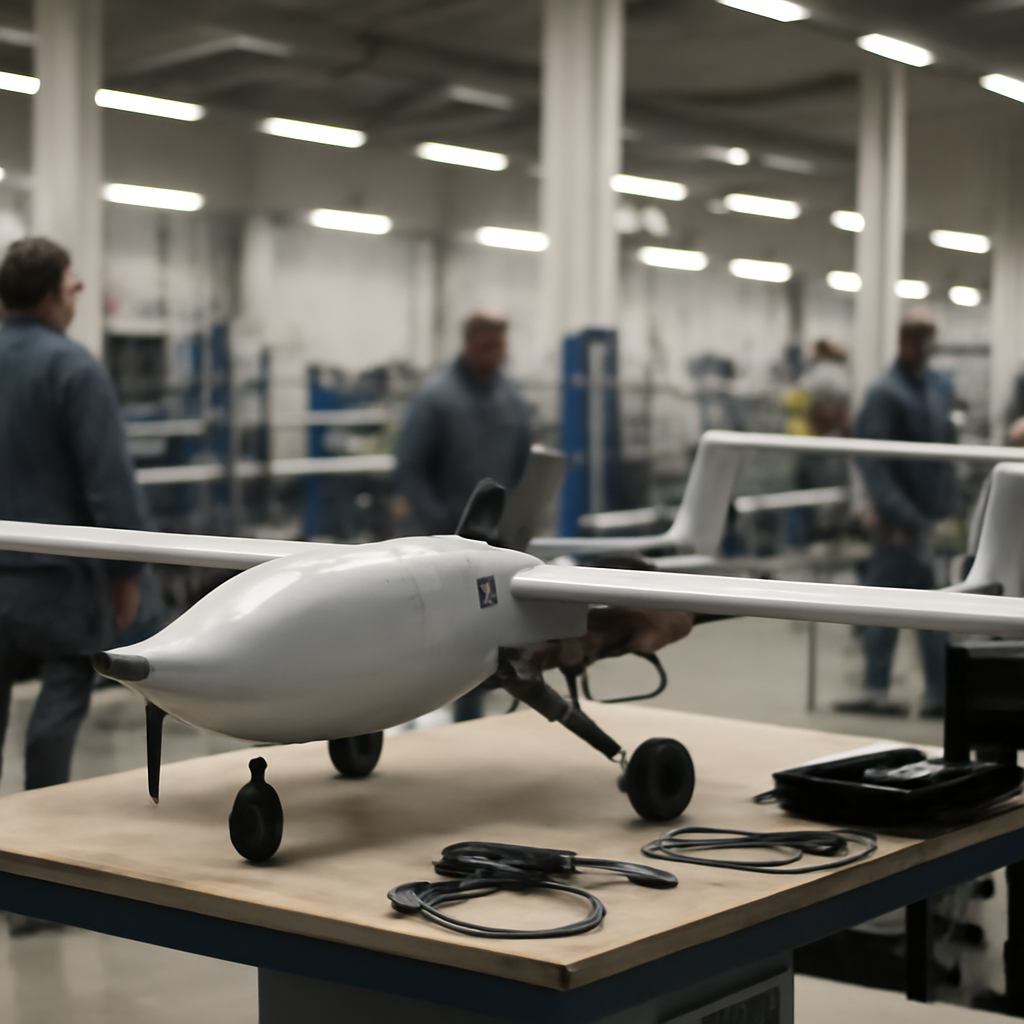
Anduril has built Arsenal‑1, a production facility outside Columbus, Ohio, capable of producing as many as 150 Fury aircraft per year, Jason Levin, the company’s senior vice president of engineering, said. Levin added that the Air Force’s current orders under the June production contracts do not yet reach that annual threshold. The production contracts themselves were awarded in June to Anduril and General Atomics to build the Air Force’s first round of Collaborative Combat Aircraft (CCA), but both the Air Force and the companies have declined to disclose how many aircraft are covered by those June contracts.

Audit-ready is a season. It shouldn't be.
Evidence in spreadsheets, controls drifting between audits, frameworks multiplying on flat headcount. Nubivance runs continuous compliance on Rapid7 Cyber GRC - SOC 2, HIPAA, ISO 27001, PCI, CMMC.
End the scrambleYFQ‑44 testing, weapons integration, and operational handoffs
While Anduril awaits FY27 procurement dollars, it is building YFQ‑44 prototypes at Arsenal‑1 and has already delivered the first prototype to the Air Force’s Experimental Operations Unit (EOU). In July the Air Force disclosed that the YFQ‑44 was the first CCA to conduct a successful live‑fire test of a munition — an AMRAAM air‑to‑air missile. Following that test, Anduril is using internal funds to integrate additional munitions, Levin said, naming 500‑pound guided bombs, small diameter bombs and low‑cost cruise missiles such as the company’s Barracuda 500.
Levin described expanded mission integration work as including other air‑to‑air weapons along with rocket pods and targeting pods so the Fury can perform counter‑UAS, counter‑cruise missile and air‑to‑ground missions. Anduril has supported additional Fury tests at Creech Air Force Base, Nevada, and said testing has pushed more complex operational procedures — for example a “hot reload” in which two EOU personnel swapped out an AIM‑120 AMRAAM with the YFQ‑44’s engine running, reducing time between sorties from hours to minutes.
Operational autonomy, formation flights, and quarterback integration
Anduril reported that, in recent tests, Air Force operators have launched and recovered the Fury on their own and flown the aircraft using mission autonomy software without Anduril personnel assisting. The Fury has flown in formation with F‑35s, and the company said it has begun “quarterback integration” work allowing a manned fighter to control the drone from a tablet. Levin said quarterback integration has already been exercised in hardware‑in‑the‑loop and software‑in‑the‑loop environments and on the aircraft itself, with the first live quarterback integration events expected in the coming weeks or months.
Those operational milestones frame the technical readiness Anduril says it brings to the CCA program — readiness that company executives say is prepared to be converted into production if procurement funding is provided.
What this means for the Air Force, Anduril, and Congress
- The Air Force: The service expects 500 CCA drones in service by 2032, Air Force Secretary Troy Meink said, but the Air Force did not specify how many will come from the first production increment or later development rounds. The timing of production starts will influence delivery schedules and the EOU’s ability to expand operational doctrine.
- Anduril: The company has pushed private capital into facilities, prototype build and weapons integration and says it is ready to “turn dollars into airplanes” if appropriations permit; absent FY27 procurement dollars, production cannot start despite those investments.
- Congress: The current CR keeps funding at FY26 levels through Dec. 11 and limits new program starts. If Congress cannot pass FY27 appropriations by then, Simpson raised the possibility that a future CR could include an anomaly — a funding exemption — that would let Anduril begin CCA production without full FY27 appropriations.
Anduril’s public position is narrow and practical: the company will continue prototype work and testing while pressing the Air Force and lawmakers for the procurement authorities needed to begin production. The outcome now hinges on a congressional appropriations timeline — either passage of FY27 defense funding by December or a targeted exception within any subsequent stopgap measure — and on whether the Air Force’s undisclosed initial orders will prompt such an anomaly. For now, Arsenal‑1 will continue producing YFQ‑44 prototypes and supporting EOU operations, but conversion of those assets into fleet FQ‑44 Furys remains contingent on the FY27 budget decision.