"Guardians are not supporting from the sidelines as a nice-to-have, but we are delivering space power directly into the fight as a need-to-have," Chief of Space Operations Gen. Douglas Schiess told the Air & Space Forces Association’s 2026 Air, Space & Cyber Conference.
Gen. Douglas Schiess at AFA 2026: a firsthand account
Speaking at the conference less than two weeks after taking the job as head of the U.S. Space Force, Gen. Douglas Schiess offered a concrete example of how his service applied electronic warfare during Operation Epic Fury against Iran. Schiess recounted that Space Force components — notably those at U.S. Central Command and Space Command, with support from European and Pacific commands — supplied direct space effects into the fight. He singled out a single operator, Specialist Gray, to illustrate those effects and how they were executed under fire.
Specialist Gray and the 42nd Electromagnetic Warfare Combat Detachment
According to Schiess, Specialist Gray, a two‑year Space Force service member from Tampa, Florida, deployed to the CENTCOM area of responsibility as part of the 42nd Electromagnetic Warfare Combat Detachment (EWCD). Within hours of Operation Epic Fury commencing, she "received a top priority target package" with the objective to "reconfigure her weapon system and execute critical non-kinetic fires." Schiess said she locked onto the target, optimized her system, and "waged electromagnetic warfare" against the adversary. Even as "Alarm Red" sirens sounded and incoming missiles targeted her site, Schiess said she continued until her commander had to pull her from the console to safety.

Audit-ready is a season. It shouldn't be.
Evidence in spreadsheets, controls drifting between audits, frameworks multiplying on flat headcount. Nubivance runs continuous compliance on Rapid7 Cyber GRC - SOC 2, HIPAA, ISO 27001, PCI, CMMC.
End the scrambleCounter Communications System imagery and the nature of the effects
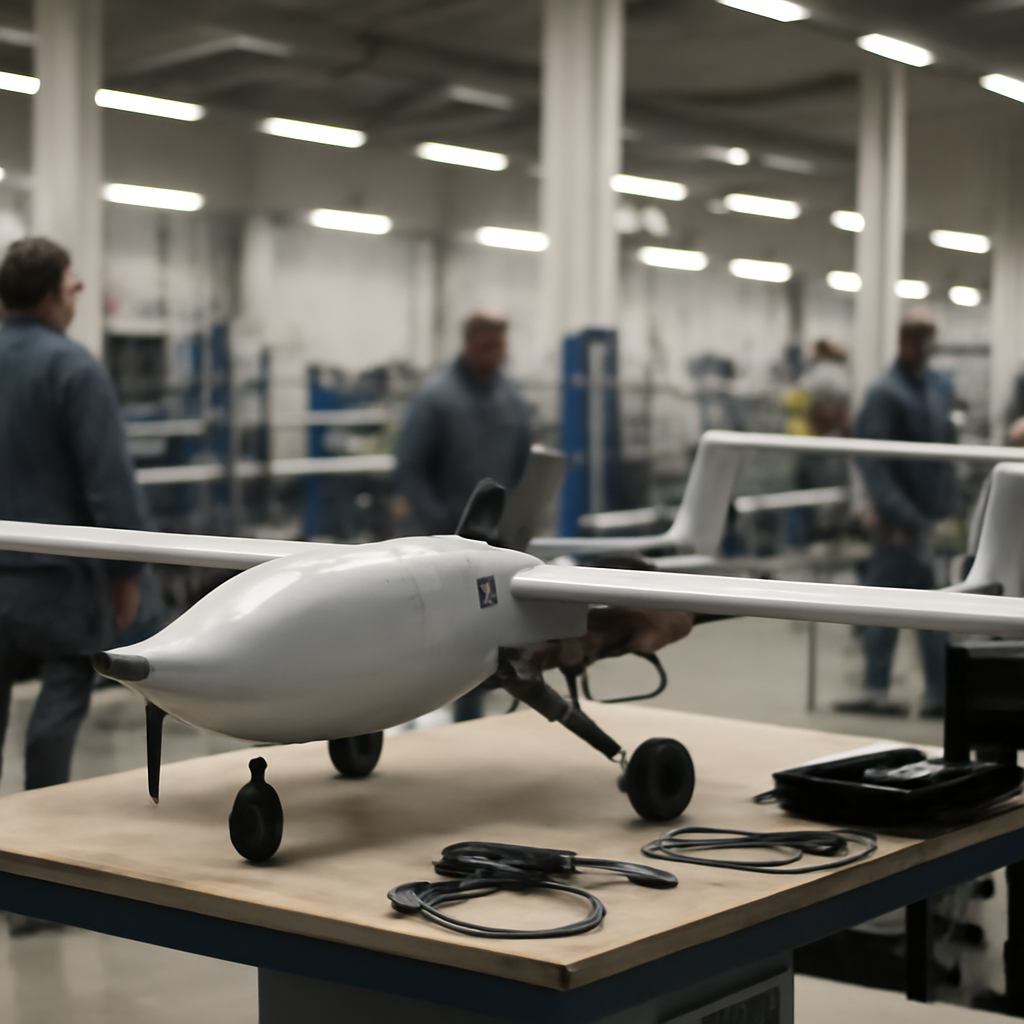
The Space Force did not name the specific weapon system Schiess described. TWZ notes previously released photographs of 42nd EWCD personnel working with trailer-mounted multi-band antennas that have been associated with variants of the Counter Communications System (CCS). The CCS is described in the record as a family of ground-based electronic warfare jammers primarily designed to disrupt enemy space-based communications capabilities. Before the latest disclosures, CCS was the U.S. military’s only publicly acknowledged anti-satellite weapon; the source also reports that Space Force has confirmed it possesses weapons in orbit.
Operational lessons: communications, GPS/PNT, missile warning, and logistics
Schiess emphasized several mission areas that Space Force supported during Epic Fury: electromagnetic warfare, satellite communications, GPS and positioning/navigation/timing (PNT), and missile warning and tracking. He and Air Force Chief of Staff Gen. Wilsbach referenced "Red Alarm" situations in which timely warnings allowed forces to take cover — a capability Schiess called "extremely important."
Chief Master Sergeant of the Space Force John Bentivegna added that reconstitution of forces inside a combat environment and logistics — notably the relationship with U.S. Transportation Command (TRANSCOM) to get supplies and replenishment into the theater — were lessons learned. Bentivegna said those logistics functions "something we haven’t really worked on before," framing them as new operational priorities for Space Force units engaged forward.
What this means for acquisition professionals, forward-deployed commanders, and TRANSCOM
- Acquisition professionals and trainers: Schiess credited acquisition personnel who "developed and fielded the weapon system" and instructors who trained operators like Specialist Gray — signaling sustained emphasis on fielding systems that can be rapidly reconfigured under combat stress and on training for EM warfare in high-threat environments.
- Forward-deployed commanders and base planners: The account reinforces the need to harden facilities and consider subterranean or remote command options. Schiess noted the service is "looking at all those [lessons learned]" including what can be done from space and what must be protected underground, referencing damage to bases such as Al Udeid that were targeted during the operation.
- TRANSCOM and logistics planners: Bentivegna’s comments highlight new emphasis on rapid reconstitution and sustainment of space-enabled forces inside contested theaters — a shift that places TRANSCOM and theater logistics at the center of Space Force readiness.
The episode Schiess described is presented in stark, individual terms: a single specialist, a priority targeting packet, and non‑kinetic fires applied while under missile attack. TWZ also notes that Iranian missiles and drones in the opening phases of the conflict damaged and destroyed high-value assets, including aircraft and radars, and caused hundreds of casualties — framing Epic Fury as both a tactical challenge and a strategic wake-up call.
Beyond the anecdote about Specialist Gray, the facts presented here underscore two broader shifts documented in the record: space is increasingly a domain of direct engagement rather than only a support medium, and the U.S. military is operating counter-space effects from both the ground and orbit. How those lessons reshape base defenses, procurement priorities, and the balance between forward deployment and remote command remains an operational question with immediate stakes.
https://www.twz.com/space/new-details-on-how-space-force-has-waged-electronic-warfare-against-iran