Ukrainian intelligence says 70 enterprises and 84 individuals were involved in producing the 3M22 Zircon — a level of supply‑chain detail that brings new technical and policy choices into sharp relief.
GUR’s component inventory and production chain
The Main Directorate of Intelligence (GUR) published an interactive breakdown of the Zircon that lists systems from the radar seeker and onboard computer to propulsion and warhead, tying named components to specific Russian firms. NPO Mashinostroyeniya is identified as the missile’s prime designer and contractor; NPO Iskra is listed as the producer of the 3L2211 solid‑fuel rocket motor; NPP Radar MMS supplied the 3B222 active radar‑homing head; and KB Korund‑M produced the Baget‑83 onboard digital computer. The GUR also attributes 3B915 guidance units and a 3G22 warhead to the weapon’s makeup.
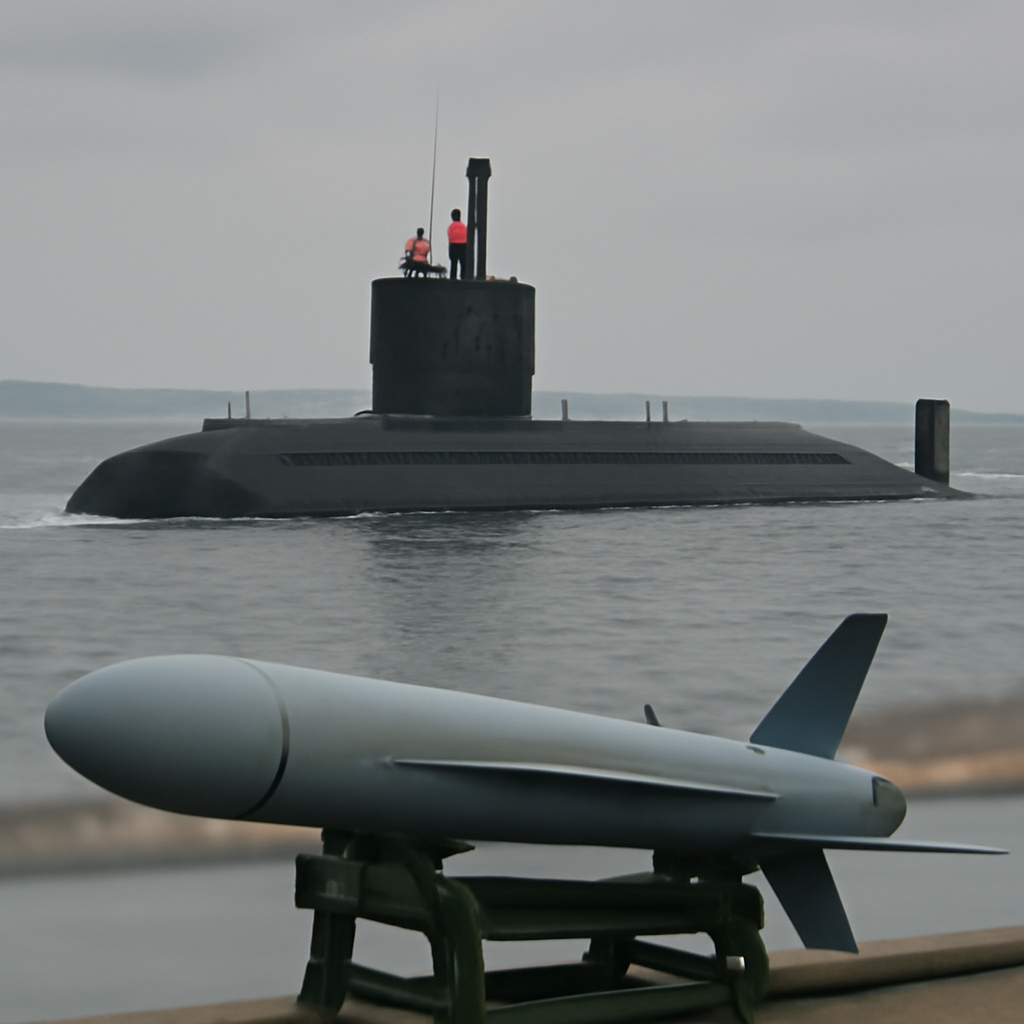
The agency gives physical specifications for the missile as roughly 26 feet long, 2.2 feet in diameter, with a warhead of about 265 pounds. Those figures, and the inventory, are presented as Ukrainian intelligence assessments and have not been independently verified.
U.S.‑origin electronics documented in wreckage
The GUR report names specific Western‑origin components recovered from Zircon wreckage: a TGA2704 amplifier associated with TriQuint Semiconductor (now part of Qorvo) and an Altera Cyclone II EP2C5T144I8N field‑programmable gate array (FPGA) associated with Altera (now part of Intel). The GUR notes these identifications do not prove the companies knowingly supplied Russia, nor do they trace the precise path those components took into Russian production lines.
The report says it is seeking additional information on the origins and supply chains. It also points to prior precedents — including China as a potential vector for recycled chips — as possible but not proven routes for Western components to enter Russian systems.

Audit-ready is a season. It shouldn't be.
Evidence in spreadsheets, controls drifting between audits, frameworks multiplying on flat headcount. Nubivance runs continuous compliance on Rapid7 Cyber GRC - SOC 2, HIPAA, ISO 27001, PCI, CMMC.
End the scramblePropulsion evidence points to a rocket‑powered, quasi‑ballistic design
The GUR publish and open‑source analyses together raise questions about whether Zircon is a classic hypersonic cruise missile. Multiple lines of evidence cited in the report suggest a two‑stage, solid‑propellant architecture rather than an air‑breathing scramjet.
Open‑source analyst Fabian Hinz noted the apparent absence of a conventional air intake in available imagery — a necessary feature for sustained air‑breathing hypersonic cruise. Forensic work by Ukraine’s Scientific Research Institute of Forensic Expertise examined a circular metal structure interpreted as part of a solid‑propellant rocket motor associated with Zircon’s second stage rather than only a launch booster. Patents tied to NPO Mashinostroyeniya and NPO Iskra describe solid‑propellant motors with aerodynamic control arrangements around the exhaust, and Russia has developed advanced composite solid propellants reportedly for the missile.
Those technical indicators support interpreting Zircon as a maneuverable quasi‑ballistic weapon: rocket‑boosted to high altitude, then descending on a partly ballistic trajectory while retaining aerodynamic maneuverability — a boost‑and‑glide or “skip‑glide” type profile that can produce variable speeds through flight without sustained air‑breathing propulsion.
Operational use, speeds, and air‑defense implications
The first public evidence of combat use emerged in February 2024 when Ukrainian authorities displayed wreckage with “fragments of the engine and steering mechanisms [with] specific markings.” The missile has been employed on additional occasions, with Ukrainian authorities reporting a launch from occupied Crimea during a major strike in January 2026. Zircon was initially developed for shipboard and submarine launch but has also been launched from ground‑based platforms; modified K‑300P Bastion launchers are considered likely candidates for land launches.
Speed and altitude figures differ across sources. The GUR lists a maximum speed of Mach 8–9, a flight altitude of about 19–25 miles, and a separate “maximum fixed speed” of Mach 6.8. Russian statements have at times claimed speeds of about Mach 9, including a 2020 test the Russian military said reached more than Mach 8 to roughly 17 miles altitude. Ukrainian assessments describe profiles that include cruising near Mach 5.5, accelerating to about Mach 7.5 near the target, and slowing before impact. The boost‑and‑glide or quasi‑ballistic interpretation is offered in the report as a natural explanation for that variability and for the missile’s difficulty against air defenses; Ukrainian officials have also reported successful interceptions by Patriot PAC‑3 systems.
What this means for policymakers, semiconductor vendors, and air‑defense planners
- Policymakers and regulators: The GUR’s naming of specific foreign components provides concrete leads for export‑control enforcement, sanctions targeting, and supply‑chain tracing; the agency says it is seeking further provenance information to pursue those paths.
- Semiconductor vendors and procurement teams: The identification of a TGA2704 amplifier and an Altera Cyclone II FPGA in wreckage underscores continued leakage of Western‑origin electronics into sophisticated weapons programs and highlights the value of deeper end‑use controls and traceability for chips and modules.
- Air‑defense planners and military procurement: If Zircon is primarily rocket‑powered and quasi‑ballistic, its flight profile and terminal maneuvering challenge layered defenses differently than a sustained hypersonic cruise missile; variable speed and high‑altitude trajectories underline the need to adapt detection, tracking, and interception concepts.
The GUR inventory sharpens two linked facts: Russia’s Zircon program relies on a broad, dispersed industrial base, and Western‑origin electronics can still appear inside advanced weapons despite sanctions. Ukrainian authorities are now pursuing supply‑chain provenance and have provided governments and investigators a detailed map to follow — a practical next step for those seeking to disrupt the flows that sustain the missile’s production.