"Grateful to the Security Service of Ukraine, all units of Ukraine’s Defense Forces involved, Ukraine’s Minister of Defense, the Commander-in-Chief of the Armed Forces of Ukraine and the General Staff, and all our weapons manufacturers for an unprecedented operation in response to Russian strikes on our infrastructure," President Volodymyr Zelensky wrote on Nov. 17, 2026.
How Kyiv describes the operation
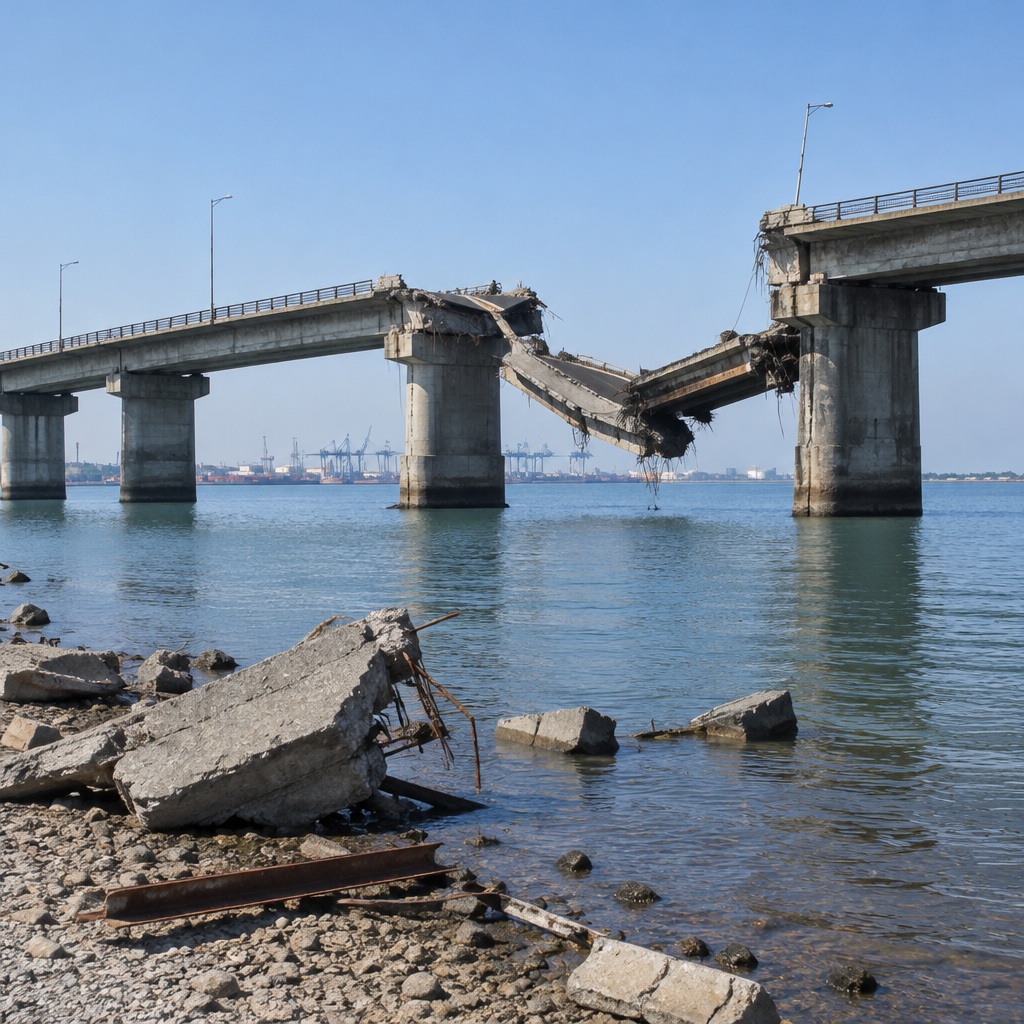
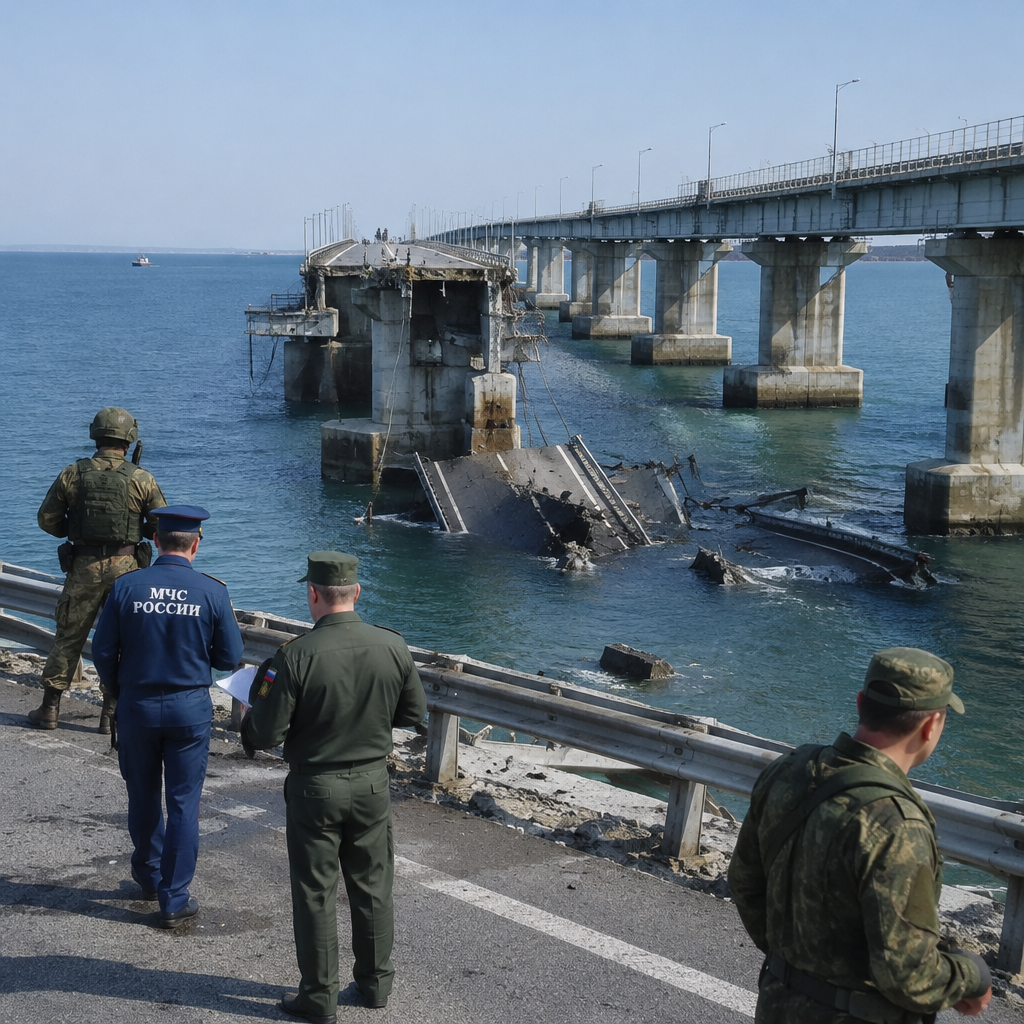
Ukrainian authorities presented the strike that collapsed a key road span of the Kerch (Crimean) Bridge as a carefully staged, multi-week campaign. The Security Service of Ukraine (SBU) said the operation lasted "approximately a month and consisted of seven stages" and involved systematic suppression of Russian air defenses before direct strikes on the bridge. The General Staff of the Armed Forces of Ukraine said an arch and a span of the bridge's road section collapsed and that the railway section remained standing but with a damaged arch.
Weapons and tactics named by Ukrainian sources
Zelensky and other Ukrainian statements listed an array of domestically produced and western-supplied systems used in the final operation. Zelensky named Dovbush, Vendetta, Da Vinci, Sichen, Mich-2000, Ruta, Palianytsia, An-197, FP-1, FP-5 Flamingo, and R-360 Neptune. He said "Palianytsia" drones struck the road section, while "Neptune" missiles, "Ruta" drones, and FP-5 drones struck the railway section. Video released by Ukrainian forces shows an FP-5 Flamingo approaching the bridge; independent analysts noted apparent man-in-the-loop control on that system, and the FP-5 was reported in the source material to carry a very large 2,500‑pound warhead.

Audit-ready is a season. It shouldn't be.
Evidence in spreadsheets, controls drifting between audits, frameworks multiplying on flat headcount. Nubivance runs continuous compliance on Rapid7 Cyber GRC - SOC 2, HIPAA, ISO 27001, PCI, CMMC.
End the scrambleDestinus, SBU and precedents
Destinus Defense, a European firm, stated on LinkedIn that Destinus RUTA missiles struck the bridge on two consecutive days and that seven RUTA missiles "hit the bridge, causing one span to collapse." The company also said its LORD/Da Vinci drone systems were deployed to suppress Russian air defenses. The SBU noted this was the fourth time it had damaged the Kerch Bridge: an October 2022 truck-bomb attack, a July 2023 Sea Baby drone-boat attack on pylons, and June 2025 underwater explosives on support pylons were all listed as prior operations.
Russian response: repair pledges and alternative links
Russian officials pledged to restore transport links. Kremlin spokesman Dmitry Peskov said "there is no doubt that the bridge will be restored." Deputy Prime Minister Marat Khusnullin briefed President Vladimir Putin, Peskov added. Sergey Aksyonov, the Russian-installed governor of Crimea, said rail service between Crimea and Taman had been resumed and that passengers (without vehicles) could use ferry service; he encouraged the public not to react to "fake news and misinformation." Mikhail Razvozhayev, the Russian-installed governor of Sevastopol, said supply chains for Sevastopol had been preserved and that "the supply of food, fuel, and other essential goods continues," while urging people to avoid travel toward the Kerch Bridge for now.
Immediate logistical and maritime effects
The collapsed road section extended over the main shipping channel linking the Sea of Azov to the Black Sea, and the source material highlighted that debris blocking the channel would impede large-vessel passage and create downstream impacts on military logistics, grain and oil exports, and river and maritime transport. The Ukrainian General Staff framed the loss of the bridge as a blow to a primary land artery that had carried fuel, ammunition, equipment and personnel to the peninsula and into southern Ukraine, and noted that "every hour without traffic over the bridge means Russian groupings in the south receive less of what they need to keep fighting."
What this means for Ukrainian forces, Russian authorities, and maritime operators
- Ukrainian forces: The SBU and General Staff portrayal emphasizes coordinated multi-domain tactics—EW and air-defense suppression followed by combined drone and cruise-missile strikes—suggesting Kyiv will continue to target high-value transport nodes that support Russian logistics.
- Russian authorities: Officials have pledged reconstruction and moved to restore rail and ferry services, but they are also faced with an immediate need to protect any repair effort and to develop alternative logistics while the strait and bridge remain contested.
- Maritime and port operators: With the shipping channel affected by collapsed span debris, vessels large enough to use the Kerch Strait could be impeded for an extended period, raising short-term disruptions for commercial and military movement through the Sea of Azov and Black Sea outlets.
Russian statements also included claims about the scale of Ukrainian drone activity: the Russian Defense Ministry said air defenses destroyed 1,441 Ukrainian fixed-wing unmanned aerial vehicles overnight between 8:00 PM on Nov. 16 and 8:00 AM on Nov. 17, a figure the source noted TWZ could not independently verify.
The Kerch Bridge's symbolic status and logistical role were central to both Kyiv's presentation of the strike and Moscow's rapid assurances of reconstruction. Ukraine’s account frames the action as the culmination of a layered, month‑long campaign using a broad weapons mix; Russia’s response so far combines repair promises, alternative transport measures, and public reassurances about supplies. Whether restoration can proceed while the bridge, the strait and nearby transport routes remain under threat is a concrete question that the facts assembled in this report leave squarely on the table.