"We have to change something."
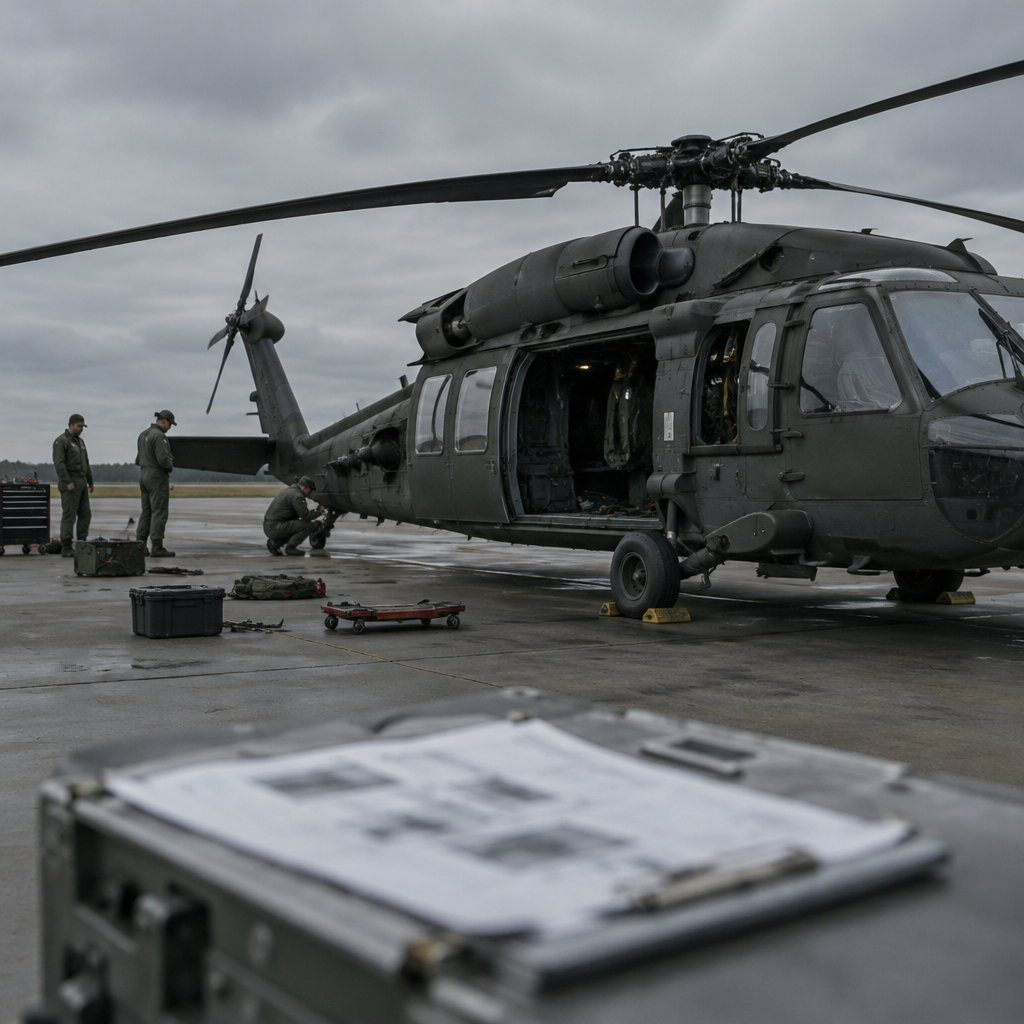
That blunt assessment came from Army Undersecretary Michael Obadal as he addressed a packed AUSA Hot Topic event in Washington, laying out a compact but stark diagnosis: Army manned aviation is flying less, is less ready, and is experiencing more accidents even as leaders scramble for fixes.
Readiness: fully mission capable rates "below 60 percent"
Obadal said the Army’s manned aviation fleet's fully mission capable (FMC) rates are sitting at “a norm” of below 60 percent — well below the service’s stated goal of 75 percent. He warned the trend is year-over-year and declining. A March Government Accountability Office report found the service did not meet its FMC goals for FY24, though the GAO did not provide an exact rate, and Army-published FY24 figures that had appeared online are no longer available, the source noted. FY25 FMC data was likewise not yet available in the materials cited by Obadal.
Accidents and flight hours: "more accidents, less hours, less readiness"
Obadal tied the readiness shortfall to rising accidents and falling flight time. "We actually had more accidents this year, and we flew 150,000 hours less than we did three years ago. So more accidents, less hours, less readiness," he said, adding that 82 percent of the Army’s Class A accidents are attributed to human factors. He warned that the trend cannot continue: "It has to change. We cannot put any more lives [into] that because we ignore the problem."
The Army’s own safety reporting complicates a simple reading of the trend. An Army newsletter published in January showed the Class A mishap rate improved in FY25 even as the overall Class A–C flight mishap rate was higher than in any of the previous 10 years. The newsletter also showed Class C mishaps have increased in each of the past three years, coinciding with a decline in flying hours. Obadal did not provide a breakdown of the types or severity of the recent accidents, nor did he offer additional numeric details beyond the totals he cited.

The cyber insurance questionnaire just landed. Now what?
SOC 2, HIPAA, insurance renewals - someone has to own security strategy. Nubivance provides fractional CISO leadership without the full-time salary.
Get a security leadWeapons 360: tying readiness data to parts and suppliers
To address sustainment shortfalls, Obadal said the Army is turning to its Weapons 360 platform. He described Weapons 360 as providing real-time readiness data on the service’s major weapons systems and said it can identify bottlenecks "down to the part and supplier level." He framed the effort as part of a broader attempt to unify sustainment activity: "The way that we sustain our major end items has been very sporadic, and it’s got about six different organizations that touch it," he said. "So I’m pulling all of them together into an Army sustainment model."
Training overhaul: Flight School Next and personnel moves
Obadal said the Army is "completely changing" its aviation training base. He highlighted Flight School Next, a program to acquire a new helicopter and develop new training curriculum focused on the basic stick-and-rudder skills for helicopter pilots. Alongside changes to the training pipeline, he said the Army will move both commissioned and warrant officers back into aviation formations "where they belong" and "out of staff jobs" as part of an effort to restore flight proficiency and reduce human-factor mishaps.
How Army aviators, sustainment planners, and senior leaders are affected
- Army aviators: Flying hours have dropped sharply — Obadal cited a three‑year decline of 150,000 hours — and leaders are prioritizing restored flight time and a new training curriculum that emphasizes basic helicopter handling.
- Sustainment planners: Weapons 360 is being positioned as the tool to reveal parts- and supplier-level bottlenecks and to bring "about six different organizations" into a single sustainment model.
- Senior leaders and personnel managers: Obadal has announced personnel moves — transferring commissioned and warrant officers back into aviation formations — and framed those moves as part of a safety and proficiency response tied directly to human-factor accident rates.
Obadal’s message was both diagnostic and prescriptive: readiness is down, accidents are up, and the Army is deploying data tools, training changes, and personnel shifts to reverse the trend. He framed the problem in human terms — the majority of severe accidents attributed to human factors — and tied his remedies to restoring flight time, rebuilding basic skills, and fixing sustainment processes.
Whether Weapons 360, Flight School Next, and the personnel moves will arrest the falling FMC rates and the rising accident picture remains the practical test ahead. Obadal left no ambiguity in the stakes: "Our aviation is fundamental, and we have to fix it," he said.