Taiwan Aims to Export Drone Ecosystem Beyond Hardware
Analyst 207||Source: TheDiplomat
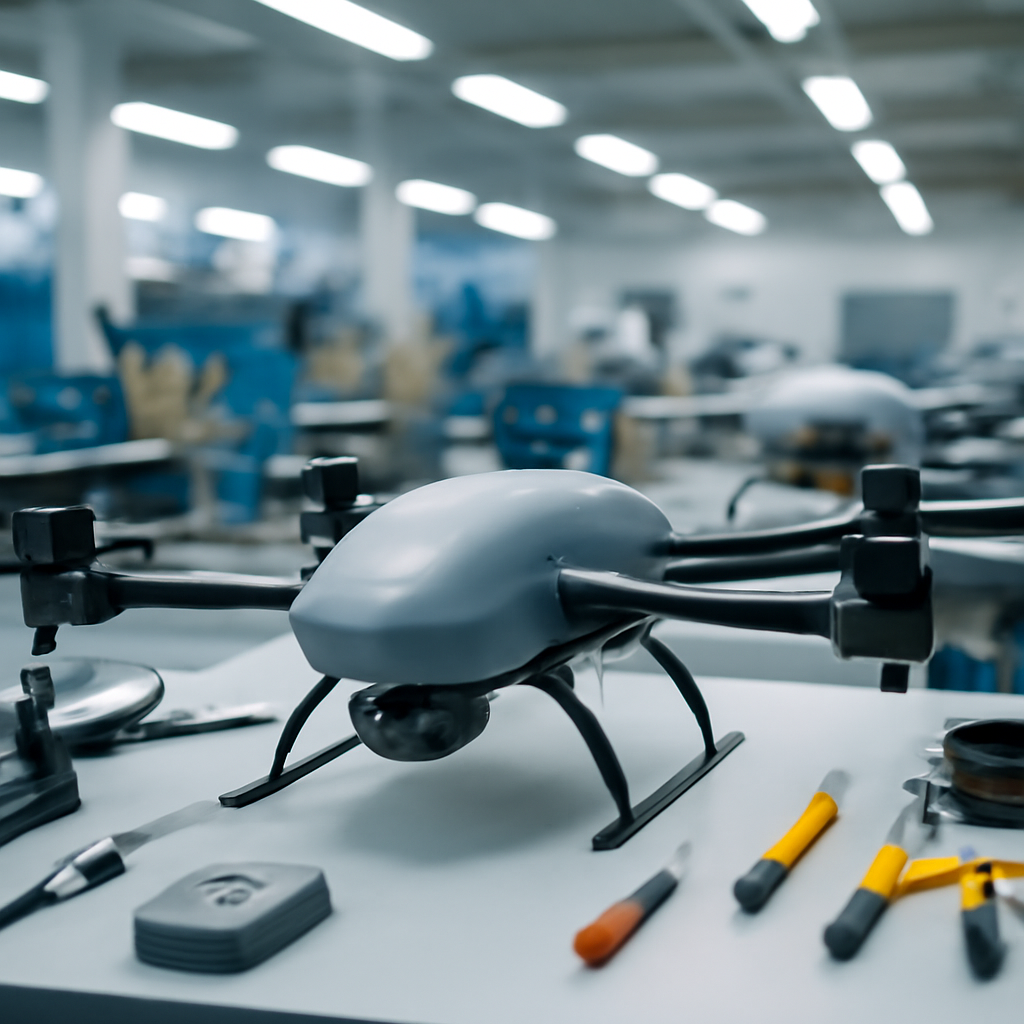
“democratic drone supply chains,” the phrase the Executive Yuan has used to frame Taiwan’s national push into unmanned systems, is less slogan than strategy: sell more than quadcopters and rotors, sell the processes that let them operate reliably in combat, disaster response, and daily life.
Taiwan’s non‑red supply chain and shifting markets
Taiwan has made drone development and exports a government priority centered on a “non‑red” supply chain — systems and components free of Chinese units. The policy responds to lessons from the Russia‑Ukraine war, Taiwan’s own deterrence concerns, and growing demand from countries and firms wary of Chinese equipment. The logic is straightforward: Chinese firms such as DJI still dominate the commercial drone market, even as the U.S. Department of Defense has stated that DJI systems pose potential national security threats. That anxiety created buyers for alternatives; Taiwanese exports have surged to Poland and Czechia, and recent trade data showed a record sale of Taiwanese drones to Saudi Arabia.
Military capability: the drone is only one piece
A capable drone force is not measured by frames sold but by the systems that surround those frames. The source makes clear that operator training, simulation systems, testing fields, certification standards, logistics pipelines, secure communications, software update channels, and interoperability with partners’ weapons systems determine combat effectiveness. Taiwan’s army has formed drone battalions in several combat zones and upgraded its drone training center into an Unmanned Systems Training Command responsible for education, testing, evaluation, and standards. The key question the government faces is whether it can build and export a complete doctrine, training, testing, and sustainment system that is insulated from Chinese interference.
[SPONSOREDNUBIVANCE]
This site is the portfolio.
OSINTSights runs on Cloudflare Workers, D1, R2, and Vectorize, with an AI pipeline on Hetzner ARM. Nubivance designed, built, and operates it. We do the same for clients.
Taiwan’s geography shapes the drones it should build. The Taiwan Strait brings strong winds and humidity; cities blend dense residential and commercial zones with communication dead spots; the island suffers high‑salt sea air, afternoon thunderstorms, and steep mountains. Those conditions offer unusually rich testing environments for resilience and adaptation. The report argues Taiwan can turn this natural variability into a competitive advantage: if manufacturers and training programs design for Taiwan’s severe, mixed conditions, their products and procedures will likely perform better in other demanding environments.
Certification, tracing, and the trust premium
Price alone will not dethrone Chinese competitors. The source emphasizes that Taiwan must make “non‑red” more than a marketing line by building credible tracing, testing, documentation standards, and certification mechanisms foreign buyers can examine. Reporting has already raised concerns that some Taiwan‑made drones still include Chinese components. To compete on trust, Taiwan needs transparent supply‑chain attestations and interoperable testing standards that reassure militaries and commercial buyers alike.
Civil society, emergency services, and the early ecosystem
The seeds of an ecosystem exist beyond factories. Civil defense groups such as Kuma Academy have begun drone training; disaster‑response organizations and local fire departments use drones for rescue and emergency operations; drone soccer is appearing in schools and youth programs. These civilian activities are small today but important: they integrate drones into society, generating trained operators, norms for flight and safety, and use cases that feed into standards for certification and doctrine.
How Taiwan’s military, foreign buyers, and SMEs are likely to act
- The army and Unmanned Systems Training Command will push doctrine, testing, and standards that make exported systems usable under battlefield pressure, seeking supply chains and sustainment practices impervious to outside interference.
- Foreign buyers and procurement officials — from Poland and Czechia to Saudi purchasers noted in trade data — will prioritize demonstrable supply‑chain transparency, interoperable training packages, and after‑sales maintenance hubs over low unit cost.
- Taiwan’s SMEs and entrepreneurs will leverage the island’s semiconductor, ICT, battery, and precision manufacturing strengths and their agility to customize systems, but they face pressure to document component provenance and adopt common certification practices.
Conclusion
Taiwan’s advantage lies not in outbidding low‑cost Chinese hardware but in exporting a package: resilient hardware, tested under hard conditions, backed by training, certification, logistics, and democratic governance of drones. The source argues three concrete steps would make that package exportable: build overseas maintenance, training, and testing hubs; develop a transparent non‑red certification system; and integrate civil defense, disaster response, education, and commercial users into a unified drone policy. Whether the island can convert “drone shield” rhetoric into an ecosystem that buyers trust — and that resists foreign interference — remains the practical test of this strategy.
Original story: https://thediplomat.com/2026/07/beyond-a-non-red-supply-chain-taiwan-should-export-a-drone-ecosystem/
The US cyber arsenal is being rapidly depleted in modern conflicts, leaving military leaders scrambling to regenerate and develop new capabilities. Vice Adm. Heidi Berg warns that high-value cyber effects can be consumed quickly, creating a strategic constraint that demands urgent attention.
The Navy's Shipyard Infrastructure Optimization Program is facing a massive blowout, with estimated costs skyrocketing to $200 billion and a timeline stretching up to 50 years. This is a far cry from the original plan of 20 years and $21 billion.
In a major win for national security, a US court has upheld the Pentagon's ban on Anthropic AI, deeming it a supply chain risk to the defense industrial base. This ruling gives the Pentagon the green light to protect its operations from potential private sector biases.
In a future fight, the backbone of logistics isn't just about moving supplies, but also about maintaining a resilient digital network that keeps commanders informed and one step ahead. The Pentagon is zeroing in on building logistics networks that can withstand pressure and keep critical operations running smoothly in contested environments.