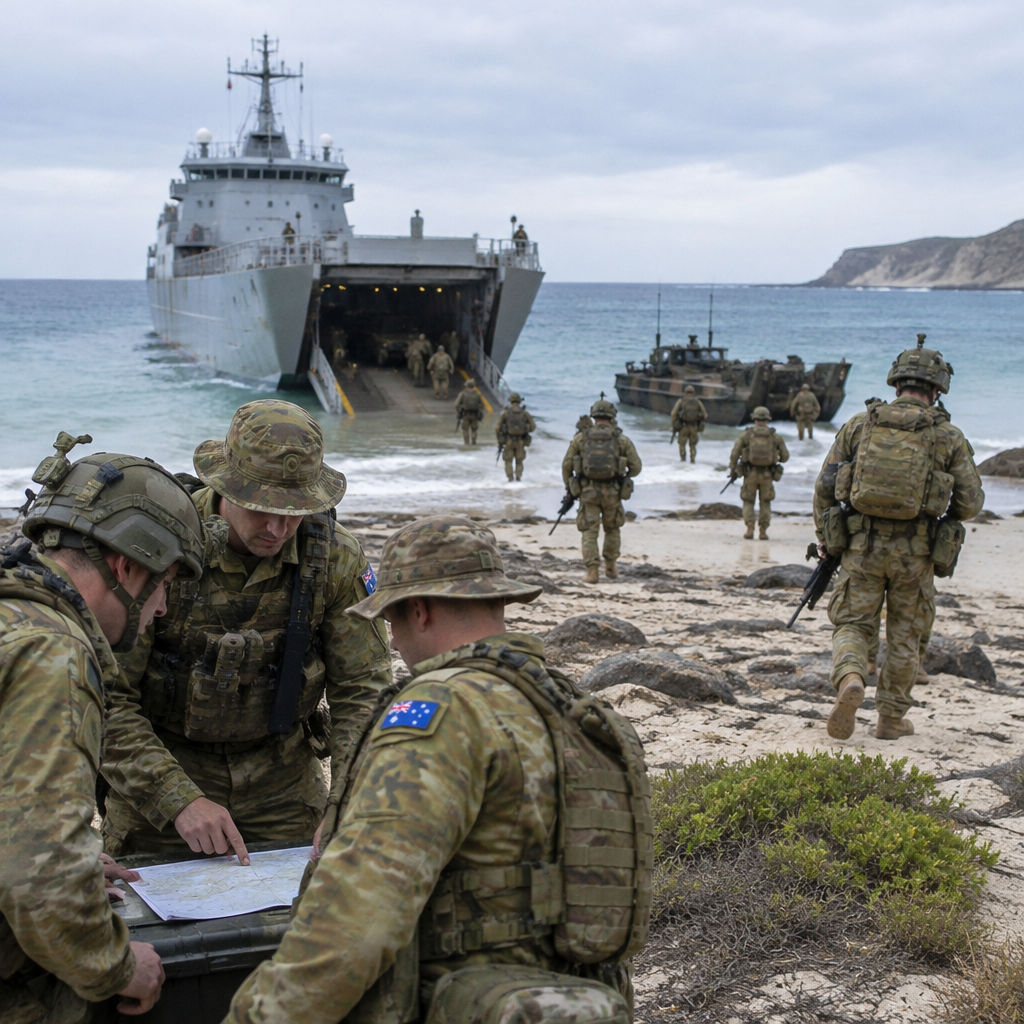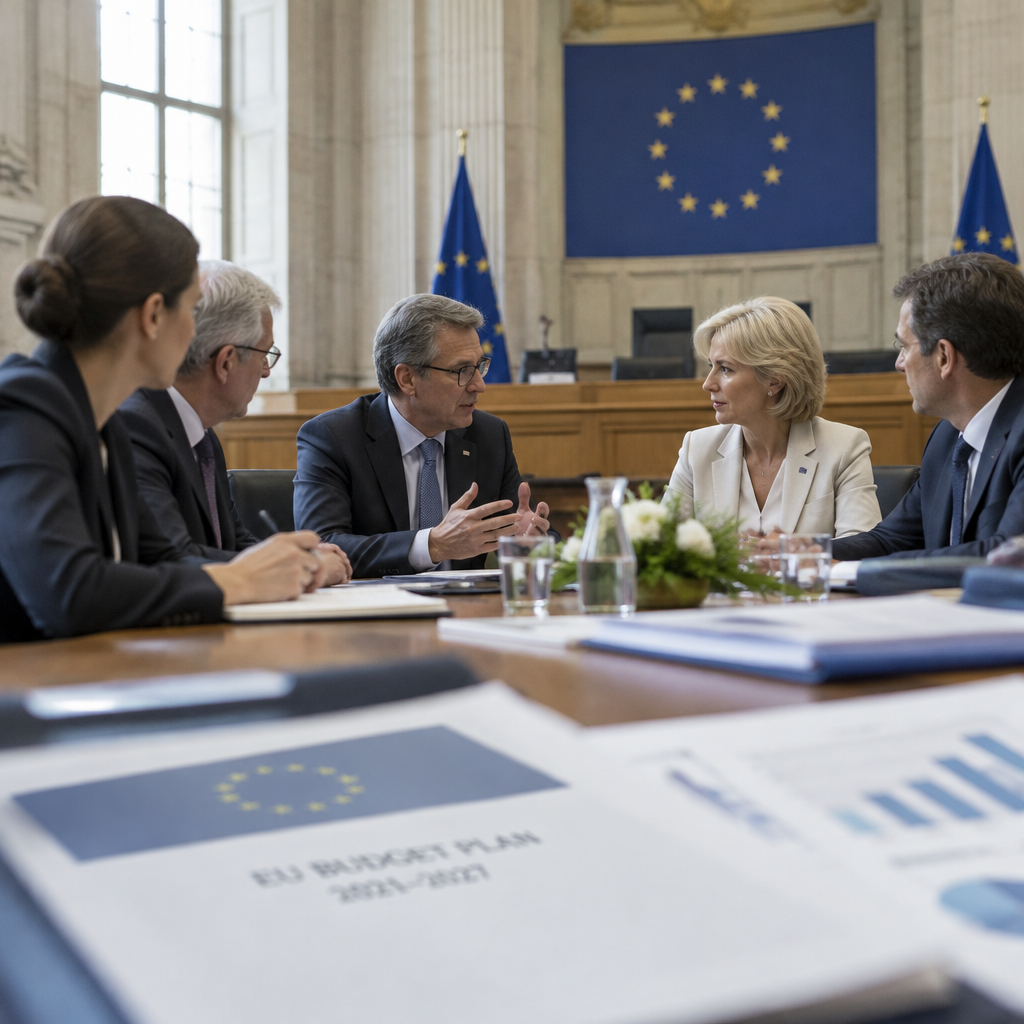
"To step up to the challenge of the current geopolitical situation," the European Union said on Thursday, as the Parliament and Council agreed a 2027 defense and security budget worth €3.1 billion ($3.4 billion).
EU 2027 defense and security budget
The bloc signed off on an annual defense and security allocation of €3.1 billion for 2027, a package the EU itself framed as a response to "the conflicts in Ukraine and the Middle East." The announcement, issued by the EU after negotiations between the European Parliament and the Council of the European Union, positions next year’s budget as an explicit effort to boost military, security, and related support in a turbulent regional environment.
Ukraine Support Loan and the Ukraine Facility
The 2027 package includes a listed €650 million for Ukraine Support Loan funding — described in the EU material as a boost to the earlier promised pool of €90 billion. The statement also distinguished the Ukraine Support Loan funding from the Ukraine Facility, noting that the Ukraine Facility is a separate mechanism intended to "facilitate tens of billions of euros to Kyiv in grants and loans."

This site is the portfolio.
OSINTSights runs on Cloudflare Workers, D1, R2, and Vectorize, with an AI pipeline on Hetzner ARM. Nubivance designed, built, and operates it. We do the same for clients.
See what we buildZelenskyy’s appeal and the reported €45 billion follow-up
President Volodymyr Zelenskyy is quoted as telling European leaders last month that “we need at least €70 billion more from you” on top of the promised €90 billion in loans as the war with Russia approaches its fifth year. In reporting that appeal, the UK’s Guardian said the EU “appears to have heard Zelenskyy’s call,” promising to raise €45 billion, with a remaining shortfall that could be filled by Canada and the UK. The EU’s announcement did not clarify how the newly agreed 2027 budget relates to that proposed €45 billion; a bloc spokesperson did not respond to a request for comment.
Merz, António Costa and the Multiannual Financial Framework
The 2027 defense envelope is the last annual budget under the EU’s current Multiannual Financial Framework (MFF) before member states begin negotiating a new MFF covering 2028–2034. The Financial Times reported that German Chancellor Friedrich Merz has warned he will block the future multiyear budget if any EU member state refuses to provide financial support for Ukraine. Merz “purportedly wrote in a letter sent to European Council President António Costa” that a collective commitment by all members to contribute fairly to closing Ukraine’s financing gap is an essential precondition for further discussions, according to the FT.
The reporting also reminded readers that several member states opted out of the EU’s initial €90 billion loan: Hungary, Slovakia and the Czech Republic. Those three nations, along with Bulgaria, have signaled they will not contribute to future lending, creating a potential political and financial impasse as the MFF discussions begin.
European Commission on budgetary limits and a mid‑term revision
The EU’s own budget preparation documents acknowledged tensions between rising emergency needs and the current budget architecture. A European Commission statement of estimates for FY2027 said: “The EU budget has shown versatility, but it also demonstrated the limits of its current architecture, thus requiring a mid-term revision to adequately address additional needs for Ukraine, migration and its root causes, responding to the crises in the Middle East, reinforcing our capacity to respond to natural disasters, and support for boosting investments in critical technologies and defence.”
What this means for Ukraine, Germany, and Hungary, Slovakia, the Czech Republic and Bulgaria
- Ukraine: The €650 million Ukraine Support Loan entry for 2027 and the separate Ukraine Facility mechanism keep Kyiv on the receiving end of EU financial instruments; Zelenskyy’s call for an additional €70 billion frames expectations for substantially larger transfers beyond annual budget lines.
- Germany: According to the Financial Times reporting, Germany’s position — represented by Chancellor Friedrich Merz’s warning to António Costa — aims to use future MFF leverage to compel broader member-state contributions, making Germany a pivotal actor in whether collective financing obligations will be enforced.
- Hungary, Slovakia, the Czech Republic and Bulgaria: Having opted out of the initial €90 billion loan (in the first three cases) and signalling unwillingness to contribute to future lending (all four), these countries are named in the source as the clearest potential blockers in upcoming multiyear budget talks.
The EU’s short-term decision to allocate €3.1 billion for defense and to boost the 2027 Ukraine Support Loan line to €650 million threads two tensions together: immediate support for conflict-affected partners, and the looming, politically fraught effort to design a longer-term budget for 2028–2034. How the reported €45 billion package and national opt-outs will be reconciled with the last-year MFF numbers — and whether that reconciliation will require a formal mid-term revision as the European Commission suggests — remains the central question facing EU leaders and Kyiv alike.