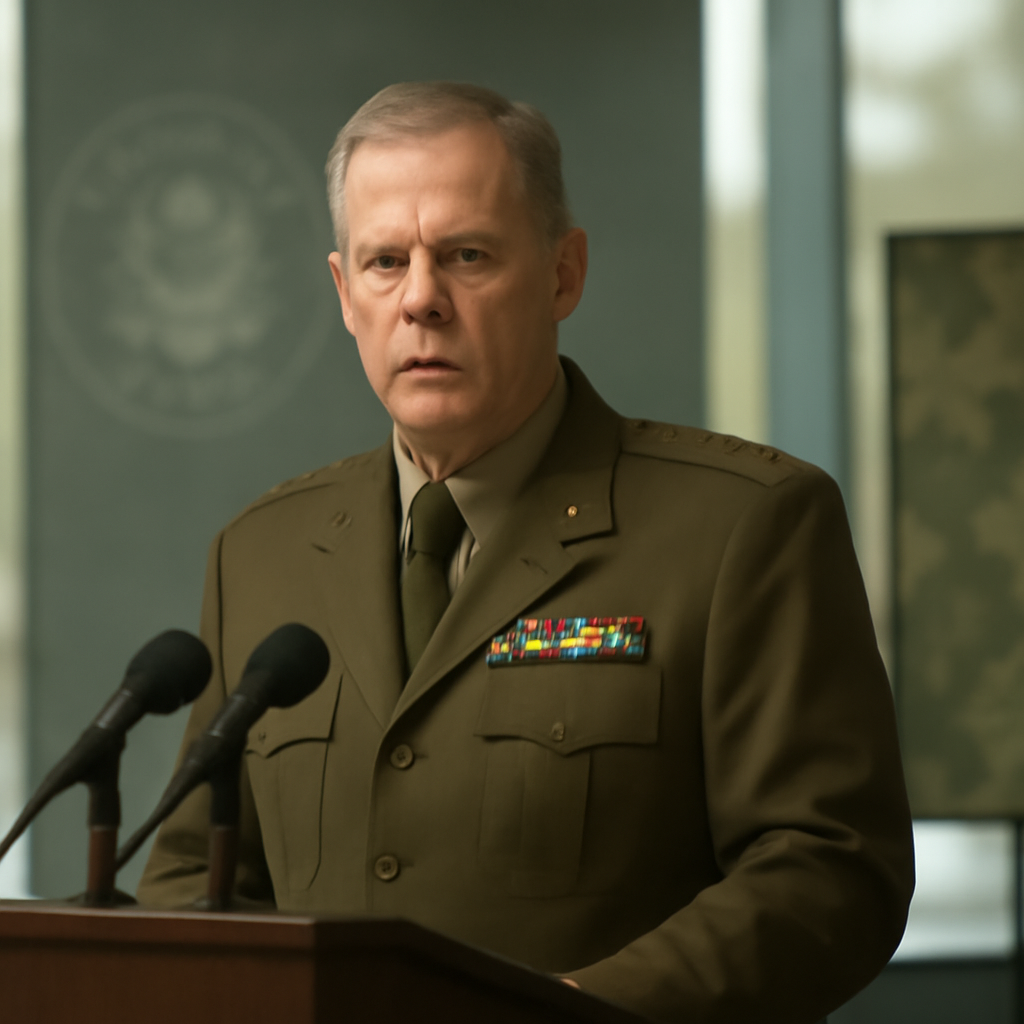
"An 80% solution in the warfighters’ hands today is infinitely more valuable than a 100% solution that arrives late," Chief of Space Operations Gen. Chance Saltzman wrote in his first Commander’s Note of 2026.
Gen. Chance Saltzman's April 24 C-Note sets a new tempo
In a memo dated April 24 and published as the 38th entry in his C-Note series, Saltzman urged Guardians to adopt a faster, iterative approach to fielding space capabilities. He framed the guidance inside a larger push: the White House, the Defense Department and the Department of the Air Force, he wrote, are "driving capability delivery to a wartime footing," and the Space Force must "embrace the changes needed to support this transformation."
Minimum viable capabilities, not perfection, as the organizing principle
Saltzman explicitly called for acquisition program offices and operators to prioritize delivery of "minimum viable capabilities" (MVCs) rather than waiting to satisfy every operational requirement before fielding systems. He argued that pushing technological boundaries involves "failure, learning, iteration, and imperfection" and urged Guardians to accept calculated risk because it "can decrease operational risk in the end." The memo warns against requirements creep and urges an accountable, urgent mindset: define an MVC, deliver it quickly, and continuously enhance it.

The cyber insurance questionnaire just landed. Now what?
SOC 2, HIPAA, insurance renewals - someone has to own security strategy. Nubivance provides fractional CISO leadership without the full-time salary.
Get a security leadAcquisition scale and limits: authority versus influence
The memo makes a point of scale: the Space Force's acquisition corps is the largest, by percentage of total personnel strength, among the services, and is executing "nearly $33B this year and preparing for future growth." Saltzman acknowledged the institutional limits of his role — while he can set priorities and direction as the service chief, "he hasn’t the power of the purse — acquisition authority flows through the civilian side of the Department of the Air Force." The memo also referenced previous scrutiny from Capitol Hill over a perceived lack of focus on acquisition issues and personnel.
Operators and System Deltas: share the work and the accountability
Saltzman directed that "Guardians in operations units must work closely with System Deltas to define a minimum viable capability, and then continuously enhance it." The guidance stresses shared responsibility: operators define acceptable initial capability, System Deltas accelerate delivery, and both parties hold each other accountable to avoid scope growth that delays fielding. The C-Note frames this as a cultural and procedural shift toward speed, iteration, and deliberate risk-taking.
Eric Felt's endorsement and practical implications for operators, acquisition leaders, and technologists
Eric Felt, chief technology officer at the University of Texas at El Paso National Security Institute and a former senior Space Force acquisition officer, told Breaking Defense the memo is "spot-on" about the "needed cultural shift" for space acquisition. Felt emphasized that the message targets both operators and the acquisition community: under the "old paradigm" operators insisted on near-perfection because they feared not getting another chance; under the "new model," operators will accept a partially functioning minimum viable product because they will receive it sooner and know it "will continue to be improved in successive iterations."
- Operators and requirement owners: Expect to be asked to accept earlier, less-complete deliveries in exchange for faster fielding and ongoing updates.
- Acquisition leaders and System Deltas: Will be measured on speed and iterative delivery as much as on final specifications, and must guard against requirements creep.
- Technologists and program implementers: Will be expected to adopt rapid learning cycles, accept setbacks as part of development, and prioritize incremental improvements over a single, delayed complete solution.
Saltzman's memo places a clear premium on speed, iteration and cultural change inside the Space Force. It also highlights a structural tension: the service chief can set urgency and priorities, but the civilian side of the Department of the Air Force controls acquisition authority and the purse strings. Whether that division of authority will align with the faster, risk-tolerant approach Saltzman prescribes is the practical constraint his C-Note acknowledges even as it demands a new operating rhythm from Guardians.