“A direct challenge to sovereignty and security.”
Novatek’s role and denials
Documents and interviews obtained by ProPublica show that the United Arab Emirates company funding surveys off Alaska was being steered by Novatek, Russia’s liquefied natural gas giant, which is under partial U.S. sanctions. Novatek told ProPublica it “provided technical and other information” on equipment for a sanctions-waiver request and that it “provided comments to the draft application.” The company denied that it was gathering intelligence through the project, saying: “We state clearly and categorically: any such claims or implications are false.”
Polar Train, Joel Riddle, and the August–September rupture
Polar Train LNG’s U.S. chief executive, Joel Riddle, resigned on Sept. 19 after months of disputes with the venture’s UAE parent, Tech Wave Industrial Project Management, over site selection, financing and who controlled the project’s direction. Riddle said he had become convinced Novatek was “financing and ultimately controlling the strategic direction” of the ostensibly American-led effort and warned the investments were “very likely sooner or later to trigger” a federal inquiry. Polar Train countered that Riddle was “a disgruntled employee” and later posted that Novatek had agreed to buy a minority stake contingent on American investment exceeding 50%.

Audit-ready is a season. It shouldn't be.
Evidence in spreadsheets, controls drifting between audits, frameworks multiplying on flat headcount. Nubivance runs continuous compliance on Rapid7 Cyber GRC - SOC 2, HIPAA, ISO 27001, PCI, CMMC.
End the scrambleSurveys off Prudhoe Bay and Wainwright: ships, scope, and timing
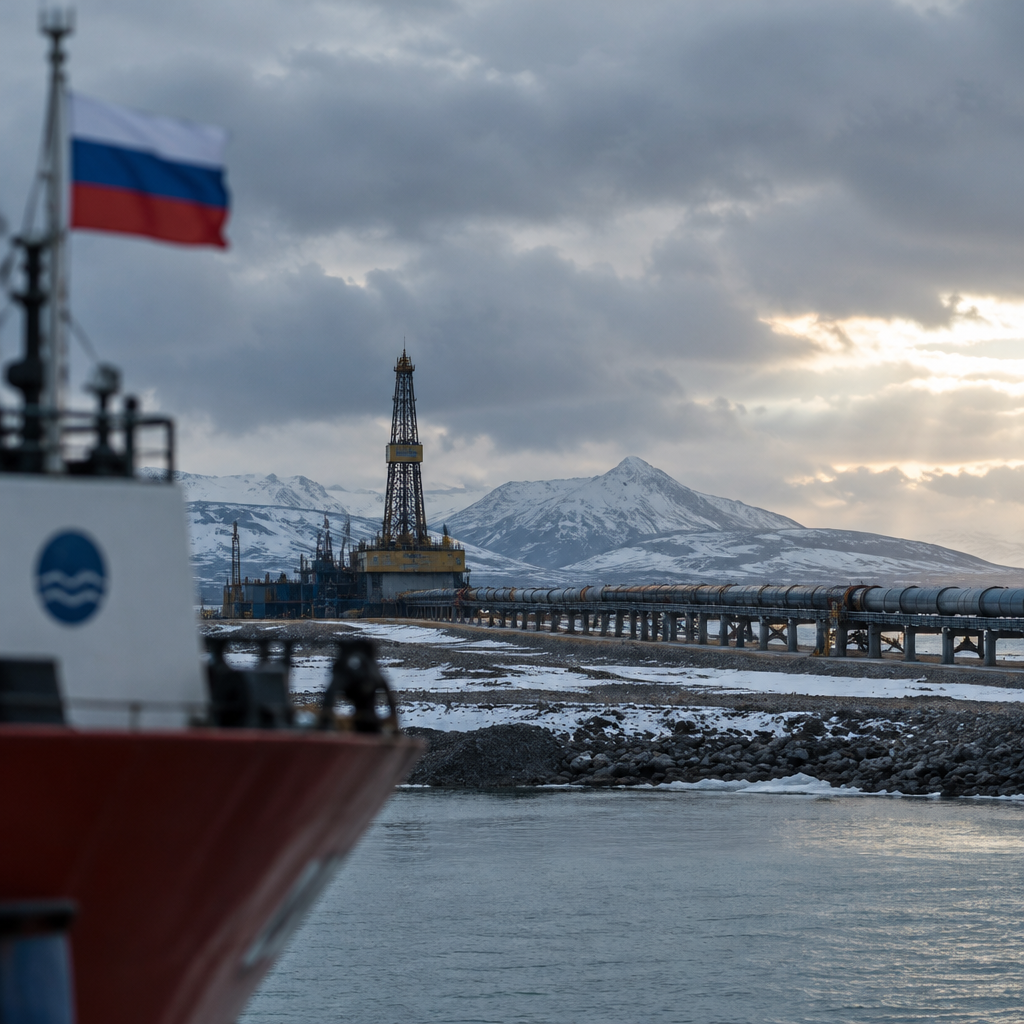
Survey work began in the second half of 2025, paused for winter, and resumed in mid-2026. By late August 2026, dozens of contractors were aboard three vessels — the Annika Marie, the Ukpik and the Uŋalaq — conducting seabed mapping, sonar scans, shallow sediment coring, and oceanographic monitoring. In 2025 the work focused just west of Prudhoe Bay, close to the Trans‑Alaska Pipeline System, an Air Force long‑range radar station and the subsea fiber-optic cable that runs to Nome; Polar Train executives later dispatched surveyors to a site near Wainwright that Riddle preferred because it would reportedly require less dredging and would not interfere with local whaling.
The OFAC waiver application, Cyrillic metadata, and the Murmansk platform
In August Polar Train applied to the Treasury Department’s Office of Foreign Assets Control for a waiver to buy a partially built LNG processor sitting in a Murmansk shipyard and import its components to Alaska. The six‑page application argued the equipment would “unlock U.S. LNG resources” and be deployed “primarily to the benefit of the United States rather than Russia.” Metadata embedded in the document identified an author in Cyrillic as Evgeniya Kononova, who lists herself on LinkedIn as deputy head of legal for Novatek in Moscow. Novatek said it “provided technical and other information” for the waiver request but did not answer questions about Kononova’s role.
What this means for energy officials, the military, and Alaska residents
- Energy officials: The project’s structure — Tech Wave’s UAE ownership, loans routed through multiple entities, and Novatek’s asserted technical contribution — raised internal concerns about who would control financing and technology. Polar Train told investors the deal required more than 50% U.S. investment for Novatek to take a minority stake; the company also said it expected “LNG deliveries to the market in 2030.”
- The military and intelligence community: Specialists quoted in the reporting noted that detailed data on sea ice, seabed and currents is “dual use.” The surveys took place near critical infrastructure: the Trans‑Alaska Pipeline start, an Air Force long‑range radar site and areas where Navy fast‑attack submarines train. Experts and lawmakers cited the proximity of the work to defense assets as a sensitive national-security concern.
- Alaska residents and local subsistence users: Riddle and others warned that a Prudhoe Bay site would require heavy dredging and could interfere with whaling by local communities — a factor Riddle said had informed his push for a Wainwright location.
The project’s internal conflict accelerated after a $5 million wire transfer from Tech Wave to Polar Train’s U.S. parent, Polar Eagle, on Sept. 7. Meetings in Abu Dhabi in late August included a confrontation between Riddle and Novatek founder Leonid Mikhelson over site choice; Riddle says Mikhelson insisted Prudhoe Bay was “non‑negotiable.” The episode unfolded as Congress and the administration debated policy on Russian energy and Arctic security: the Graham Act was signed into law on Sept. 18, and Riddle resigned the following day. In October, the president signed a waiver exempting Russia from the new sanctions laid out in the Graham Act — and a bipartisan Senate bill introduced in June aimed at stopping spy ships in U.S. waters had not moved.
The record assembled in interviews, corporate documents, wire transfers and the OFAC application leaves clear, immediate facts: foreign-funded vessels gathered detailed environmental and seabed data off Alaska’s North Slope; a sanctions‑waiver application linked the effort to Novatek through document metadata; and senior U.S. managers resigned after concluding control had shifted. What remains unresolved in public records is the Treasury Department’s decision on the waiver and the full extent of any financing Novatek provided — questions that will determine whether this project is an export-development plan, a commercial accommodation with Russian technology, or, as critics warn, a strategic foothold near America’s Arctic approaches.