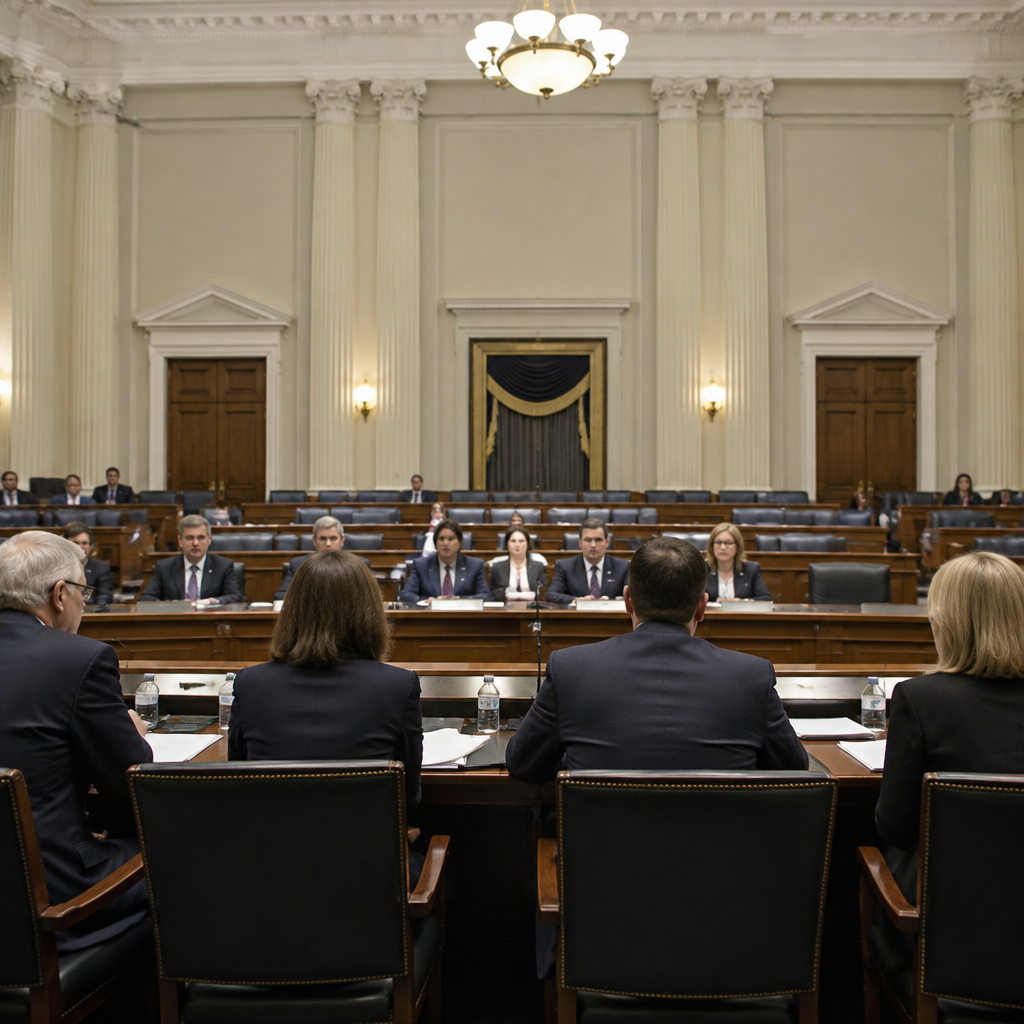
"The AUKUS Public Inquiry matters more for the debate it provokes than for its dubious conclusions, because AUKUS needs ongoing popular support that can only be built and maintained through open discussion," the article argued.
AUKUS needs open discussion to secure long-term buy-in
The inquiry’s chief contribution, according to the piece, is not the quality of its findings but the public conversation it has re-opened. The three AUKUS governments created the pact in secret, the article notes, and a multi‑billion‑dollar, multi‑decade program depends on "solid and consistent public buy‑in." That need is especially acute where emotive elements such as nuclear technology are concerned, and where public understanding has so far been described as "sporadic."
Inquiry’s two themes: appetite for information and criticism of Pillar One
The report, issued on 4 November, was said to advance two main themes: an appetite for more information, and multi‑pronged criticism of AUKUS, particularly its submarine element, Pillar One. The article highlights an uneasy tension between those themes — a reported lack of information must by definition limit the ability to draw cogent conclusions either for or against the program.

Audit-ready is a season. It shouldn't be.
Evidence in spreadsheets, controls drifting between audits, frameworks multiplying on flat headcount. Nubivance runs continuous compliance on Rapid7 Cyber GRC - SOC 2, HIPAA, ISO 27001, PCI, CMMC.
End the scramblePolling: Guardian Essential, Lowy Institute, and United States Studies Centre show mixed views
The article places polling at the centre of the case for more transparency. It cites the Guardian Essential poll finding that 38 percent of respondents said AUKUS Pillar One would make Australia more secure, while far fewer — 21 percent — thought it would make Australia less secure. At the same time, annual polling by the Lowy Institute has "consistently found that two‑thirds of Australians support acquiring nuclear‑powered submarines." Yet the United States Studies Centre survey found a substantial 44 percent of Australians disagreed that AUKUS had been properly explained. The article also points to Lowy data showing young people are much less likely than others to favour acquiring nuclear‑powered submarines, raising questions about future, intergenerational support.
Expert rebuttals: geopolitics, nuclear management, and sovereignty
In the days after the inquiry’s report, journalists, politicians and academics rapidly challenged its central claims. The article summarises those rebuttals as ranging from critiques of the inquiry’s understanding of Indo‑Pacific geopolitics to arguments that it failed to acknowledge Australia’s ability to draw on US and British experience in managing nuclear technology and waste. Commentators also argued the report glossed over the fact that alternatives to acquiring US and British submarines were considered — noting that AUKUS itself was an alternative to the previous plan — and described the report’s treatment of sovereignty as "naive and outdated" in a world of complex partnerships and supply chains.
What this means for the three AUKUS governments, young Australians, and experts
- The three AUKUS governments — constrained by necessary secrecy on defence matters — will face renewed pressure to explain the long‑term logic of the partnership and to translate intermittent support into consistent public buy‑in for a multi‑decade project.
- Young Australians, flagged by the Lowy Institute as comparatively sceptical, are a cohort whose lower levels of support the article identifies as a long‑term risk; winning their understanding and backing, the piece argues, will be important for sustaining the program across future leadership cycles.
- Experts, journalists and academics have already used the inquiry’s weaknesses as a platform to outline AUKUS’s positives; the article suggests that continued public rebuttal will both educate voters and put the partnership back on the national radar.
The practical upshot, as the article frames it, is partly ironic: the anti‑AUKUS energy that produced a privately run public inquiry may ultimately bolster the partnership by forcing a wider, public airing of the case for it. Whether that results in clearer explanation from the three governments, sustained engagement beyond anniversary spikes in September and March, or an altered tone from senior commentators — only time will tell. For now, the inquiry has re‑opened a debate that the piece suggests AUKUS’s long‑term success cannot afford to have remain episodic.