Aero Vodochody currently produces approximately 12 Skyfox aircraft annually, with the capacity to rise to 18 — a hard production ceiling that matters because the Czech Republic is discussing supplying Ukraine with up to 16 L-39NG Skyfox jets to hunt Russian Shahed-type attack drones.
Czech offer and Kyiv meetings
Czech Deputy Prime Minister and Industry and Trade Minister Karel Havlíček raised a proposal in Kyiv to transfer a total of up to 16 Aero L-39NG Skyfox aircraft — four already agreed for transfer plus a further 12 now under discussion with Ukrainian counterparts. Havlíček met Ukrainian Prime Minister Serhiy Koretskyi and described the talks as encouraging; he did not announce a finalized agreement for the additional aircraft.
What the L-39NG Skyfox is: airframe, engine, performance
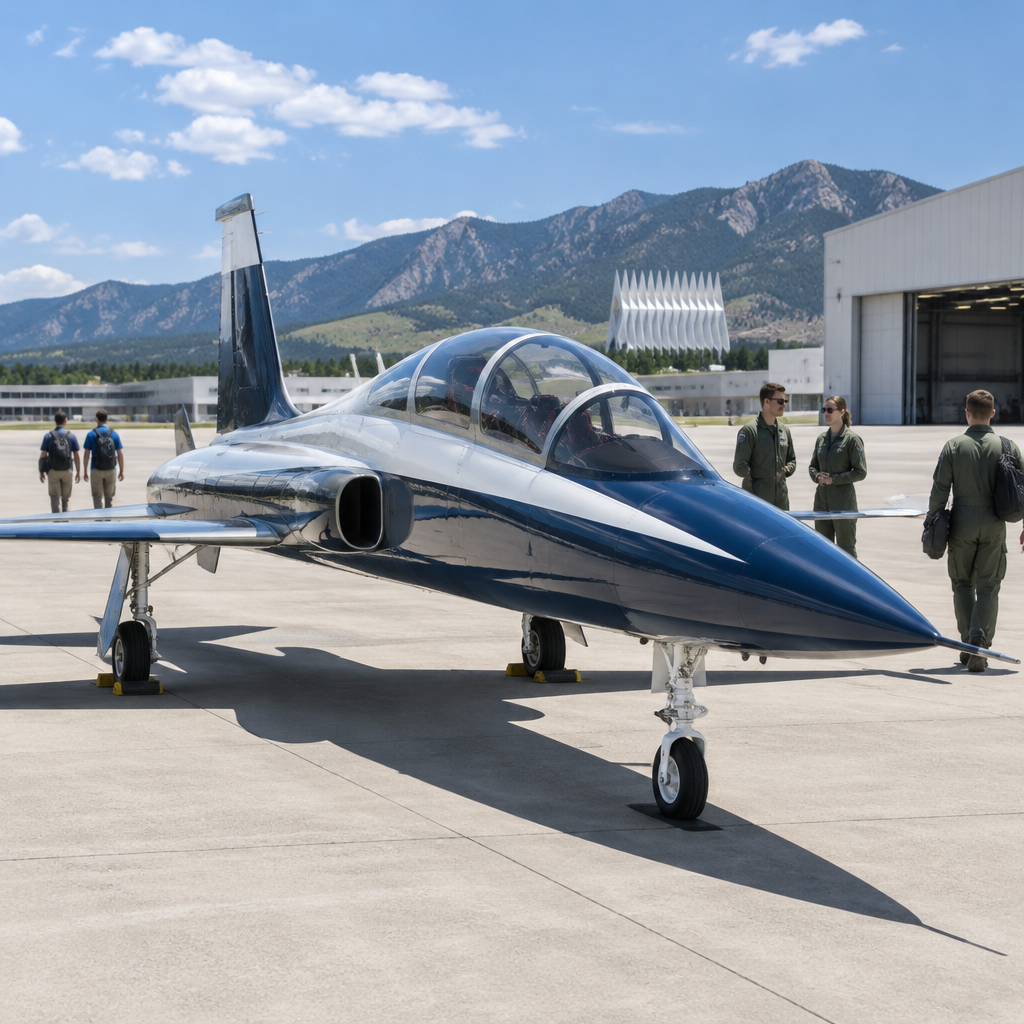
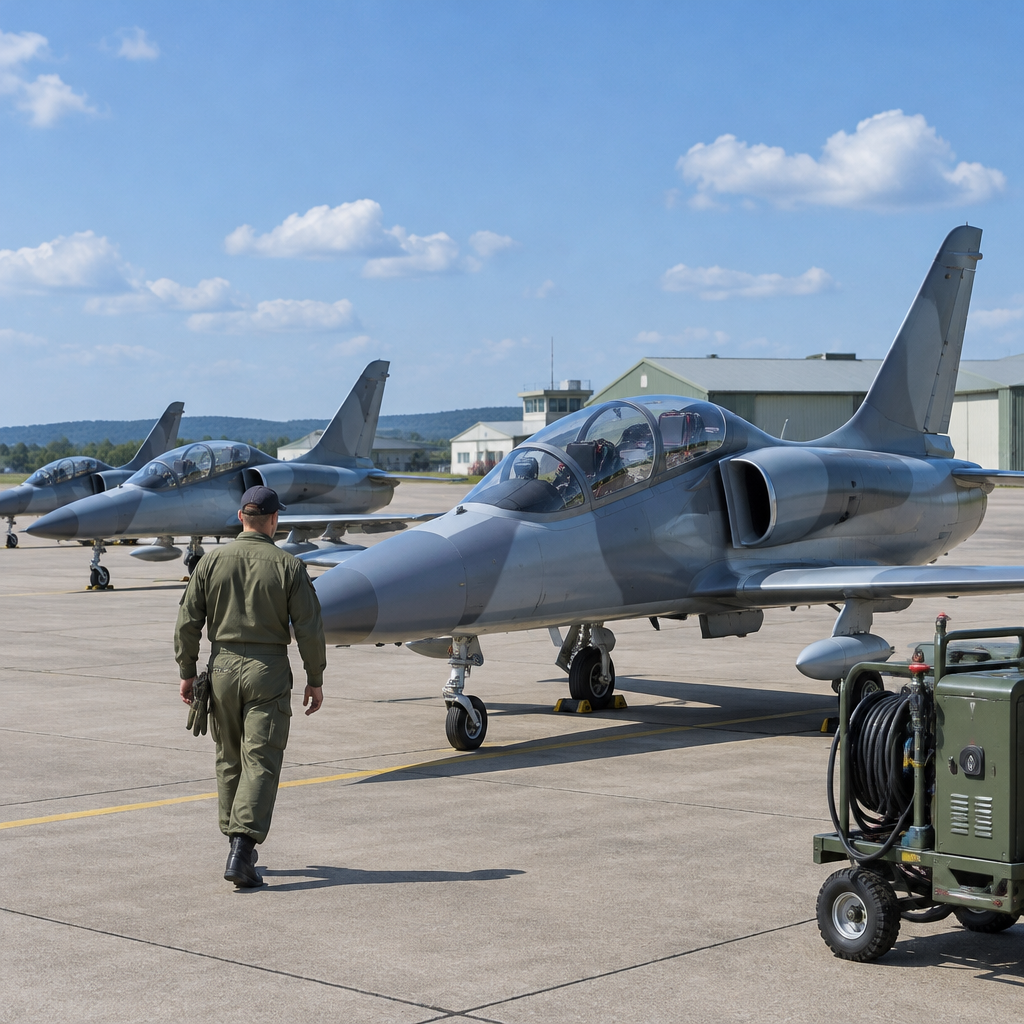
The Aero L-39NG Skyfox is a modernized derivative of the Cold War–era L-39 Albatros trainer. Reworked in the 2010s, the Skyfox uses modern materials to reduce weight and extends structural lifespan to 15,000 flight hours. It replaces the original Soviet engine with the American Williams FJ44-4M turbofan, gaining better fuel efficiency and digital engine control. The jet has a modern glass cockpit, updated flight controls, a maximum speed of about 560 miles per hour, a service ceiling near 38,000 feet, and five external hardpoints for weapons or mission equipment.

The cyber insurance questionnaire just landed. Now what?
SOC 2, HIPAA, insurance renewals - someone has to own security strategy. Nubivance provides fractional CISO leadership without the full-time salary.
Get a security leadDrone Hunter concept, armament, and economics
Aero Vodochody is developing a Drone Hunter configuration specifically to engage uncrewed aerial vehicles. The proposed fit includes an electro-optical targeting system and launchers for 70mm laser-guided rockets; gun pods are another potential option. Aero is working with Belgian defense company Thales on the guided rocket system. The Thales 70mm laser-guided rocket is similar to the U.S. APKWS II type; the reported cost profile in the source places the guidance and control element at roughly $15,000, with total APKWS II-style rockets generally in the $20,000–$25,000 range.
Those costs are contrasted in the reporting with traditional air-to-air missiles: current-generation AIM-120 variants are reported in the ~$1 million unit-cost range, and AIM-9X variants around $500,000. Aero Vodochody also estimates Skyfox operating costs at approximately $1,700 to $2,300 per flight hour versus around $22,000 per flight hour for an F-16-class fighter.
Operational trade-offs and the contested airspace
Analysts quoted in the source see the Skyfox as a middle ground between frontline fighters and lower-end propeller or utility platforms. Justin Bronk, Senior Research Fellow for Airpower and Military Technology at RUSI, said the L-39NG “offers an unusually attractive combination of attributes as a dedicated counter-drone interceptor; being fast enough to easily intercept Geran-3 and Geran-4 jet-powered drones, very cheap and simple to operate compared to frontline fighters and even other advanced trainer jets, already having targeting pod, gunpod and rocket pod options integrated, and being available quickly due to a small existing order book.”
Bronk added that the Skyfox “also has impressive endurance for an aircraft of its size and weight, so it can stay on station longer than most other jet options without air-to-air refuelling,” a capability the source ties to the FJ44 engine. He noted the primary limitation — a lack of an onboard radar — but said “this makes it harder to acquire the drones during an intercept, it is not as problematic in Ukraine given the extensive existing network of radar-equipped ground-control stations to help guide interceptors to the rough vicinity of the target.”
The Skyfox’s potential role is to reduce pressure on Ukraine’s more capable fighters — F-16s, MiG-29s, Su-27s and French-supplied Mirage 2000s — which are needed for counter-air operations, strikes, and intercepting faster cruise missiles and jet-powered attack drones. The source reports the F-16 fleet is under strain: more than half of the aircraft were reportedly stuck in maintenance limbo and shortages of AIM-9 Sidewinder and AIM-120 AMRAAM missiles are complicating operations. Russia’s jet-powered Geran family — including Geran-3 and Geran-4 — are reported to reach roughly 280–310 miles per hour and operate at altitudes up to 26,000 feet, increasing interception difficulty for slower or cheaper systems.
What this means for the Ukrainian Air Force, the Czech government, and Aero Vodochody
- Ukrainian Air Force: A dedicated, lower-cost interceptor could preserve frontline fighters for higher-end missions and relieve missile consumption, but effectiveness hinges on integration with Ukraine’s ground radar network and the results of Drone Hunter testing.
- Czech government: The proposal follows Prague’s earlier, unsuccessful negotiations over L-159 ALCA transfers; political decisions in Prague will determine whether agreed transfers proceed and whether additional aircraft are released.
- Aero Vodochody and Thales: Deliveries and fielding depend on the L-39NG production schedule (booked through the second quarter of 2027 at reported rates) and on completing integration and testing of the Drone Hunter configuration and its guided-rocket systems.
Conclusion
The Czech discussions could give Kyiv another tailored tool against the expanding threat of Russian one-way attack drones, but several concrete constraints remain: no finalized agreement for the additional aircraft has been announced; Drone Hunter has not yet entered operational service and requires further testing and integration; and Aero Vodochody’s limited production capacity — roughly 12 aircraft per year, with a booked schedule into mid‑2027 — may slow deliveries. Whether the Skyfox becomes a practical, cost-effective drone hunter for Ukraine will turn on those political, technical and industrial variables.