“America’s ability to compete with China depends in part on our ability to manufacture the materials that underpin our economy and national defense,” Biosphere CEO Brian Heligman said in a press release announcing a new Pentagon award.
Biosphere’s 20,000‑liter bio‑brewery and the Pentagon award
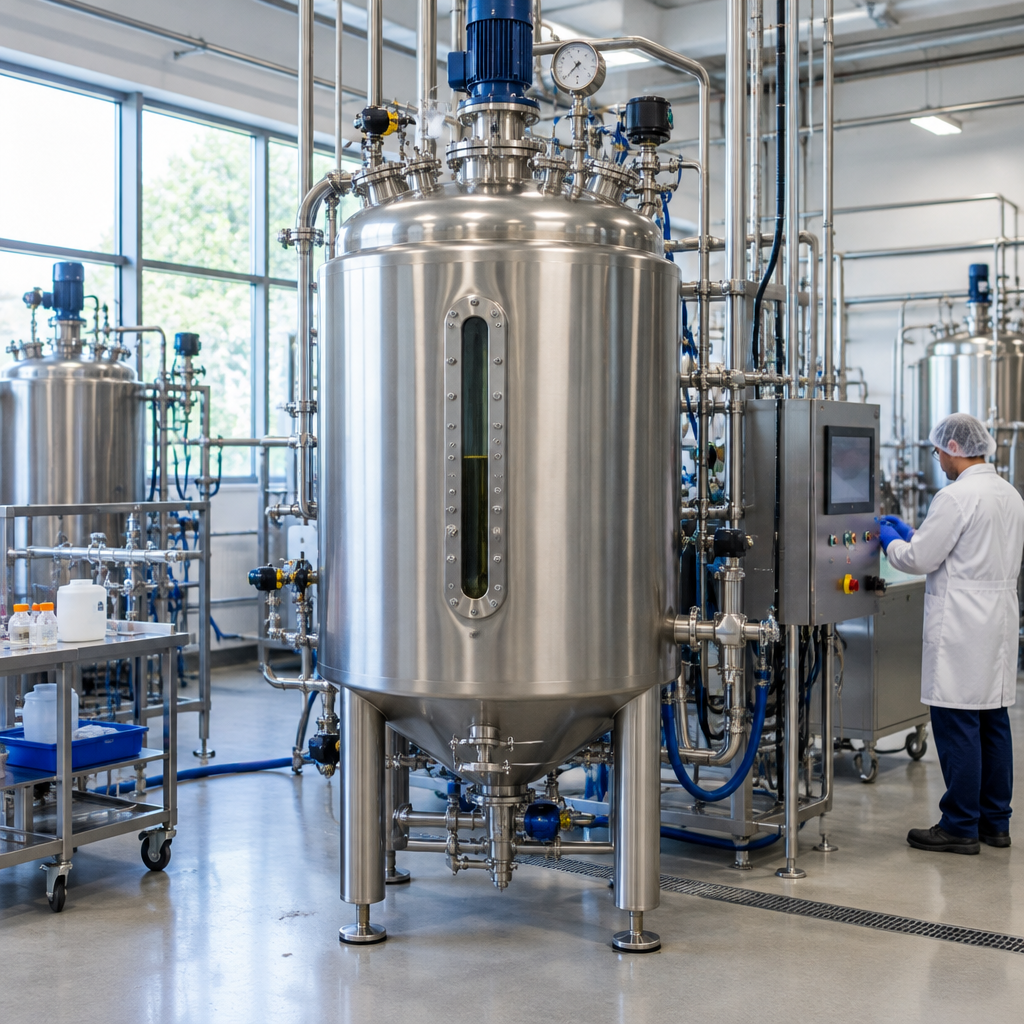
The Department of Defense has awarded $21 million to California-based startup Biosphere to build a 20,000‑liter biomanufacturing facility intended to produce “critical chemicals” for military supplies. Biosphere plans to commission the mid‑sized facility in the fourth quarter of 2027. The company describes the site as about the size of a thriving microbrewery and says its projected output is roughly 100 tons of chemicals per year.
What the facility will make — and what the company will not say
In public statements and an interview with Breaking Defense, CEO Brian Heligman named potential products ranging from a “bio‑cement” mixture that can turn loose sand into solid landing surfaces for helicopters to polymer‑bonded explosives (PBX) used in weapons such as the Hellfire missile. Heligman declined to disclose specific chemical targets beyond saying “we’ve had some detailed discussions around two or three fine chemicals which should be quite a good fit for the facility [and] the government priorities they’ve articulated.”

Audit-ready is a season. It shouldn't be.
Evidence in spreadsheets, controls drifting between audits, frameworks multiplying on flat headcount. Nubivance runs continuous compliance on Rapid7 Cyber GRC - SOC 2, HIPAA, ISO 27001, PCI, CMMC.
End the scrambleWhy a mid‑scale, biology‑based plant?
Heligman framed the 20,000‑liter size as a “sweet spot” for defense needs: large enough to make sufficient quantities for munitions and other military programs but not so large as to carry the overhead of traditional bulk manufacturing. He contrasted the projected output with conventional petrochemical plants, noting that 100 tons per year is tiny compared with commodity‑scale plastic production, but roughly ten times the size of the 1,000‑liter systems currently standard in military labs for experimental batches.
Biosphere described technical controls it uses to keep bioprocesses clean — for example, using ultraviolet light to sterilize miles of piping so the wrong microorganisms do not proliferate — highlighting the operational complexity biomanufacturing entails.
Context: Pentagon supply‑chain strategy and earlier awards
The $21 million award follows an earlier Pentagon contract to Biosphere, issued less than six months prior, worth up to $9 million if all options are exercised. That previous award funded development of a portable, electrically powered bio‑brewery designed to make protein from water and air, using microorganisms fed by those inputs.
Both awards are part of a larger Defense Department effort to shore up supply chains and rebuild domestic manufacturing of vital components and chemicals that have been offshored, especially to China. The source notes the Defense Department currently faces high demand as the military rushes to restock munitions expended against Iran; at the same time, historically volatile funding for energetics has produced “dramatic peaks and valleys,” complicating private investment in specialty chemical capacity in the United States.
Pentagon Chief Technology Officer Emil Michael elevated biomanufacturing into one of six “Critical Technology Areas” last year, according to the report, even as other priorities were downgraded.
How the military, traditional manufacturers, and biomanufacturers are likely to respond
- The military and procurement leaders: Will gain a mid‑scale, demonstrable production line for bespoke chemicals used in munitions and supporting equipment, timed to help restock supplies that the source says are being consumed in current operations.
- Traditional chemical manufacturers: Face the same structural problem noted at a Hudson Institute conference — irregular Defense demand and high upfront investment deter them from building capacity for niche energetics, a gap Biosphere’s mid‑scale approach aims to fill.
- Biomanufacturers and technologists: See an opportunity to prove that biological production can hit a defense‑relevant scale and cost profile. Heligman framed the facility as both a production asset and a demonstration to show “that our cost advantage translates to even the very large facilities,” and he cited rapid advances in genetic engineering and AI simulation of biological processes as drivers of future growth.
The $21 million award and the earlier portable‑brewery grant show the Pentagon testing a two‑track approach: rebuilding traditional industrial capacity while experimenting with emerging biomanufacturing techniques. The next concrete milestone in that experiment is commissioning of Biosphere’s 20,000‑liter facility in the fourth quarter of 2027. Until then, company and Pentagon officials will be working to translate laboratory scale biology and modeling into repeatable production runs that meet the exacting needs of military energetics and specialty chemicals — and to determine whether the “sweet spot” Heligman describes can be sustained cost‑competitively at larger scales.
Original reporting: breakingdefense.com — “Startup Biosphere wins Pentagon contract to scale up production of key chemicals”