"The push for low-cost munitions is unlikely to have a material effect on the Iran War—at least not anytime soon," said Becca Wasser, Bloomberg Economics’s defense lead.
New, cheaper seekers and drone killers — what was announced
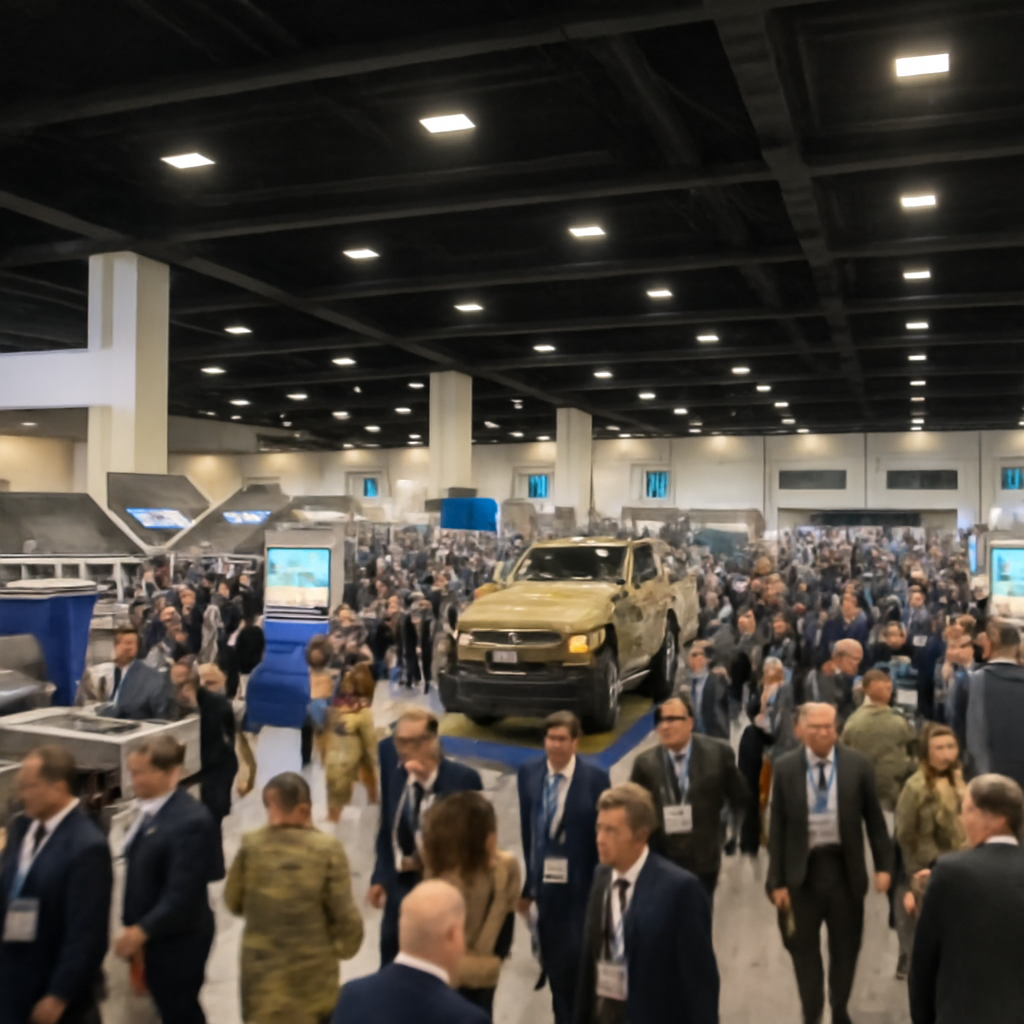
At recent industry gatherings, major primes and newcomers rolled out lower-cost options aimed at easing pressure on U.S. stockpiles. Boeing unveiled an Ultra Low-Cost Seeker that adapts commercial off‑the‑shelf components and draws on seeker expertise from programs like PAC‑3 MSE; Boeing says further flight tests are expected in 2027. Northrop Grumman announced a “cost-effective” 50 millimeter gun‑based drone defense system. Lockheed Martin showed a more affordable, proximity‑detonation version of its Patriot missile. New entrants—Anduril’s Barracuda, Zone 5 Technologies’ Rusty Dagger, Coaspire’s cruise missile, Castelion in hypersonics, and X‑Bow Systems’ $100,000 drone destroyer—are also pitching lower‑price interceptors and strike options. X‑Bow additionally landed an $11 million Missile Defense Agency award to develop and test low‑cost interceptors.
Why cheaper designs do not translate into instant supply
Experts in the room cautioned that concept and announcement are far from mass production. Todd Harrison of the American Enterprise Institute noted that adapting or developing new weapons requires testing and evaluation, which takes time. Jason Reynolds of Lockheed said PAC‑3 ACE removes Attitude Control Motors and is “no longer hit‑to‑kill,” but that PAC‑3 ACE “isn’t expecting a first flight until early 2028, and won’t go to production until 18 months after that.” Boeing declined to provide exact affordability figures for its seeker. In short: development, flight testing and integration timelines make rapid, large‑scale fielding unlikely in the near term.

This site is the portfolio.
OSINTSights runs on Cloudflare Workers, D1, R2, and Vectorize, with an AI pipeline on Hetzner ARM. Nubivance designed, built, and operates it. We do the same for clients.
See what we buildLegacy weapons, contracts, and the production bottleneck
While firms pitch new designs, the Pentagon is also placing large bets on legacy systems—and those take time to replenish. RTX secured a seven‑year, $22.9 billion Tomahawk contract with the Navy. Lockheed Martin received a seven‑year, $35 billion undefinitized contract for THAAD—an agreement that leaves aspects to be finalized and requires special approval because work must begin before price and terms are complete. Supply chain realities complicate ramp‑up: an AEI report found that at the current maximum annual rate of 96 THAAD interceptors per year, it would take 27 years to reach the quantities the Pentagon wants. The Center for Strategic and International Studies warned in May that “there will be a window of vulnerability for several years until inventories return to their previous levels.”
Framework agreements, capital spending, and the limits of demand signals
Framework agreements have become the Pentagon’s tool to signal demand and induce industry investment, but they are not guaranteed orders. Jerry McGinn of CSIS described frameworks as demand signals that reduce risk and enable increased capital expenditures; CSIS analysis found publicly traded companies with framework agreements raised capex by 31 percent from Q2 2025 to Q2 2026. Yet money still needs congressional appropriation, firms must win binding contracts, and then produce. Becca Wasser summarized the dynamic: “The framework agreements are just that—agreements, not contracts. Until these are on contract, you won’t see a lot of companies surging production.”
What this means for the Pentagon, Lockheed Martin, and war planners
- The Pentagon: faces a short‑to‑medium‑term stockpile shortfall that will persist until production and procurement on both legacy and new systems scale up; changes in tactics are being discussed but face operational and risk constraints.
- Lockheed Martin (and other primes): are leaning into framework agreements and undefinitized contract actions—Johnathon Caldwell said Lockheed “has never shied away” and is “bringing capabilities to market in weeks and months, not years and decades”—but must still complete testing, contract finalization and production ramp.
- War planners and regional commanders: are constrained by the interplay of inventory depletion and operational risk. Tom Karako of CSIS argues the services have plentiful GPS‑guided gravity munitions today but are not using them because of “extreme risk aversion.” The fall of an F‑15E over Iran and subsequent declarations by President Donald Trump and Defense Secretary Pete Hegseth that the U.S. had “achieved overwhelming air dominance and superiority” highlight how contested airspace and risk calculations shape which munitions are considered usable.
The rapid rollout of lower‑cost seekers and interceptors is welcome, but the facts in front of policymakers are sober: announced concepts and framework deals are useful signals, but production rates, testing schedules, supply chains—especially solid rocket motor suppliers—and appropriations determine when stockpiles actually refill. Between now and the early‑to‑mid‑2028 window when some new systems expect their first flights and subsequent production, the Pentagon will operate with constrained inventories and a narrow set of high‑end interceptors and missiles.