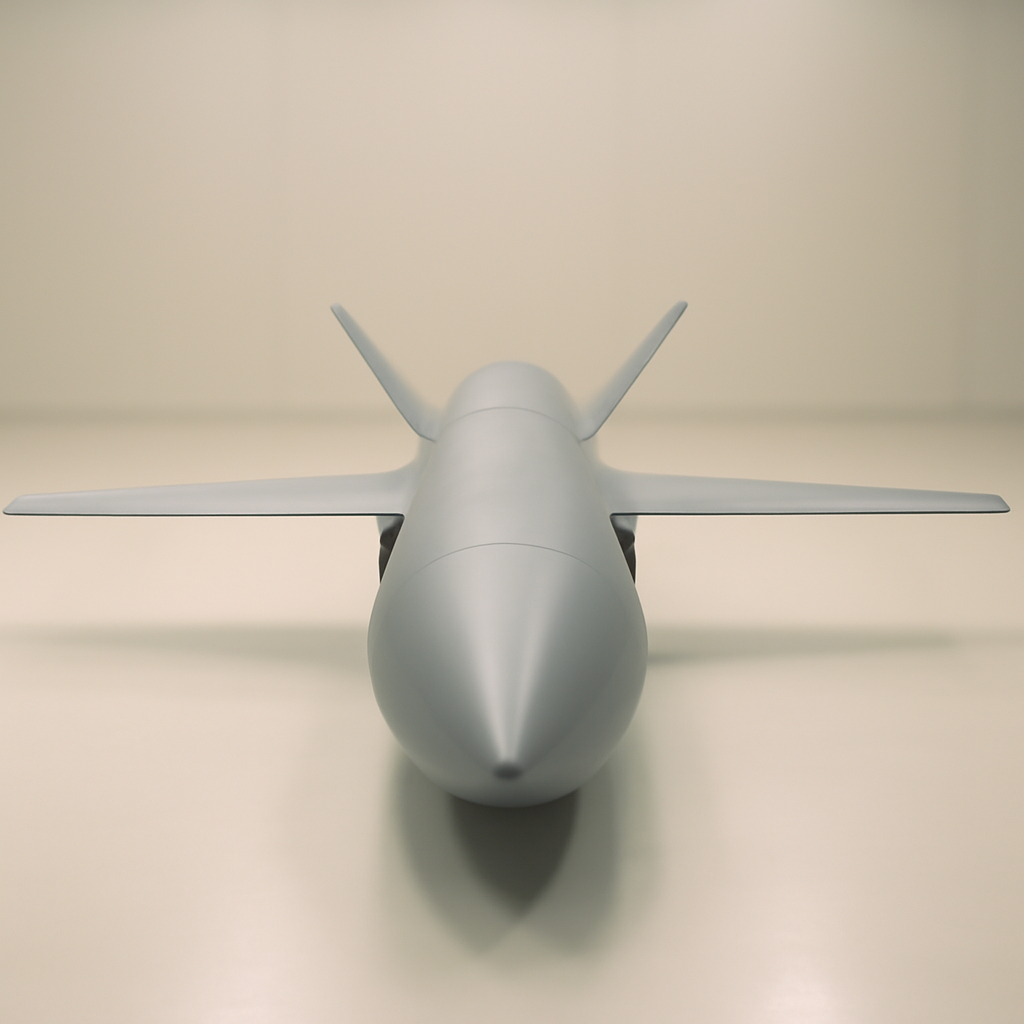
“We are accelerating weapons development from high-end air dominance weapons like the JATM to hypersonic strike systems like the Hypersonic Attack Cruise Missile,” Air Force Brig. Gen. Mark Massaro told reporters at the Air & Space Forces Association’s 2026 conference, a statement that frames the Pentagon’s latest move to transition the AIM-260 Joint Advanced Tactical Missile (JATM) from development toward production.
Pentagon and Lockheed Martin: a framework intended to signal long-term demand
The Pentagon announced a new framework agreement with Lockheed Martin that “is critical to ensuring long-term demand signals flow to key suppliers, allowing Lockheed Martin and the munitions supply chain to invest in manufacturing capacity, workforce, and production efficiencies,” according to a Pentagon press release. The agreement “establishes a framework for future Multi-Year Procurement (MYP) of JATM, executing congressional authority to secure the nation’s highest-priority missile systems,” the release added.
Lockheed Martin described the deal as forming “the foundational agreement for a multiyear procurement contract, pending Congressional approval, that provides long-term demand to strengthen and expand the defense industrial base for the program,” in a separate company release. When asked by TWZ, the Pentagon declined to comment on projected numbers, costs, or delivery schedules covered under the agreement.
Where testing stands: Air Force Test Center update
Brig. Gen. Massaro, head of the Air Force Test Center (AFTC) at Edwards Air Force Base, said the AFTC and Navy test communities are “actively testing JATM, and it’s progressing along its program path.” He described testing activity that includes ground work with models and airborne tests on aircraft, but declined to discuss operational performance details “from an operational security perspective.”
Massaro acknowledged test infrastructure and throughput considerations — “from a test perspective only, infrastructure and throughput to make sure that we can get things out … and make the testing happen” — but said he was not worried about the system’s capabilities. The program remains in development and, as Massaro noted, is being accelerated alongside other high-end weapons efforts.

The cyber insurance questionnaire just landed. Now what?
SOC 2, HIPAA, insurance renewals - someone has to own security strategy. Nubivance provides fractional CISO leadership without the full-time salary.
Get a security leadPlanned platforms: Super Hornet, F-22, F-35 variants, F-47 and CCAs
U.S. Navy F/A-18E/F Super Hornets and U.S. Air Force F-22 Raptors are expected to be the first types to fly operationally armed with AIM-260s. Integration on other platforms, including variants of the F-35 Joint Strike Fighter and the Air Force’s planned F-47 sixth-generation fighter, is expected to follow. The JATM has been discussed as part of the arsenal for the Air Force’s Collaborative Combat Aircraft (CCA) drones as well.
The AIM-260 is being built to the same general form factor as the AIM-120 Advanced Medium Range Air-to-Air Missile (AMRAAM) but with “significantly greater engagement range” over the AIM-120, according to public descriptions. The missile’s exact operational timeline remains unclear: the program was first disclosed publicly in 2019 with a then-stated goal of fielding in 2022, and a late-2025 funding report that suggested a three-month delay was later said to be incorrect by the House Armed Services Committee.
Allied sales confirmed: Australia is first international customer
The framework agreement explicitly includes planned foreign military sales of AIM-260s. Australia is the first confirmed international customer and plans to integrate the missiles on its F/A-18Fs, F-35As, and EA-18G Growler electronic warfare jets. The Royal Australian Air Force’s MQ-28 Ghost Bat CCA-type drones, initial versions of which can already fire AIM-120s, might be an AIM-260 launch platform in the future.
What this means for the Air Force, the Navy, and Australia
- Air Force: AFTC test activity is accelerating and focused on throughput and infrastructure; the service is pacing JATM alongside other long-range weapons programs and remains involved in integration planning for fighters and CCAs.
- Navy: The service expects the Super Hornet to be an early operational launcher and is advancing parallel long-range air-to-air efforts such as the air-launched AIM-174B Gunslinger and the AIM-424 Malice, both cited publicly by the Navy and in related reporting.
- Australia: As the first confirmed international buyer, Australia will pursue integration across manned fighters and electronic-attack aircraft, with a possible future CCA role for the MQ-28 Ghost Bat.
The new framework agreement signals a push to translate the AIM-260 from a tightly held development program into a producible, sustaining capability for U.S. forces and allied partners. But the record is explicit about limits: the missile remains in development, the Pentagon declined to provide program quantities, costs, or delivery schedules, and the multiyear buy itself will require Congressional approval. The concrete test milestones, production ramp plans, and timeline for first operational AIM-260 fielding remain the central questions left to be answered as the program moves from secretive development toward broader deployment.