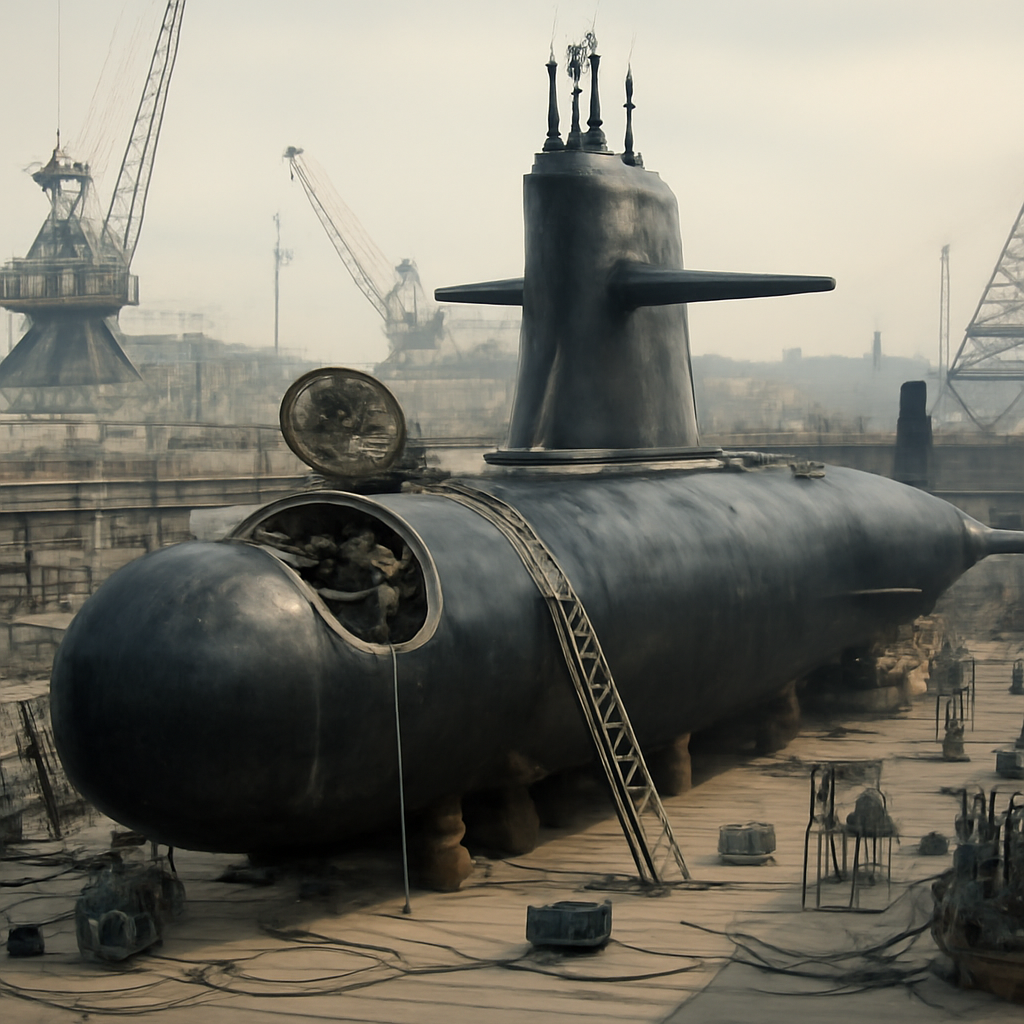
“The USS Pasadena entered inactive idle status on January 1, 2025 and is not expected to be inducted into Norfolk Naval Shipyard for decommissioning until November 15, 2028 (1,414 days)—due to shipyard capacity constraints,” the Government Accountability Office wrote in an Aug. 27 report.
How much time and money are at stake: GAO’s headline figures
The GAO found that, over the past decade, U.S. attack submarines have accumulated 41 ship‑years of idle time while waiting for shipyard work. Looking ahead, the agency projects that 15 attack submarines entering inactive idle status from fiscal year 2026 through fiscal year 2030 could generate more than 14,000 days of additional inactive idle time and about $3.1 billion in operating and support costs.
The report also quantified recent historic costs: roughly $3.3 billion spent on idle Los Angeles‑class submarines and about $835 million on idle Virginia‑class boats over the past decade. GAO’s math equates to roughly $230,000 in operating and support costs for every day a submarine sits pierside waiting to be worked on.
USS Pasadena and the mechanics of an idle boat
GAO uses the USS Pasadena as a concrete example. The boat entered “inactive idle” on Jan. 1, 2025 and — because of shipyard capacity constraints — was not expected to be inducted into Norfolk Naval Shipyard for decommissioning until Nov. 15, 2028, a span GAO counts as 1,414 days. During that time the submarine lacks a valid dive certification and is unable to be operational, yet remains fully crewed.
GAO noted the Navy has used the inactive submarine for crew training while it waits for shipyard work, but that arrangement still carries price: GAO’s analysis estimates the nearly four‑year delay will cost about $300 million in operating and support costs.

This site is the portfolio.
OSINTSights runs on Cloudflare Workers, D1, R2, and Vectorize, with an AI pipeline on Hetzner ARM. Nubivance designed, built, and operates it. We do the same for clients.
See what we buildRoot cause identified: shipyards are overloaded
The GAO attributed the problem primarily to constrained shipyard capacity. “The main problem is that shipyards are simply overloaded with work,” the agency wrote. That overload creates multi‑year backlogs between a submarine’s entry into inactive status and its induction into a shipyard for decommissioning or other work, prolonging the period that the boat remains crewed but non‑operational.
The report flagged the broader programmatic consequence: unless alternatives or mitigation measures are adopted, idle time and associated costs will continue to accumulate across the attack‑submarine fleet.
Recommendations, sensitive items, and the Navy’s response
GAO issued specific recommendations to address the idle‑time problem. Two public recommendations urged the Navy to identify “alternative options for decommissioning attack submarines,” expressly including options such as defueling outside of drydocks and reducing crewing levels for submarines awaiting decommissioning, and to create and execute a detailed inactivation plan designed to reduce inactive idle time.
The report also included two additional recommendations that the Department of Defense deemed sensitive and withheld from public disclosure. According to GAO, the Navy — speaking for DOD — verbally concurred with the recommendations in the report but did not provide written comments.
The GAO report appears months after the Navy’s decision to decommission USS Boise, a Los Angeles‑class attack submarine, despite having spent $1.6 billion on repairs; Chief of Naval Operations Adm. Daryl Caudle told lawmakers last year that the situation was “unacceptable.”
What this means for submariners, the Navy, and taxpayers
- Submariners and crews: Boats in inactive idle status remain fully crewed even though they are not operational and lack dive certification; GAO noted the Navy has used some inactive submarines for training, but the arrangement continues to consume personnel and support resources during extended waits for shipyard work.
- The Navy and shipyards: Shipyard capacity constraints are the proximate cause of multi‑year induction delays. GAO urged the Navy to evaluate non‑drydock defueling and reduced crewing as concrete mitigation steps and to develop a detailed inactivation plan to shrink idle time.
- Taxpayers and budget planners: GAO’s estimates place billions of dollars at risk — roughly $3.1 billion projected for 15 boats through FY2030 and historical idle costs in the billions — underscoring the fiscal consequences of shipyard bottlenecks and current inactivation practices.
GAO’s calculations and its recommendations frame a narrow but costly problem: submarines that cannot dive but remain fully crewed while awaiting scarce shipyard slots. The agency has offered specific fixes — from off‑drydock defueling to smaller crews and a detailed inactivation plan — and reported that the Navy verbally agreed. What remains to be seen is whether the Navy will adopt the public recommendations, how it will address the two DOD‑classified recommendations, and whether changes will convert billions of projected costs into measurable savings.