Tag: unmannedaerialsystems
7 articles

Shield AI Unveils Autonomous VTOL Combat Drone
Shield AI says it has built a jet-powered, runway-free autonomous VTOL fighter — a drone that can launch from ships, forward sites or improvised clearings. If proven, it could slash response times, confound air-defense planning and fundamentally reshape how air power is projected.

Ukraine’s Drone Milestone: Defense Held, Victory Uncertain
A wave of cheap, internet‑connected drones has given Ukraine game‑changing eyes and strike power—blunting offensives and keeping the country afloat—yet despite reshaping the battlefield, mass UAS have so far prevented defeat without delivering a decisive victory.

counter-unmanned aircraft capabilities: Must-Have, Best Tool
Could a $300 drone shut down a city? DHS is asking Congress for $100 million to field sensors, jammers and other tools to detect, track and stop hostile drones — a necessary but imperfect step to protect events, infrastructure and borders while balancing privacy and legal limits.

Amazon-like online marketplace: Must-Have Game-Changer
Imagine soldiers ordering vetted drones as easily as parents buy toys—scrolling specs, reading reviews, and getting gear to the unit in days instead of months. The Army’s new Amazon-like UAS marketplace aims to speed fielding and widen vendor access, while tackling the security, sustainment, and oversight challenges that come with buying fast.
airspace management Must-Have: Best AI for Battle
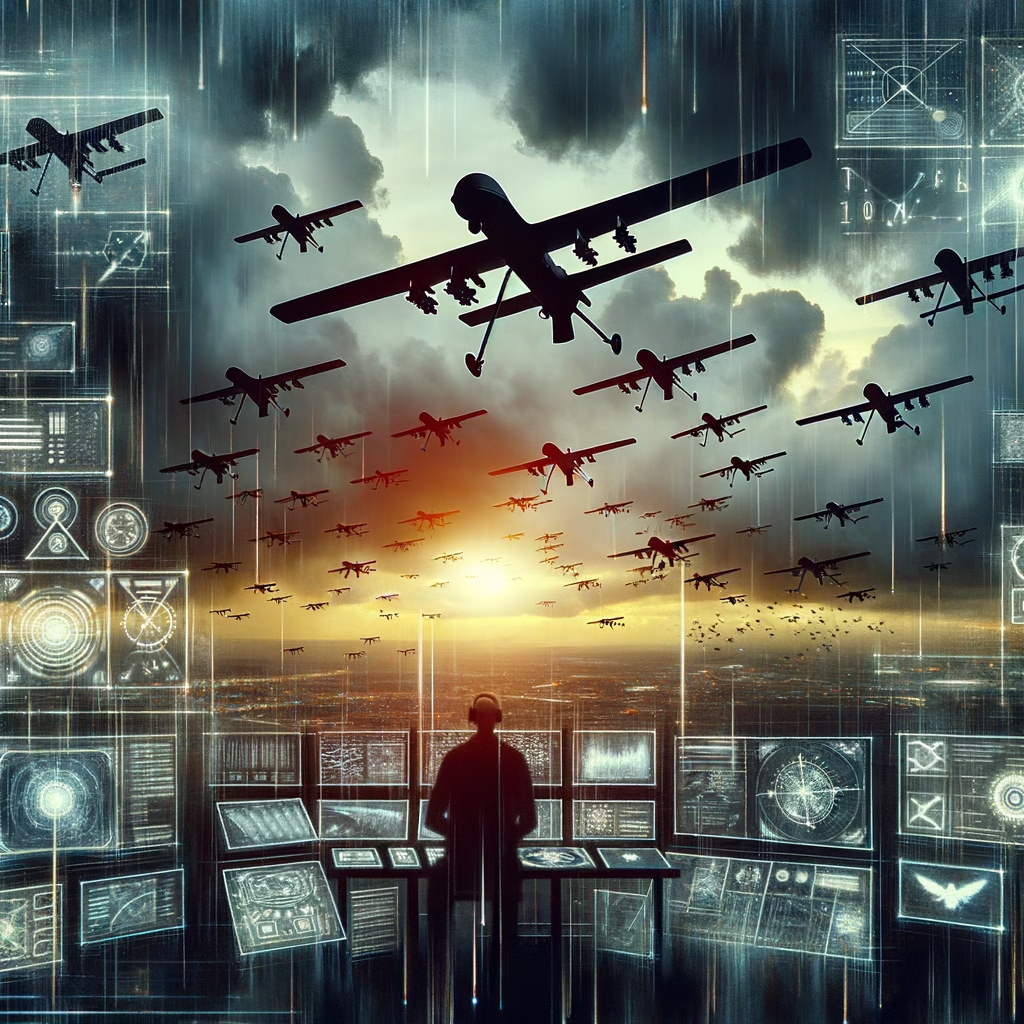
The Army is racing to put AI into battlefield air-traffic control to stop the sky from becoming a deadly traffic jam, asking industry for near-term “fight tonight” fixes and longer-term, explainable systems that keep commanders safe and sane. Done right, AI could untangle crowded airspace and free leaders to focus on strategy; done wrong, it could make the sky the battlefield’s greatest danger.

manned-unmanned teaming: Must-Have Best for Pacific Defense
What used to be science fiction—soldiers teaming with drones, robots, and autonomous sensors—is becoming a near-term reality in the Pacific, forcing commanders to rethink planning, logistics, and doctrine now rather than later. With experiments accelerating and deployments planned within years, the Army must balance rapid innovation with training, resilience, and ethical safeguards to turn advantage into lasting deterrence, not new vulnerability.

C2 centers: Must-Have Resilience for Best Survival
When the map is incomplete, radios go quiet, and drones, jammers and deception probe your nerve centers, modern C2 centers face three linked challenges—information overload and trust, contested communications, and coalition interoperability—that will decide whether commanders can see, decide and act faster than the enemy. The Ukraine war shows we must prioritize explainable data fusion, layered resilient comms, and federated interoperability now, or risk losing the advantage on tomorrow’s battlefields.