"important contributions to ensuring the stability of the global supply chain," Xi Jinping told Kazakh leaders — a phrase that captures why Astana is racing to remake its military on an accelerated timetable.
Kassym‑Jomart Tokayev’s two‑year deadline and its strategic logic
President Kassym‑Jomart Tokayev set a strict, two‑year deadline for a comprehensive modernization of Kazakhstan’s armed forces. The move has provoked debate: some observers see it as precautionary against internal unrest or regional revisionism after Russia’s invasion of Ukraine; others call it a bid to elevate Kazakhstan as a middle power. The source frames a narrower rationale: Kazakhstan’s leaders are adapting to the changing character of modern warfare and to rising multipolar strategic unpredictability, making rapid reform "rational" and increasingly necessary.
From platforms to systems: drones, AI, and satellites
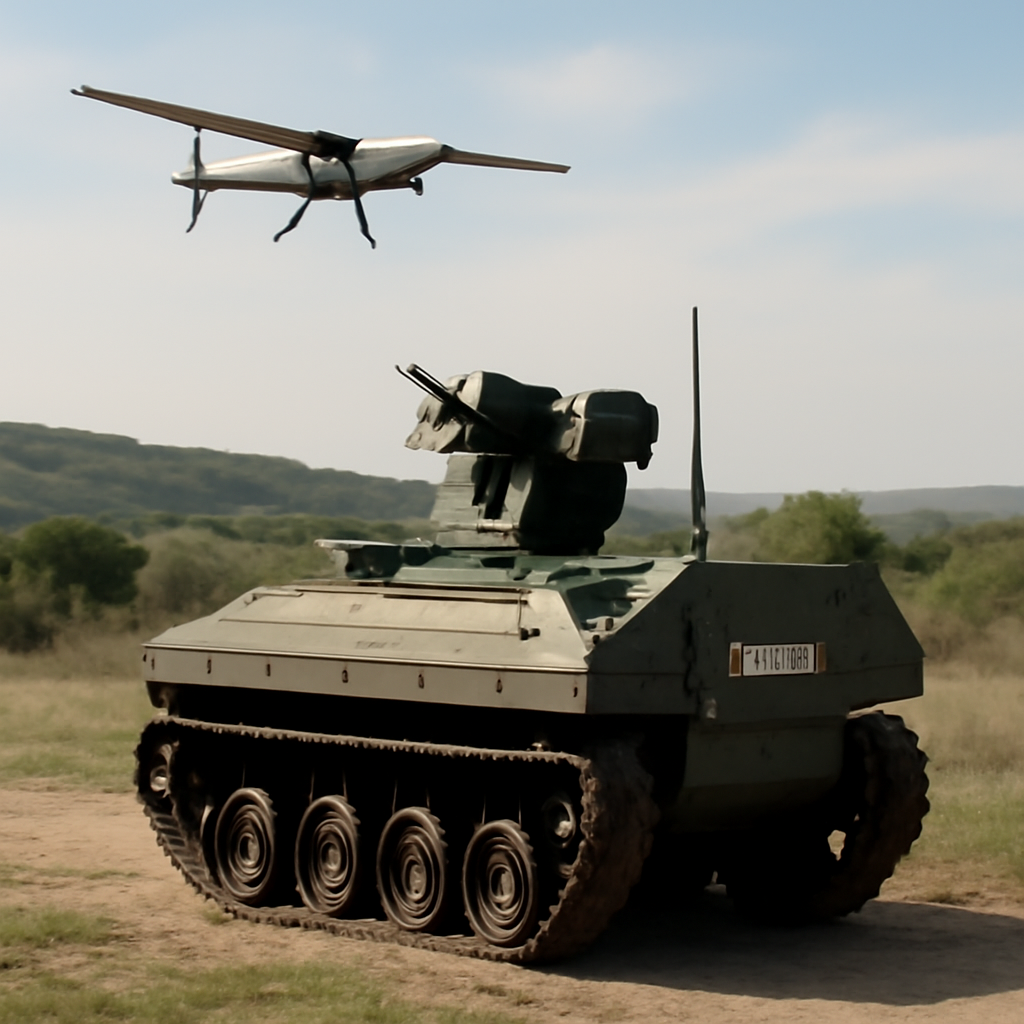
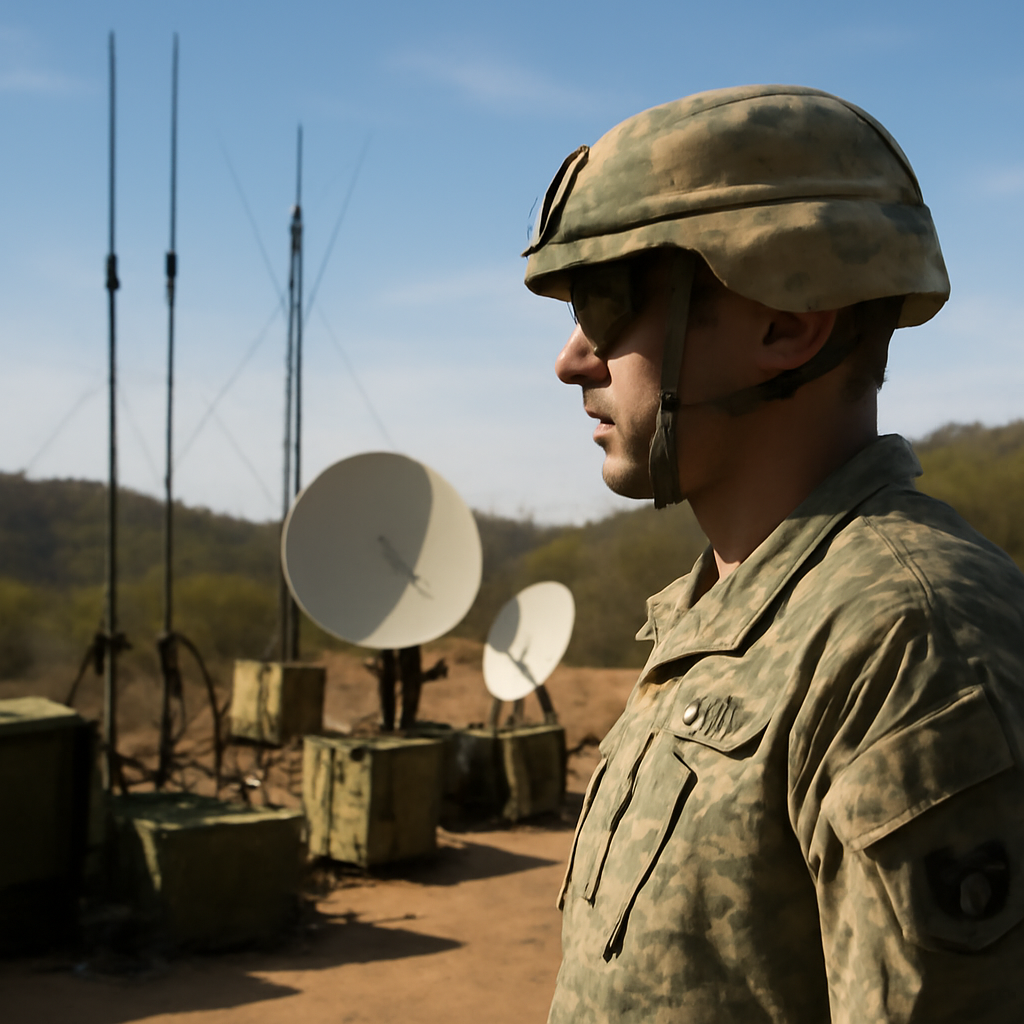
Kazakhstan is moving away from platform‑centric thinking toward an integrated, system‑centric approach centered on unmanned systems, artificial intelligence, and domestic satellite capabilities. The country has established a specialized military AI unit and is prioritizing an integrated ISR (intelligence, surveillance, reconnaissance) architecture in which data — rather than individual platforms — becomes the primary asset. The source notes that Ukraine’s long‑range drone operations reportedly reduced the pre‑invasion operational strength of the Russian Aerospace Forces (VKS) by roughly 25 percent and that in 2025 an estimated four out of every five Russian casualties were caused by Ukrainian drone operations — evidence that unmanned systems and AI analytics can offset demographic and geographic constraints.

This site is the portfolio.
OSINTSights runs on Cloudflare Workers, D1, R2, and Vectorize, with an AI pipeline on Hetzner ARM. Nubivance designed, built, and operates it. We do the same for clients.
See what we buildDefense partnerships: Turkiye, China, and diversified suppliers
Astana is broadening suppliers and building domestic capacity. A defense industry deal with Turkiye will establish a facility to produce ANKA unmanned aerial vehicles on Kazakh soil, even as Tokayev publicly downplayed the notion of a Turkic military alliance. Turkish President Recep Tayyip Erdogan visited the Alem.AI Artificial Intelligence Center in Astana during the Organization of Turkic States Informal Summit in Turkistan on May 15, 2026, signaling closer technological and defense ties.
China has become a major source of dual‑use goods and high‑tech components. Chinese exports to Kazakhstan of certain unmanned aircraft and intermediary components rose sharply: unmanned aircraft (25–150 kg) exports increased from $100,000 in 2023 to $1.31 million in 2024; unmanned aircraft (250 g–7 kg) rose from $3.7 million in 2022 to $9.7 million in 2024. Components such as radio navigational aids increased from $12.93 million in 2022 to $48.18 million in 2025; semiconductor‑based transducers from $370,000 in 2023 to $20.5 million in 2025; and electronic integrated circuits (amplifiers) from $188,000 in 2023 to $11.6 million in 2025. In 2025 Yesil Technology Company, backed by JSC NC Kazakh Invest, pledged $12 million to establish a drone production facility in Kazakhstan.
Economic corridors, the Indo‑Pacific contingency, and doctrine
Kazakhstan’s new military doctrine explicitly acknowledges intensifying great power rivalry and heightened risk of regional conflicts. The source links Astana’s modernization to possible spillovers from a major East Asian conflict — particularly around the South China Sea, East China Sea, or the Taiwan Strait — which could force China to shift resources eastward and increase reliance on overland transit routes through Central Asia. Trade through the Middle Corridor is rising: current capacity stands at 2.65 million tons and is projected to reach 10 million tons annually by 2027; in a conflict scenario, flows through the corridor could potentially triple or increase even further. That possibility turns Kazakhstan’s transport corridors and energy infrastructure into strategic assets whose protection helps explain the defense push.
What this means for Turkiye, China, and the United States and European Union
- Turkiye: Ankara will watch Kazakhstan’s industrial ties closely — Turkish cooperation on ANKA production and Erdogan’s visit to Alem.AI point to deeper defense‑tech linkages that may expand Turkiye’s regional footprint.
- China: Beijing has scaled exports of dual‑use components to Kazakhstan and values Central Asia’s role in diversifying supply routes; however, any East Asian conflict that reroutes Chinese trade would increase pressure on overland corridors that depend on Kazakh infrastructure.
- United States and European Union: Western actors are cited as potential partners in technology and capacity building even as Kazakhstan continues exercises with the CSTO and SCO. The source notes Western concern about cooperation perceived as ideological coherence with Beijing and Moscow and the risk of direct or secondary sanctions, underscoring Astana’s balancing act.
Kazan’s realignment is pragmatic: allocate more than $6 billion to defense in 2026 (an increase of over $700 million from 2025), diversify suppliers while building indigenous production, and invest in training and digitalization. Defense Minister Dauren Kosanov has issued a directive to modernize military training and establish multi‑tier training centers with emphasis on AI and digital skills, and the government has publicly framed the modernization as necessary to deter threats, secure infrastructure, and preserve economic sovereignty amid multipolar uncertainty.
Astana’s gamble is concrete and measurable: a compressed timetable, rising defense spending, new production partnerships, and a doctrine attuned to global supply‑chain fragility. The unanswered operational test is whether Kazakhstan can convert procurement and partnerships into a resilient, data‑driven force within two years — and whether that force will be sufficient to shield the country’s territory and corridors if a distant conflict remakes trade and security maps.