“Rapid and accurate battlespace awareness” and the ability to “disrupt C4I and other capabilities” — those are the phrases Japan’s Ministry of Defense has used to describe why Tokyo is widening the remit of its air service and formally folding space into its mission set.
Parliamentary approval and the rebranding timetable
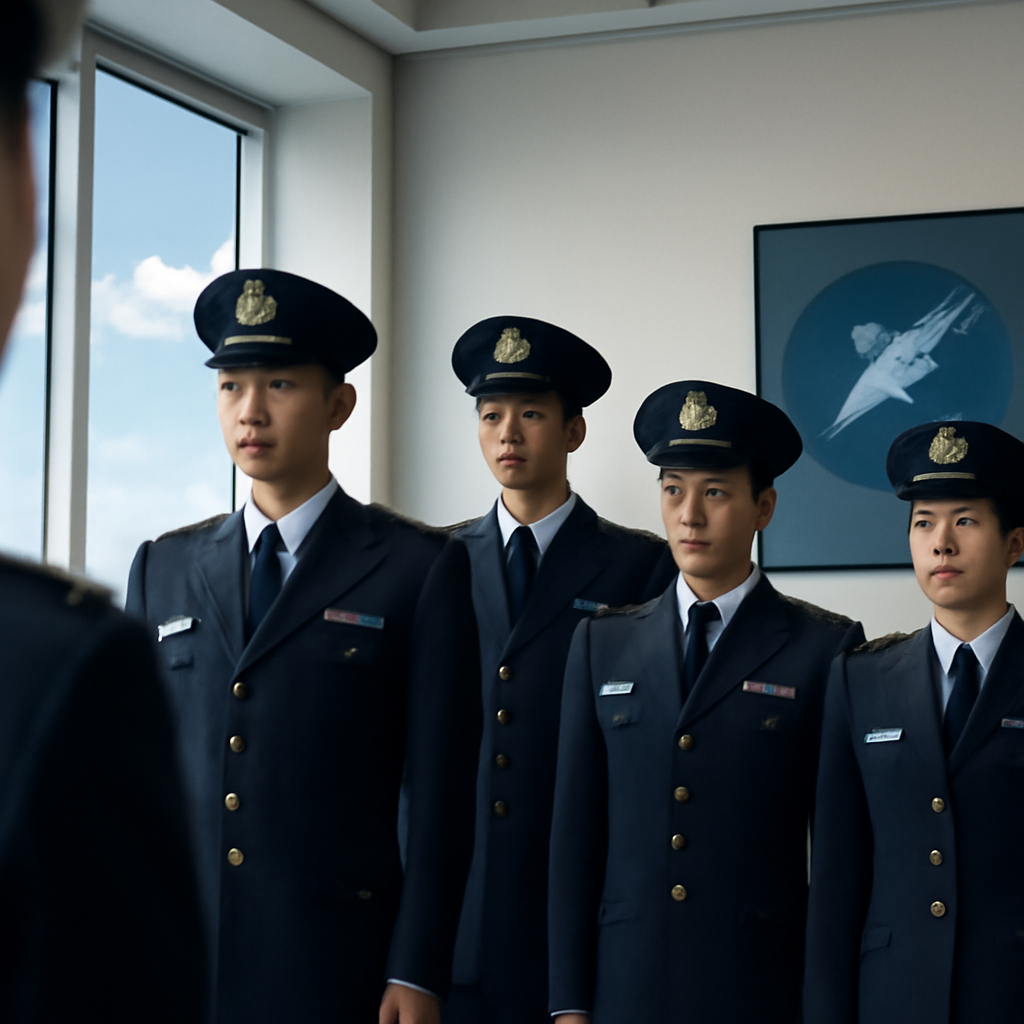
Japan’s upper house of parliament approved a bill on June 26, 2026, to rename the Japan Air Self-Defense Force (JASDF) to the Japan Aerospace Self-Defense Force. The JASDF says the name change will take effect at the start of the next Japanese fiscal year, April 1, 2027. The vote gives legal and institutional force to a shift that the service and the Ministry of Defense have been enacting administratively over recent years.
Space Operations Wing: reorganization and manpower growth
The change in name follows concrete organizational moves inside the JASDF. In March, the service reorganized its Space Operations Group into the Space Operations Wing. That move accompanied a jump in personnel strength: the unit now numbers 670 personnel, up from 310 the year before, according to the JASDF. The wing’s responsibilities are described in operational terms — space domain awareness, monitoring orbital debris, and expanding the number and capabilities of satellites available to Japan.

This site is the portfolio.
OSINTSights runs on Cloudflare Workers, D1, R2, and Vectorize, with an AI pipeline on Hetzner ARM. Nubivance designed, built, and operates it. We do the same for clients.
See what we buildMinistry of Defense rationale: awareness and C4I disruption
Japan’s Ministry of Defense has framed the expanded space focus in operational-security language. The ministry said increased attention on the space domain will enable “rapid and accurate battlespace awareness” and will reinforce “capabilities to disrupt C4I [Command, Control, Communications, Computers, and Intelligence] and other capabilities” of opponents. Those two stated aims link surveillance and situational awareness with measures that the ministry characterizes as denying or degrading adversary command-and-control functions.
Missile-mounted satellite communications and long-range counterstrike trials
Tokyo is pairing organizational changes with technological trials. Japan has been testing satellite communications technology fitted on missiles to provide beyond-line-of-sight control and guidance. The ministry and defense services present these trials as part of a broader push to boost long-range counterstrike capabilities in response to ballistic missile threats from North Korea and China. The published account ties those trials directly to the stated need to improve control and guidance over extended ranges.
How the JASDF, the Ministry of Defense, and regional actors are positioned
- The Japan Aerospace Self-Defense Force (formerly the JASDF): The service will adopt a new name on April 1, 2027, formalizing a mission set that now includes space domain awareness and the management of satellite assets. The expansion is already visible in the Space Operations Wing’s reorganization and near-doubling of personnel.
- The Ministry of Defense: The ministry has explicitly tied the space emphasis to operational outcomes — faster, more accurate situational awareness and reinforced capabilities to disrupt opponents’ C4I and related functions — and is advancing trials such as missile-fitted satellite communications to support long-range strike and guidance.
- Regional security environment — North Korea and China: The ministry’s published rationale cites ballistic missile threats from North Korea and China as the context for boosting long-range counterstrike capabilities and associated communications and space assets.
By converting an administrative fact — the JASDF’s name — into a summary of recent structural, personnel, and technological steps, Japan has signaled an institutional shift. The package of a reorganized Space Operations Wing, a sharper doctrinal emphasis from the Ministry of Defense, and missile-linked satellite communications trials will take their formal place under the Japan Aerospace Self-Defense Force banner on April 1, 2027.
Original story: https://breakingdefense.com/2026/06/japan-to-rename-air-force-in-nod-to-growing-space-capabilities/