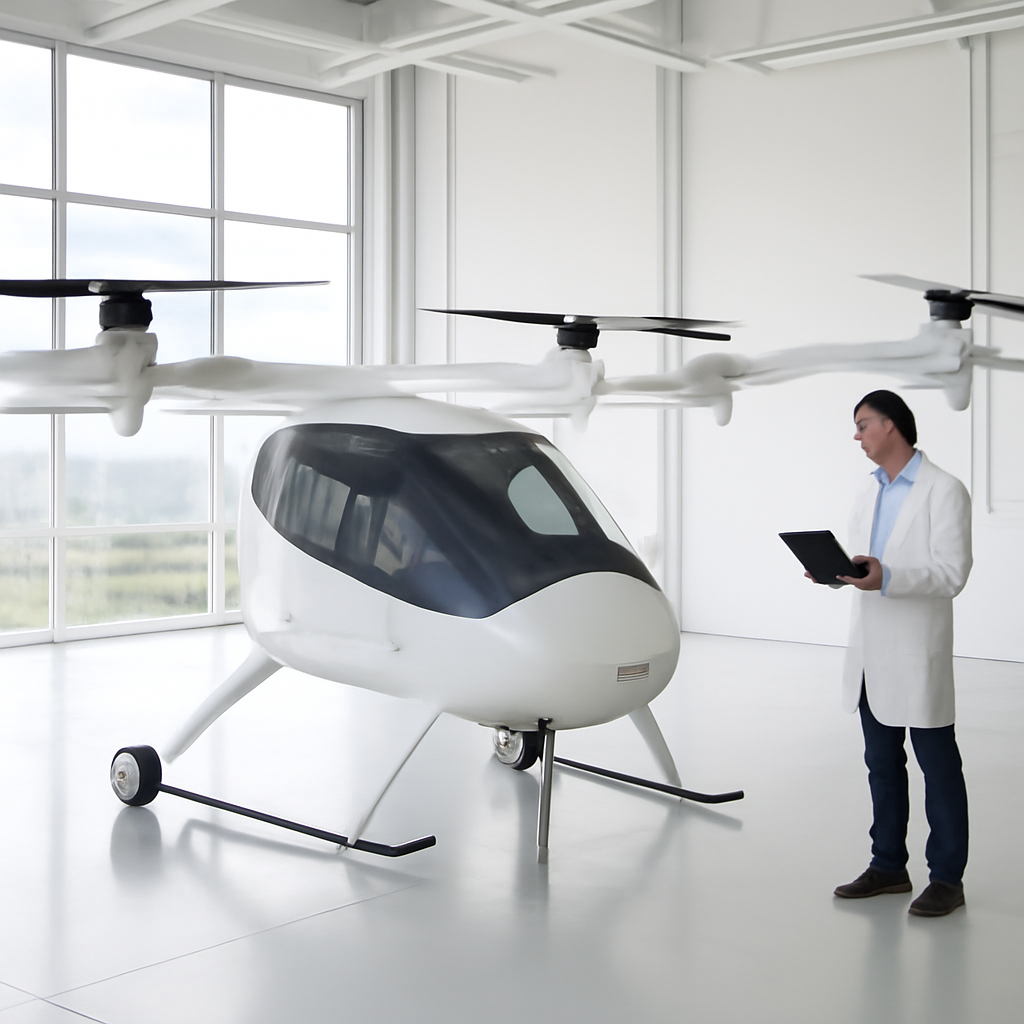
"The deal allows Wisk, SkyGrid and Insitu to accelerate capability development and time to market while ensuring Boeing capitalizes on its investments," Boeing's Brian Yutko said — calling the pact a "win‑win" for both firms. That succinct line frames a transaction that shifts ownership of three Boeing subsidiaries into the hands of an electric vertical takeoff and landing (eVTOL) startup and rearranges the strategic stakes in autonomy and defense aviation.
Boeing transfers Insitu, SkyGrid and Wisk Aero
Under agreements announced today, Boeing will transfer ownership of three subsidiaries — drone maker Insitu, air‑traffic management company SkyGrid, and electric aircraft developer Wisk Aero — to Archer Aviation in an all‑stock deal, according to a joint press release cited by the New York Times. Boeing will then take a nearly 16.5 percent stake in Archer, the New York Times reported.
The companies described Boeing's new role as a "strategic partner" to Archer, and the release characterizes the transaction as including a technology sharing arrangement that preserves Boeing's access to Wisk's core autonomous flight technology for Boeing’s current and next‑generation commercial and defense aircraft.
Deal mechanics: stock swap, follow‑on investments and purchase options
Beyond the equity transfer, the agreement commits Boeing to invest up to $55 million in an upcoming Archer funding round and grants Boeing the option to buy up to $200 million of additional Archer stock sold at a fixed price, reporting by Air Current noted. The companies said the deal is expected to close by the end of this year if regulators permit.

Audit-ready is a season. It shouldn't be.
Evidence in spreadsheets, controls drifting between audits, frameworks multiplying on flat headcount. Nubivance runs continuous compliance on Rapid7 Cyber GRC - SOC 2, HIPAA, ISO 27001, PCI, CMMC.
End the scrambleArcher’s capabilities: ZEE, Midnight, Thunder and defense pivots
Archer says the transaction will be used to strengthen its artificial intelligence platform, ZEE, by combining the capabilities of the three acquired subsidiaries. Insitu produces small drones such as the ScanEagle for military users and, the release says, has sold that technology to the armed forces of 35 countries. Archer already announced a partnership with defense tech firm Anduril to develop a loyal wingman drone for helicopters, and the company is developing a hybrid‑electric Thunder aircraft for defense alongside an all‑electric Midnight model aimed at civil aviation.
The release also notes that Archer previously committed, as part of a 2023 settlement with Boeing, to use Wisk as its exclusive provider of autonomy technology for future variants of Archer’s aircraft — a preexisting link that the new deal formalizes and expands into shared access and ownership.
How the transaction reshapes defense and autonomy efforts
Company statements frame the sale as both a financial and strategic recalibration. Boeing CEO Kelly Ortberg has prioritized divesting non‑core assets to rebalance the company and raise cash; transferring these subsidiaries while taking a sizable equity stake and maintaining technology access fits that objective, the release said.
For Archer, the addition of Insitu’s operational drone business, SkyGrid’s traffic management expertise, and Wisk’s autonomy stack is presented as a step toward becoming a “diversified platform,” in the words of CEO Adam Goldstein, who called the deal a "watershed moment" for the company. The combined set of products and software is positioned to accelerate Archer’s development timelines and broaden its addressable markets — particularly by reinforcing a defense posture that now includes hybrid defense projects and conventional unmanned systems.
What this means for military buyers, regulators, and Archer and Boeing
- Military buyers: Armed forces that already operate or evaluate small drones like ScanEagle may see continuity of supply under Archer ownership, as Insitu’s existing sales footprint — to 35 countries, per the release — transfers to Archer alongside the platform’s engineering and sales teams.
- Regulators: The deal explicitly conditions closing on regulatory approval and is slated to close by year‑end if permitted; regulators will therefore determine the timing and any conditions placed on the transfer of autonomy, air‑traffic management and defense‑oriented drone capabilities.
- Archer and Boeing: Archer gains immediate technical breadth across autonomy, traffic management and unmanned systems and welcomes Boeing as a near‑16.5 percent shareholder and strategic partner; Boeing preserves access to Wisk’s autonomy technology and secures optional follow‑on investment rights while accelerating its stated aim of divesting non‑core assets.
The transaction recasts three established technology lines under a single eVTOL banner and binds a traditional aerospace prime to a nascent electric‑aircraft firm through equity, investment options and retained technology access. The next hinge points are regulatory approval and integration: whether Archer can operationalize Insitu and SkyGrid while advancing Midnight and Thunder, and whether Boeing’s retained technology access yields the continued autonomy development Yutko described. If regulators permit the move by year‑end, the industry will soon see whether this mixture of legacy drone business, traffic management software and autonomy IP accelerates delivery or simply rearranges the same set of technical and commercial hurdles.