"This award highlights the Marine Corps’ commitment to fielding integrated, software-defined systems optimized for the complex and rapidly evolving drone threat," Epirus CEO Andy Lowery said.
The contract: $11 million HAVOC deal awarded through the Office of Naval Research
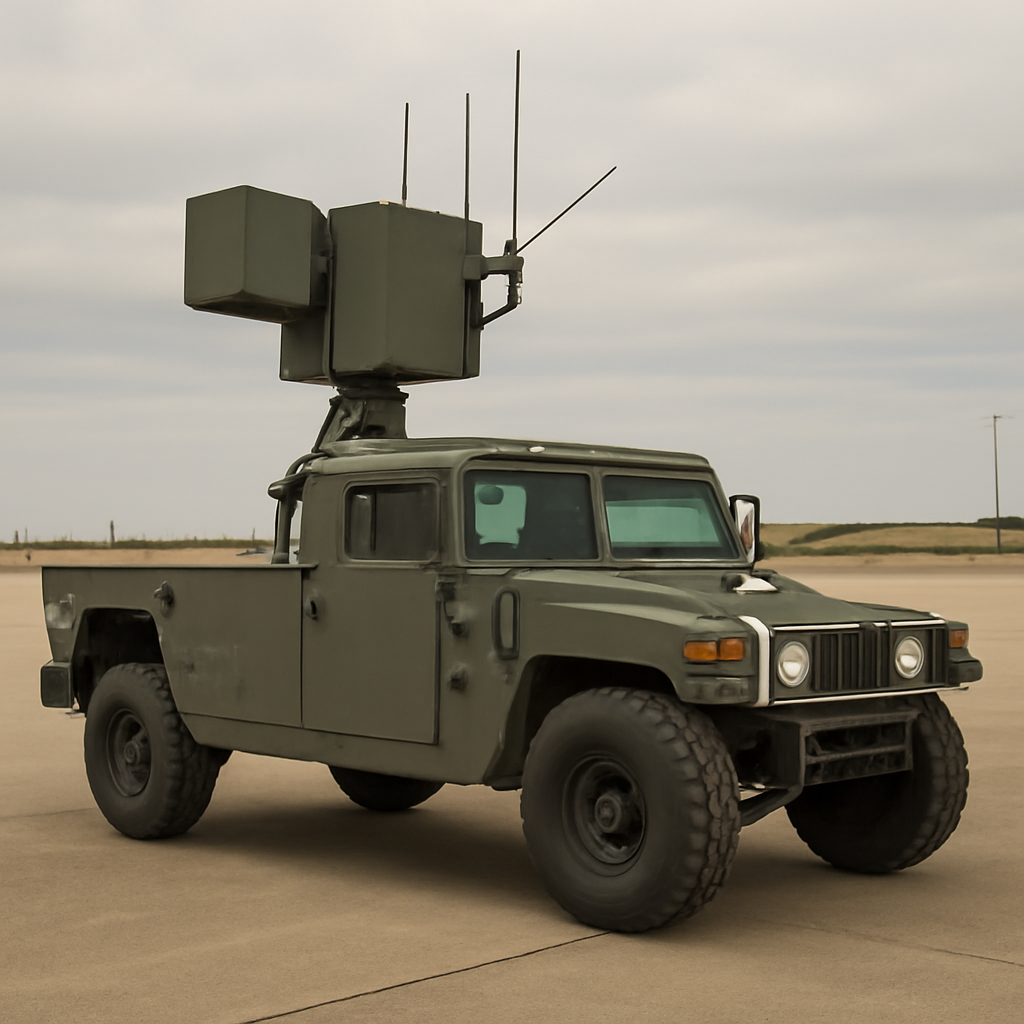
The Marine Corps has signed an $11 million contract with Epirus for a counter-unmanned aircraft system (C-UAS) installed on ground vehicles, the company announced. The award, made through the Navy’s Office of Naval Research, covers not only hardware but also training, service and sustainment support. Epirus presented the system as a capability intended to be paired broadly across the service via a “universal sled mount.”
What HAVOC is: high-power microwave autonomy-enabled capability
Epirus describes the deliverable as a High-power Microwave Autonomous Vehicle Operational Capability (HAVOC) system. The company said HAVOC is designed to temporarily incapacitate electronic assets for counter-drone operations and that the package is an “upgraded” autonomy-enabled iteration of an earlier system delivered to the Marines. The universal sled mount is intended to allow HAVOC to be installed on a variety of manned and unmanned ground vehicles.

Audit-ready is a season. It shouldn't be.
Evidence in spreadsheets, controls drifting between audits, frameworks multiplying on flat headcount. Nubivance runs continuous compliance on Rapid7 Cyber GRC - SOC 2, HIPAA, ISO 27001, PCI, CMMC.
End the scrambleLineage: from Leonidas Expeditionary to ExDECS to HAVOC
The HAVOC contract follows Epirus’ 2025 delivery of the Expeditionary Directed Energy Counter-Swarm (ExDECS) system to the Marine Corps. Epirus characterized ExDECS as an evolution of the company’s Leonidas Expeditionary system, a high-powered microwave capability designed to temporarily disable electronics such as those on unmanned systems. HAVOC, Epirus says, builds on that lineage by adding autonomy and increasing power and coverage.
Intended employment: Low Altitude Air Defense formations and protection of assets
According to Epirus, HAVOC will be used by Low Altitude Air Defense formations to safeguard ground-based air defense assets, refueling points, radars and other high-value locations. The company emphasized that HAVOC brings increased power output and enhanced coverage relative to prior systems, and positioned the capability as advancing the “one-to-many” concept introduced with ExDECS. As Lowery put it, the system will “strengthen the Marines’ ability to deliver precise, low-collateral protection of high-value points and Marine warfighters.”
What this means for technologists, procurement leaders, and Marine warfighters
- Technologists and security teams: Engineers and integration teams will focus on marrying an autonomy-enabled, high-power microwave payload to diverse vehicle platforms via the universal sled mount while maintaining the temporary-electronic-incapacitation effect described by Epirus.
- Procurement leaders and sustainment planners: The inclusion of training, service and sustainment in the contract signals planning for fielding and lifecycle support rather than a one-off experiment, and it ties future platform integration work to the Navy’s Office of Naval Research award vehicle.
- Marine warfighters and Low Altitude Air Defense units: Units tasked with protecting radars, refueling points and ground-based air defenses will gain an additional non-kinetic option the company says offers expanded coverage and higher power for counter-drone scenarios.
The Epirus HAVOC contract closes a visible loop from laboratory and fielded directed-energy prototypes to a funded, sustainment-backed capability intended for mounted use. It raises practical questions embedded in the purchase itself: how the universal sled mount will be standardized across vehicle types, how autonomy will be exercised in the fielded system, and what timelines the Office of Naval Research and the Marine Corps will set for integration, training and operational deployment. For now, the record shows a funded commitment to a high-power microwave, autonomy-enabled counter-drone capability and a stated focus on protecting Marines and high-value points with a low-collateral, one-to-many approach.