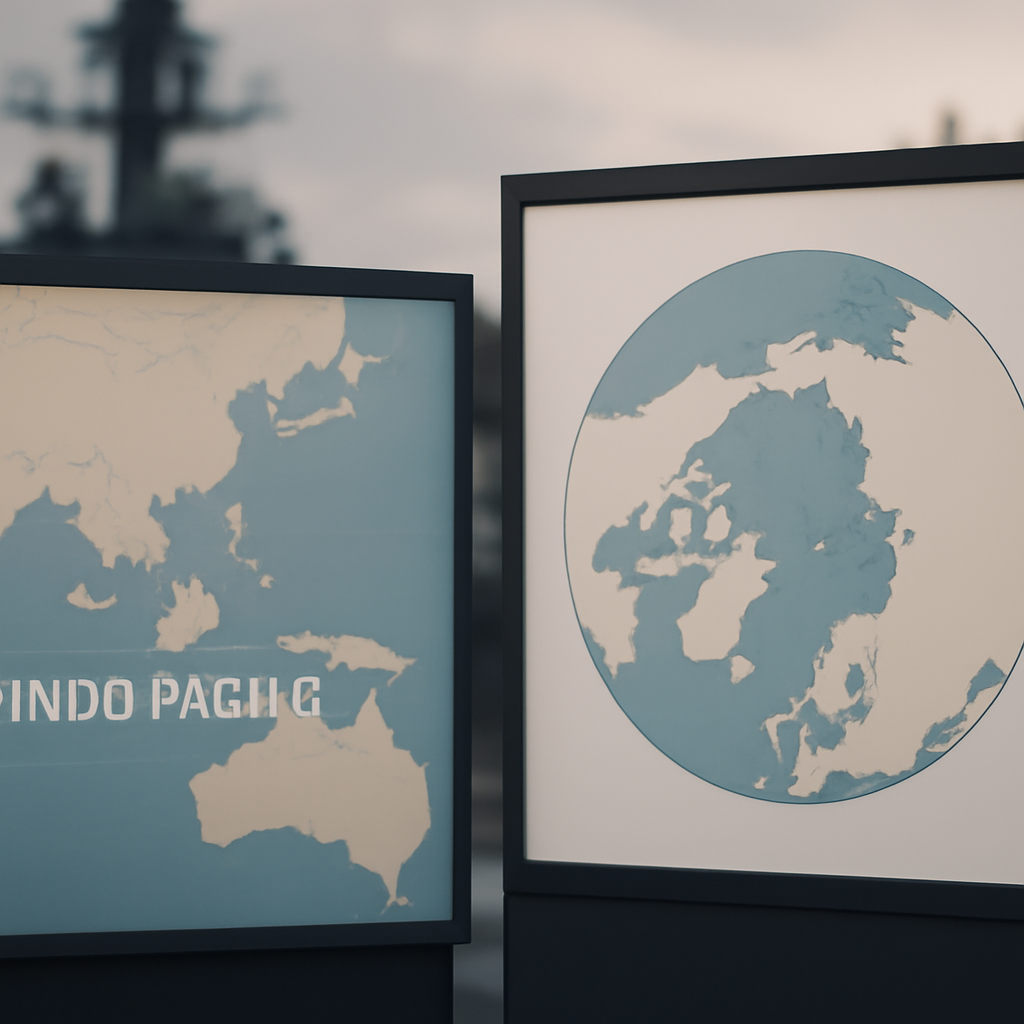
"The Arctic is no longer a distant sideshow," the source writes — and argues that for Indo‑Pacific countries the High North is already becoming a contested strategic arena whose changes will ripple into trade, allied defence planning and wider regional balances of power.
Retreating sea ice and shifting maritime economics
The article says physical change in the Arctic is producing strategic effects: as sea ice retreats for longer parts of the year, Arctic waters are becoming more accessible. Those emerging routes will not replace the main trade arteries of the Indo‑Pacific, the source cautions, but they do not need to. Even limited seasonal changes can alter shipping calculations, insurance costs and the commercial value of ports and chokepoints — and for trade‑dependent economies, small shifts in maritime geography can create larger downstream effects.
Russia’s Arctic posture and NATO’s northern deterrence
The source describes the High North as an increasingly militarised space. Russia has long treated the region as central to its security and status, investing heavily in northern bases, infrastructure and Arctic‑capable forces, and the war in Ukraine has only sharpened that logic. At the same time, NATO has renewed its focus on northern deterrence and defence, a shift reinforced by Finland and Sweden joining the alliance. Together those developments, the article argues, make the Arctic an active zone of strategic competition rather than a peripheral concern.

This site is the portfolio.
OSINTSights runs on Cloudflare Workers, D1, R2, and Vectorize, with an AI pipeline on Hetzner ARM. Nubivance designed, built, and operates it. We do the same for clients.
See what we buildHow China frames Arctic activity as part of wider reach
Beijing’s Arctic activity, the source warns, is often dismissed as secondary — a mistake. China is building access, presence and long‑term influence through activity in shipping, infrastructure, research and governance. Those initiatives, the article says, are not isolated ventures but fit a broader push to widen strategic reach across regions. For Indo‑Pacific countries already managing maritime pressure closer to home, the Arctic should be viewed as part of the same wider contest over access and influence.
What this means for Seoul, Tokyo, and Canberra
- Seoul: The article recommends that governments such as South Korea incorporate Arctic contingencies into national security planning and assess how northern disruptions could affect shipping, energy flows, insurance costs and military readiness.
- Tokyo: Japan’s energy planners are urged to include Arctic‑related disruptions in contingency planning, reflecting the article’s point that countries dependent on imported energy must consider how northern changes could affect secure sea lines.
- Canberra: Australia is advised to move beyond treating the Arctic primarily as a climate and science issue; instead, the article says Canberra should develop serious Arctic risk assessments and expand practical cooperation with Arctic and North Atlantic partners.
Practical cooperation, exercises and industry engagement
The article sets out concrete avenues for middle powers that do not wish to become Arctic operators but need to be capable and connected stakeholders. It calls for regular policy consultations with Nordic governments and Canada; participation in selected cold‑weather or logistics‑focused exercises; and deeper exchanges on maritime domain awareness, undersea infrastructure protection and supply‑chain resilience. Economically, trade and industry ministries should examine seasonal route changes, port competition and insurance volatility; and the source stresses that private shipping, port and insurance actors should be brought into planning early rather than treated as an afterthought.
Officials and planners are urged to treat the Arctic not as a stand‑alone theatre but as one that draws on the same ships, submarines, surveillance assets, industrial capacity and political attention as other regions. The source warns that a more demanding Arctic and North Atlantic will create a more crowded strategic picture and may strain alliance resources that Indo‑Pacific countries also rely upon.
The Arctic offers practical lessons as well as risks, the article concludes: long distances, sparse infrastructure, severe weather, and overlapping civilian and military requirements make the High North a useful case study in operating where logistics are harder and the boundary between economic and military security is blurred. Indo‑Pacific states, the source argues, do not need an Arctic obsession — but they can no longer afford Arctic indifference.