“The international rules-based order is imperfect. But we are much better off with it,” Australia’s deputy prime minister and defence minister, Richard Marles, told the Shangri‑La Dialogue on 29 May — a summation that threaded through the meeting in Singapore and framed the Indo‑Pacific’s response to growing regional tensions.
China’s absence and regional signalling
For the second year running, Beijing sent no senior leaders to the Shangri‑La Dialogue. The conference’s delegates treated that absence as a signal. Many speakers did not name China directly but warned of actions — cutting cables in the Taiwan Strait, militarisation of the South China Sea, aggressive coastguard use — that the source assigns solely to China. The absence left a vacancy in public diplomacy and, according to participants reported at the Dialogue, increased regional wariness about China’s motives.
Defense and deterrence: Marles, Hegseth, and Japan
Speakers at Shangri‑La argued that reinforcing the rules requires both dialogue and credible defence. Marles argued that the post‑Cold War belief that economic interdependence would reduce conflict is dead and warned that “states that do not invest in credible defence capability will be more exposed to coercion and face greater constraints on their sovereignty.”
US Secretary of Defense Pete Hegseth echoed that view, calling for “more combat power” and an alliance network “built on shared responsibility not dependency” in which “everyone has skin in the game.” Hegseth framed the United States as a Pacific nation committed to regional “peace and prosperity,” and he used a measured tone to provide the strategic reassurance smaller states sought.
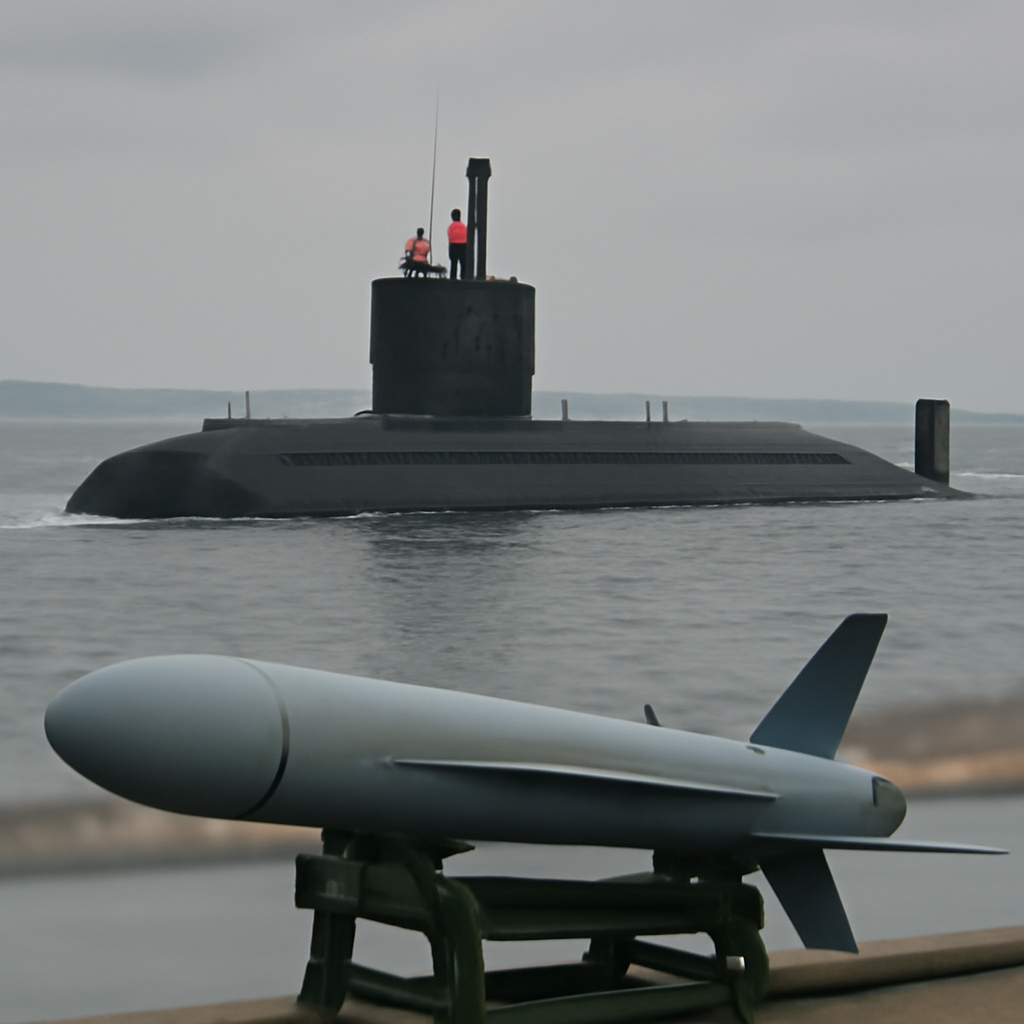
Japan’s Defence Minister Shinjiro Koizumi directly tied Tokyo’s defensive spending to China’s military expansion, calling out what he described as China’s “brazen hypocrisy” in trying to turn the region against Japan. Koizumi said Japan’s enhanced capabilities respond to China’s “unprecedented military buildup,” including “deployment of many more nuclear weapons and construction of nuclear-armed submarines,” neither of which Japan had.

Audit-ready is a season. It shouldn't be.
Evidence in spreadsheets, controls drifting between audits, frameworks multiplying on flat headcount. Nubivance runs continuous compliance on Rapid7 Cyber GRC - SOC 2, HIPAA, ISO 27001, PCI, CMMC.
End the scrambleSmaller states: Vietnam, the Philippines, and the rule of law
Vietnam provided a public call for strengthening norms. In his opening address, Vietnamese President To Lam said rules should be “reinforced,” and Lam — later quoted — urged that “competition is an enduring reality of international relations. But competition must remain bounded by law.”
The Philippines’ Defence Secretary Gilberto Teodoro urged bluntness: he encouraged everyone “to call a spade a spade,” saying there was “a deficit of trust in China’s words vis-a-vis action.” Teodoro reminded the forum that the Philippines took China to the Hague court of arbitration in 2013 and that the “historic 2016 international ruling” establishes that China’s nine‑dash line is “a fiction,” a fact the speakers used to underline the continuing relevance of international law.
Diplomatic posture and public diplomacy
Commentators at Shangri‑La noted contrasting approaches to diplomacy. China’s recent diplomacy included hosting international visitors — the source reports visits by “presidents Donald Trump and Vladimir Putin last month” as well as visits by the Canadian and Australian prime ministers — yet at Shangri‑La China declined public engagement. Conference participants said China missed an opportunity to provide strategic reassurance while engaging in military expansion and to position itself as a force for peace amid global cost‑of‑living concerns tied to the Iran war.
By contrast, Hegseth and other speakers used the crowded, unscripted setting of the Dialogue to demonstrate openness to public scrutiny. Delegates framed that willingness to engage in visible, sometimes confrontational diplomacy as part of reinforcing the rules-based order.
What this means for Australia, the United States, and Taiwan
- Australia: As represented by Richard Marles, Australia is publicly arguing that investment in credible defence is necessary to resist coercion and preserve sovereignty.
- The United States: Through Pete Hegseth’s speech, the US is widening a message of reassurance — stressing combat power and shared responsibility among allies while signalling it will not be pushed out of the Pacific.
- Taiwan: The forum discussed Taiwan as emblematic of a democracy that needs both dialogue and defence. Hegseth did not mention Taiwan directly, and the source notes concern that silence could be read as a signal the US is stepping back; the source also notes that an upcoming US arms sale to Taiwan this year will be read as a pivotal test of commitments.
The Shangri‑La Dialogue closed on a familiar paradox: the region insists the international rules-based order must be reinforced and enforced, even as its principal challenger skips the stage. The immediate test, as many participants framed it, is tangible — whether the United States will proceed with arms sales to Taiwan and whether regional powers will translate words about shared responsibility into lasting defence investments. Those outcomes, the participants said, will demonstrate whether rules “may sometimes sleep but never die,” or whether an emergent order will be written on new terms.