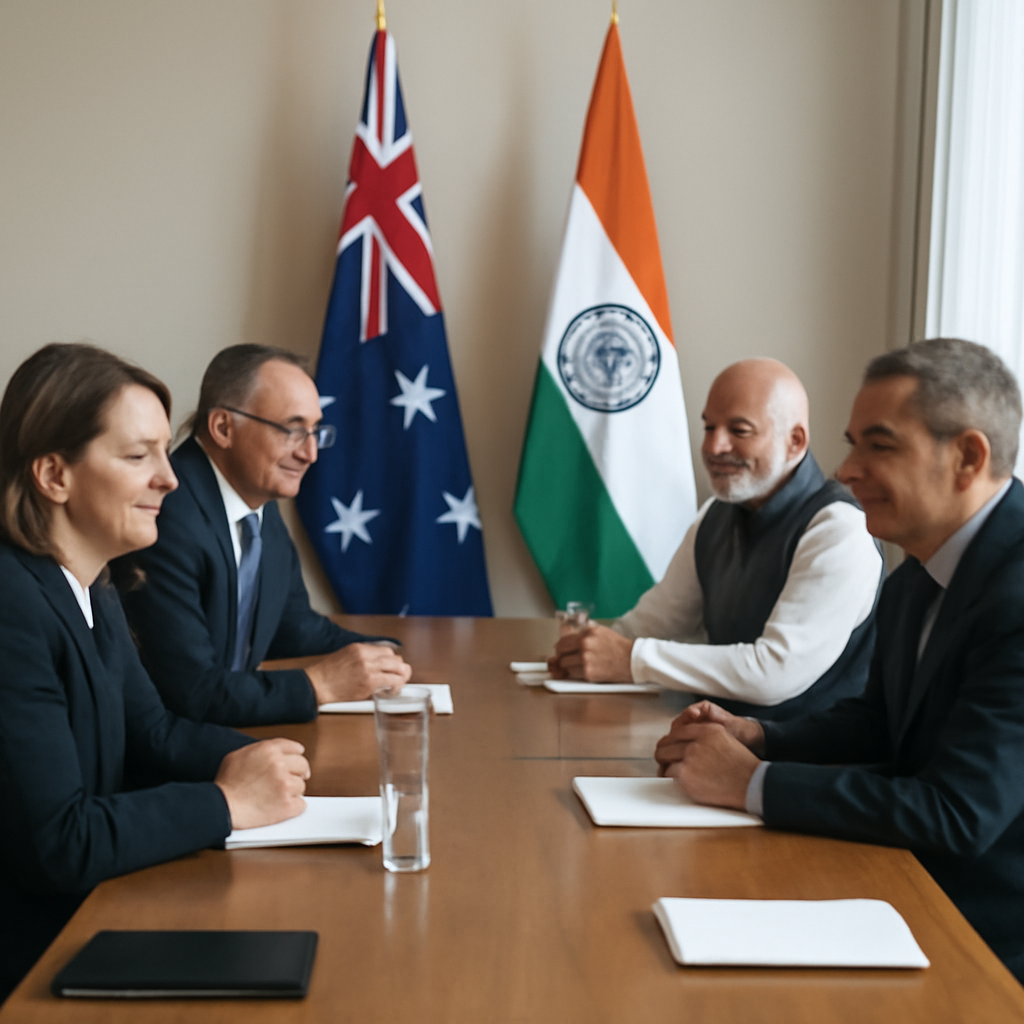
What is at stake is whether Sabang becomes a functioning commercial port that ties northern Sumatra to the Andaman and Nicobar Islands — and, if it does, whether that commercial success naturally creates modest security benefits without ever becoming a foreign military base.
Prime Minister Narendra Modi’s July visit to Jakarta
During Prime Minister Narendra Modi’s July visit to Jakarta, Indonesian President Prabowo Subianto welcomed India’s interest in the integrated development of Sabang port in northern Sumatra. The port’s position at the tip of Sumatra, across the Andaman Sea from India’s Andaman and Nicobar Islands, has long prompted speculation about naval access. The latest diplomatic exchange, however, focused on integrated development rather than any new security pact.
The India–Indonesia joint statement: commercial priorities
The July joint statement gave clearer economic substance to past commitments. It identifies cruise and marine tourism, ship repair, shipbuilding and shore-based services for offshore energy activity as areas of focus, and asks officials to clarify the project’s scope, financing and development stages. Significantly, the statement does not name a financing package, a commercial operator, a shipping route or a timetable.
India’s interest in Sabang is rooted in a 2018 Shared Vision on Maritime Cooperation that called for stronger links between the Andaman and Nicobar Islands and Sumatra. That vision produced joint task forces, feasibility discussions and proposals for connections between Sabang and Port Blair, but, to date, little has become commercially operational.

The cyber insurance questionnaire just landed. Now what?
SOC 2, HIPAA, insurance renewals - someone has to own security strategy. Nubivance provides fractional CISO leadership without the full-time salary.
Get a security leadSecurity context: proximity to the Strait of Malacca and regional naval activity
Sabang’s location near the eastern approaches to the Strait of Malacca gives the project strategic resonance. The source connects that resonance to a broader trend — China’s expanding naval presence and investments in ports and dual-use infrastructure across the Indian Ocean — and notes that India has sought a larger role in regional maritime security. Singapore has acknowledged New Delhi’s interest in the Malacca Straits Patrol.
Despite these strategic currents, the project as described in the joint statement does not provide for permanent operational access or a standing security presence. Indonesia has long guarded its sovereignty and, the source argues, is unlikely to compromise it. Rather than a base, the stated Indian objective is to improve maritime awareness, build logistical familiarity and deepen cooperation with regional partners — a model of “presence through partnership.”
The Joint Task Force on Andaman–Aceh connectivity and bankable activities
The report highlights the Joint Task Force on Andaman–Aceh connectivity as the vehicle that must move the idea from statement to shipping lane. It says the task force should identify a small number of bankable activities: a regular passenger or cargo link with Port Blair, repair and maintenance contracts, tourism packages, offshore-service partnerships and training links between maritime institutions in Aceh and the Andamans.
The central challenge is practical: strategic geography alone does not create demand. Ports become valuable only when vessels call, businesses invest and institutions develop regular patterns of cooperation. If Sabang succeeds commercially — serving shipping companies, repair yards and tourism flows — then coast guard exchanges, humanitarian missions and occasional naval visits could follow, all subject to Indonesian approval.
Australia’s supporting role and regional networks
The joint statement names the India–Indonesia–Australia trilateral as a vehicle for cooperation on maritime domain awareness, marine pollution and the blue economy. The source notes that coordination on search and rescue, disaster response, subsea-infrastructure protection and shared awareness could connect Sabang to a wider eastern Indian Ocean network, while making clear that Australia does not need to be a partner in the port project itself to support those broader activities.
What this means for shipping companies, investors, and local communities
- Shipping companies: Firms will look for regular calls, reliable repair and bunkering services, and defined shipping routes before changing schedules. The joint statement names ship repair, shipbuilding and shore-based offshore services as priorities, but it offers no immediate commercial guarantees.
- Investors and operators: Without a named financing package or commercial operator, investors will watch the Joint Task Force’s identification of “bankable activities” such as repair contracts, cargo links and tourism packages before committing capital.
- Local communities in Aceh and the Andamans: The project’s political viability depends on being “visibly Indonesian-led,” consistent with national regulations and tied to local economic priorities. Local benefits — jobs, training links and tourism revenue — are framed as prerequisites for the project’s broader strategic value.
The record is straightforward: Sabang’s strategic weight depends on commercial success and Indonesian political control, not on any pre-arranged military facility. The immediate next steps named in the joint statement are administrative and economic — clarifying scope, financing and stages — and the Joint Task Force’s ability to identify a small set of bankable, locally beneficial activities will determine whether geography translates into a functioning maritime corridor or remains a map notation.
https://www.aspistrategist.org.au/india-and-indonesia-are-developing-sabang-as-a-port-not-a-base/