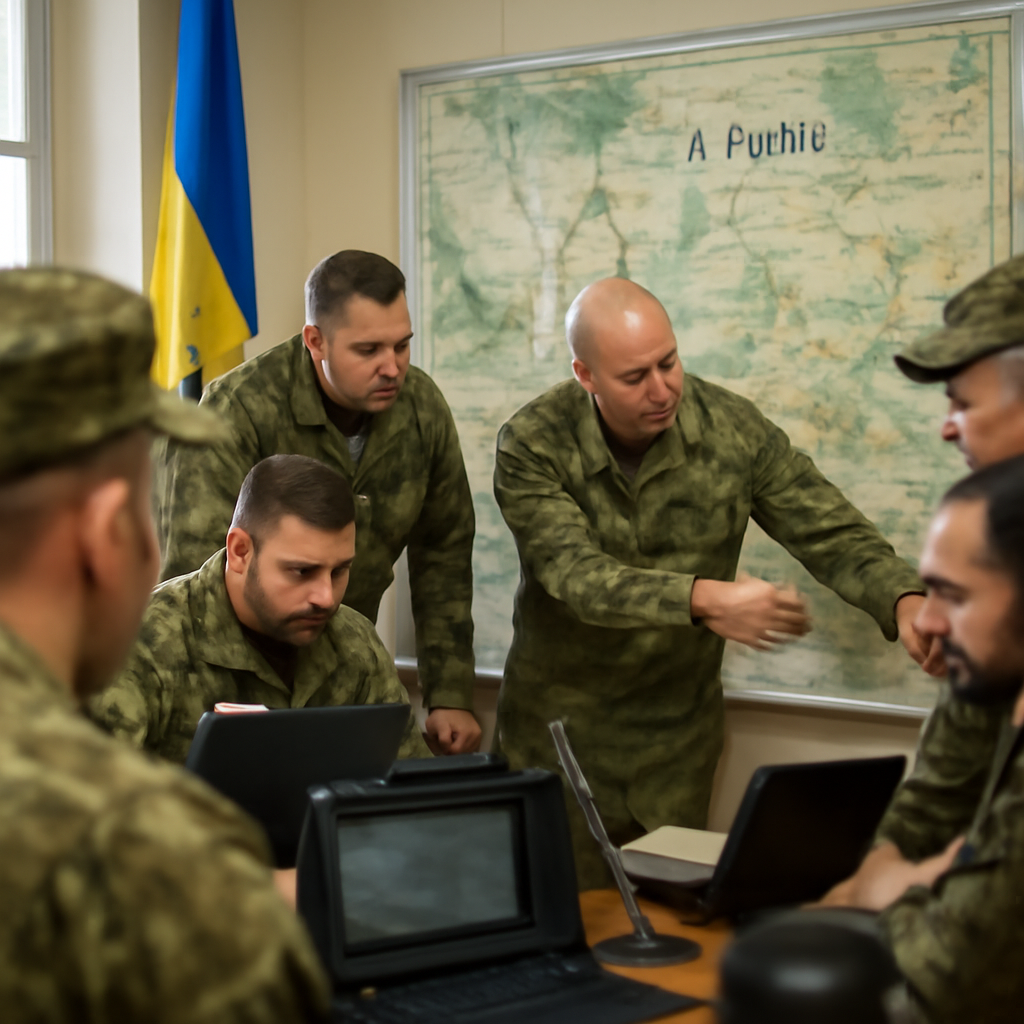
In 2024 alone, Ukrainian manufacturers produced over 2 million drones — a scale that New Delhi now cites as a model for how mass production and battlefield feedback can be married to national industrial policy.
Policy toolkit: import curbs, PLI, Drone Shakti, and DAP 2020
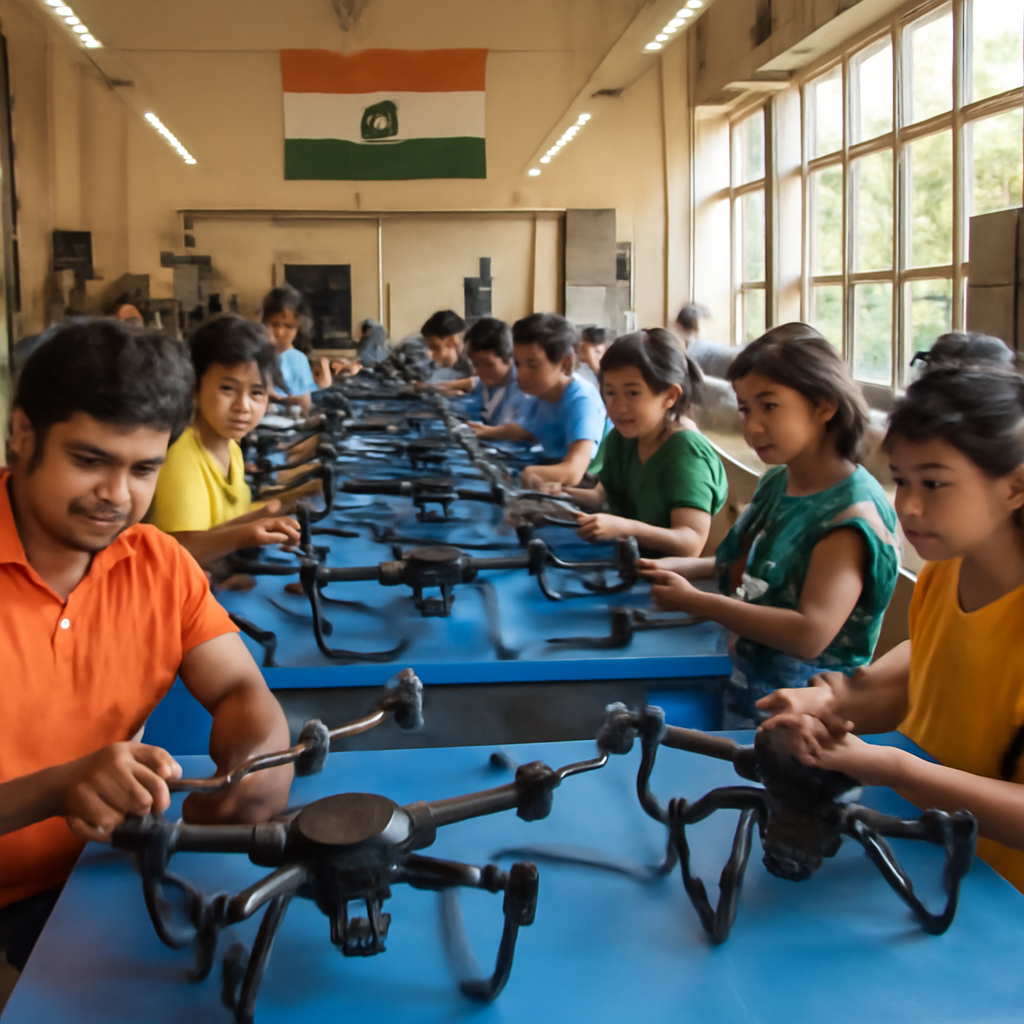
India’s shift from importer to producer did not begin in 2025; it was built on deliberate, state-led moves. In 2021 New Delhi imposed import restrictions to create a protected market for domestic manufacturers and launched a Production Linked Incentive (PLI) scheme the same year to catalyze private investment at component and system levels. The 2022 Drone Shakti Mission reframed drones as dual-use infrastructure rather than niche defense kit. Meanwhile the Defense Acquisition Procedure (DAP) 2020 reserved the “Buy IDDM” category for Indian vendors with less than 49 percent foreign direct investment and mandated at least 65 percent local content. Collectively, those measures have helped spawn over 600 drone and drone-components manufacturers in India, more than 100 of which specialize in defense applications.
May 2025 confrontation and Operation Sindoor: a tactical inflection
The four-day military confrontation with Pakistan in May 2025 — framed in available reporting as a turning point — shifted Indian thinking about drones from primarily ISR to strike roles. The conflict, halted by a U.S.-brokered ceasefire, propelled a security-driven technological arms race. During Operation Sindoor New Delhi deployed private-sector systems in combat and relied on Israeli-origin systems such as the Harop loitering munition, which the reporting describes as decisive for India during the operation. In September 2025, Rajesh Kumar Singh, India’s defense secretary, said a select few systems had cleared government trials for contracts, while numerous other private-company drones had been undergoing rigorous testing since Operation Sindoor; post-operation evaluations were focused on reliability in contested environments, integration with legacy systems, and resistance to electronic warfare.

This site is the portfolio.
OSINTSights runs on Cloudflare Workers, D1, R2, and Vectorize, with an AI pipeline on Hetzner ARM. Nubivance designed, built, and operates it. We do the same for clients.
See what we buildPrivate-sector surge and emergency procurement
The immediate result has been a sharp market surge. Zuppa Geo Navigation Technologies reportedly saw a tenfold jump in its order pipeline during May 2025 and announced plans to expand into Africa and the Middle East as an exporter of electronic warfare–resistant systems. The DAP emergency procurement route accelerated deliveries: in June 2025 ideaForge Technology Limited secured a $16 million emergency order for military-grade mini-UAVs with a one-year delivery window. India’s military subsequently placed another emergency order valued at around $11.3 million for Zolt tactical drones and VTOL SWITCH 2 drones. New Delhi is also preparing to place what the reporting describes as its largest-ever unmanned systems procurement — an order worth over $2 billion with domestic manufacturers including Adani Group, Tata Advanced Systems, Larsen & Toubro, and startups such as ideaForge and Asteria Aerospace.
Hybrid model: combining Israeli commercial feedback with Ukrainian wartime scale
India appears to be attempting a hybrid approach. The Israeli model is characterized by deep integration across state and private producers — firms like Rafael Advanced Defense Systems, Israel Aerospace Industries, and Elbit Systems act as contractors, exporters, and live-laboratory users of their own systems. Israel’s commercial-feedback loop, in which battlefield use validates and refines exports, is visible in India’s deployment of private startup systems during Operation Sindoor. By contrast, Ukraine’s drone ecosystem was born of wartime necessity and emphasizes rapid innovation and scalability: the number of Ukrainian drone companies rose from 41 in 2022 to 132 in 2023 and 183 in 2024; over 96 percent of the drones used by Ukrainian forces are now domestically produced. India is trying to graft Israeli-style feedback and Ukrainian-style scale onto its policy foundation.
What this means for New Delhi, Islamabad, and Global South buyers
- New Delhi: Seeks three goals simultaneously — employ drones operationally against Pakistan, reduce dependence on foreign suppliers, and position itself as an alternative drone supplier for the Global South, leveraging recent procurement and testing gains.
- Islamabad: Faces pressure to prioritize cost-effective, scalable counter-drone defenses and to strengthen indigenous production, but does so under notable budgetary and financial constraints; affordability must be a central concern.
- Global South buyers: Will encounter a market still dominated structurally by China — not only in finished-product exports but in key components. Reporting notes DJI’s estimated 70 percent share of the global commercial drone market and Chinese dominance in motors, electronics, batteries, rare-earth processing, and key electronics inputs; Indian firms themselves reportedly rely on Chinese-origin components via gray markets.
Risks and the road ahead
The consequences are twofold and immediate. Technically, loitering munitions and swarms can saturate and overwhelm air defenses, complicating interception and raising the cost of defense. Politically, wider deployment of lower-cost strike drones lowers the threshold for the use of force and makes episodic crises more likely — a worrisome development when the two protagonists are, as the reporting notes, nuclear-armed neighbors. Structurally, India’s ambitions to break into the Global South market face the hard reality of Chinese control over component supply chains and years of industrial learning; matching China’s cost structures and scale will be the central test of New Delhi’s strategy.
The 2021–2025 period has rewired India’s drone landscape — policy scaffolding, battlefield testing, and private-sector scaling converge in a single national project. Whether that project yields a dependable alternative to Chinese-dominated supply chains, and whether it stabilizes or further destabilizes India–Pakistan air-warfare dynamics, remains a matter now decided less by intent and more by production lines, procurement choices, and battlefield performance.