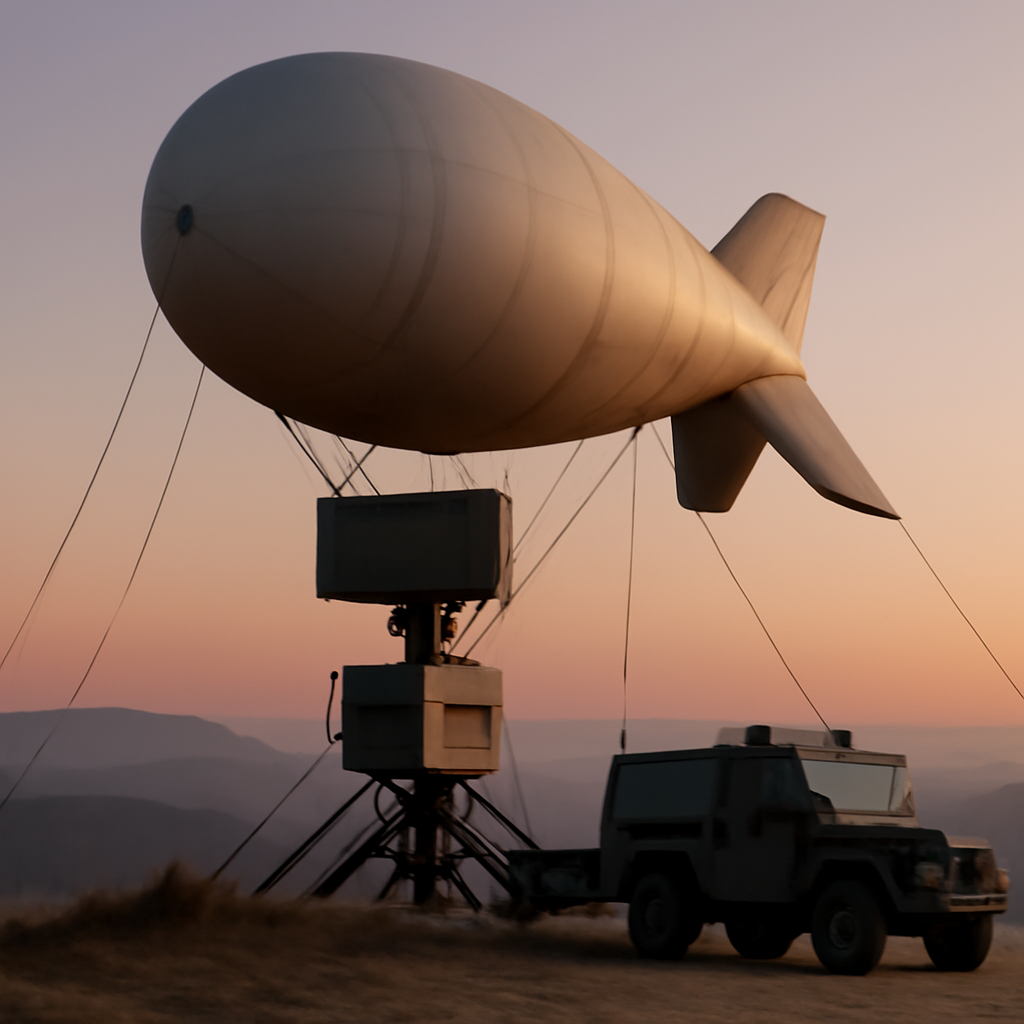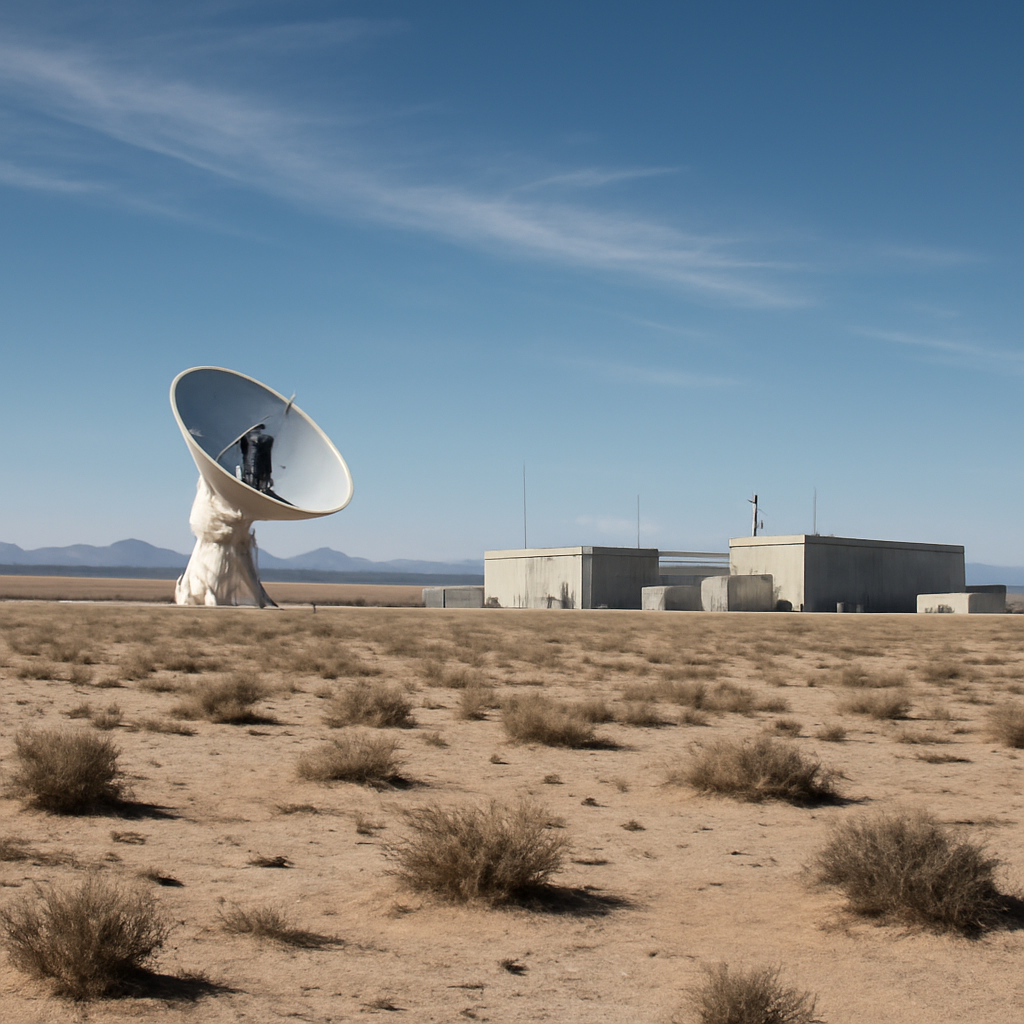
"Australia is probably overestimating Pine Gap’s support for our place in the US alliance," the article in The Strategist begins — and that blunt assessment names what is at stake for Canberra and for the bilateral intelligence relationship.
Why Pine Gap was placed near Alice Springs
The facility near Alice Springs was chosen for a concrete, technical reason: it is a ground station for US satellites that downlink faint signals gathered from high orbit. Those signals — data from missile tests, radar sites and military communications — must be transmitted back to earth, and where that downlink lands matters. Central Australia was a near-perfect location in 1966 because the desert made interception difficult. Anyone attempting to capture the feed would have had to be physically nearby, and in the middle of the continent there were few places to hide. By contrast, the article notes, a facility on an island such as Guam or Diego Garcia could be observed or intercepted from passing ships. The desert’s isolation was not incidental; "security was the point."
Encryption and modern processing have eroded the desert’s advantage
Technical change has eaten into that geographic edge. As David Rosenberg outlined in his book Inside Pine Gap, the downlink used to be encoded but unencrypted to maximise throughput. Today, the article reports, modern processing and encryption mean the downlink no longer has to travel “in the clear.” In practical terms, the old fear of someone catching an unprotected signal carries far less weight: contemporary encryption and processing can protect the same feed almost anywhere, shrinking the desert’s first great advantage.

Audit-ready is a season. It shouldn't be.
Evidence in spreadsheets, controls drifting between audits, frameworks multiplying on flat headcount. Nubivance runs continuous compliance on Rapid7 Cyber GRC - SOC 2, HIPAA, ISO 27001, PCI, CMMC.
End the scrambleCommercial imagery and the end of remoteness
Remoteness once hid Pine Gap from view; it no longer does. The article points out that commercial satellites now produce sharp pictures of anywhere on earth many times a day, and "anyone with a modest budget can buy detailed imagery of Pine Gap whenever they like." Alongside that, the facility’s mission is widely described by researchers today. The combination — routine commercial imaging plus a public record of the site’s role — means there is far less to protect by keeping the station in a remote patch of central Australia.
Cyber collection narrows the role of overhead satellites — but does not replace them
The article highlights a second technological shift: the rise of cyber collection capabilities. Many targets that once required overhead collection can now be reached via networks and cables, reducing some of the tasks satellites and ground stations performed. That said, the piece is careful to note that narrowing is not the same as obsolescence. Some missions remain uniquely suited to overhead collection. The clearest example offered is missile-test observation: when a nation flight-tests a missile it broadcasts a stream of technical data about performance, and catching that broadcast from orbit is "one of the few ways to learn what a rival’s missiles can really do."
What this means for Canberra, Australian defence planners, and US intelligence partners
- Canberra: The article urges Australian policymakers to reassess assumptions. Pine Gap has long been a way for Australia to "buy into a system we would otherwise struggle to build," because Australia lacks the satellites and heavy rockets to field equivalent capability alone. If the reasons for hosting that system are weakening, Canberra’s leverage from hosting it weakens too — even if an immediate departure is unlikely.
- Australian defence planners: The narrowing role of overhead collection and the increasing reach of cyber means planners must prioritise which unique capabilities to preserve — notably space-based observation of missile tests — rather than assuming the ground station’s historic location guarantees access or influence indefinitely.
- US intelligence partners: The article notes that the United States could now run Pine Gap’s missions from somewhere else. Relocating would be difficult, slow and expensive, and the relationship is deep, but the "enormous head start" central Australia once offered has shrunk; Pine Gap is beginning to look "like one gem among many."
Conclusion
Pine Gap still matters, the article concludes, but the comfortable story that it makes Australia indispensable is coming apart. The desert that once turned a ground station into a fortress is no longer impregnable: encryption, commercial imagery, public scholarship and cyber collection have all reduced the strategic uniqueness of a site near Alice Springs. That does not mean the facility will be abandoned tomorrow; relocation is costly and complicated. It does mean Canberra faces a strategic choice: recognise that hosting Pine Gap may not confer the same leverage it once did, and decide whether to invest to preserve the parts of the mission Australia most values — or to prepare for an era in which Pine Gap is one capability among many rather than the crown jewel.