"The tendency to treat universities in Hong Kong and Macau as somehow separated from the mainstream of Chinese research institutions is long out of date," ASPI writes — and its updated China Defence Universities Tracker provides the evidence behind that claim.
ASPI expands the China Defence Universities Tracker to include Hong Kong and Macau
Australia’s Strategic Policy Institute (ASPI) has expanded its internationally referenced China Defence Universities Tracker to cover universities in the Hong Kong and Macau special administrative regions (SARs). The update maps a dense set of research links between SAR universities and mainland state-linked defence and space organisations, showing activity ranging from satellite launches to joint laboratories and personnel exchanges.
Space programs: satellites, lunar robots and direct mission support
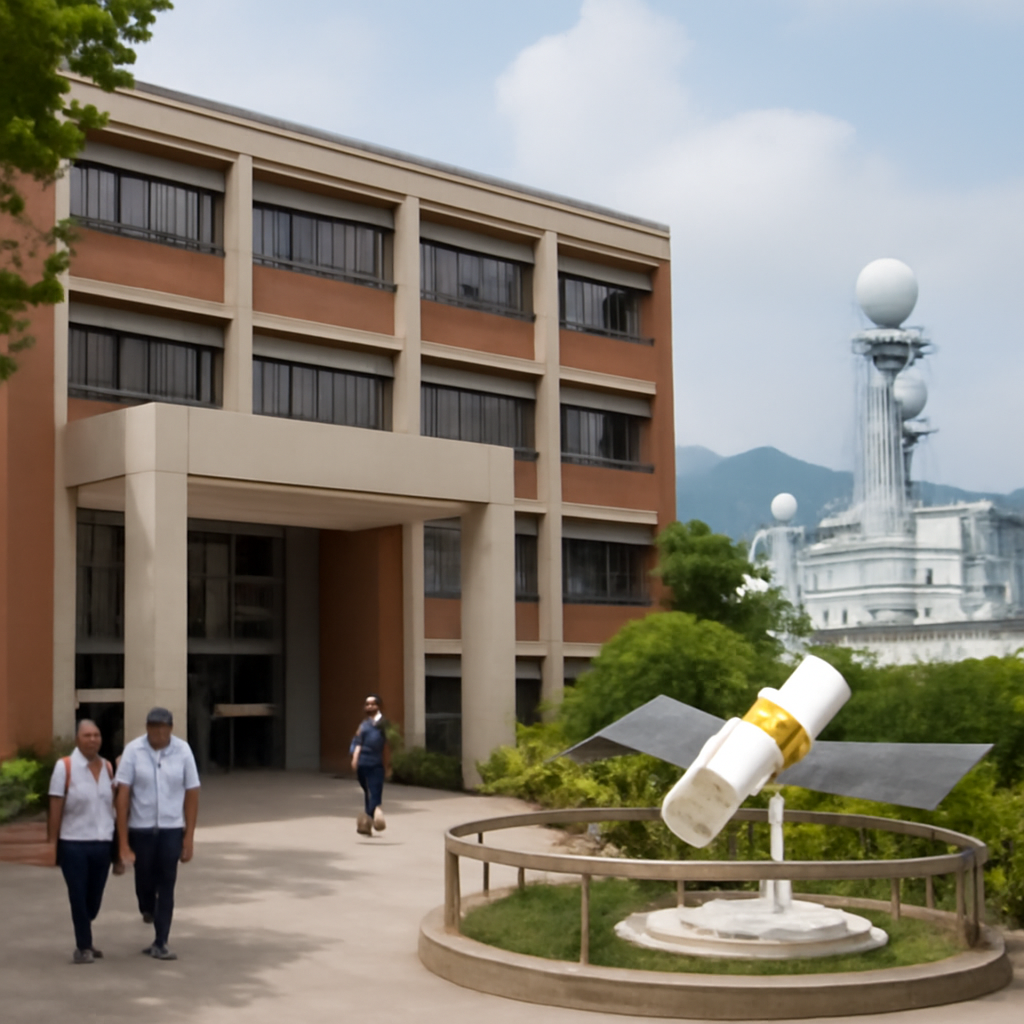
The clearest pattern of integration appears in space science. Macau University of Science and Technology joined China’s Chang’e lunar program in 2005, opened a Space Science Institute in 2011, established the State Key Laboratory of Lunar and Planetary Sciences in 2018, and launched the Macau Science‑1 satellite in 2023. The University of Macau collaborates with the China National Space Administration on remote sensing and hosts a satellite ground station in Macau with the Aerospace Information Research Institute of the Chinese Academy of Sciences.
In Hong Kong, multiple universities directly support China’s lunar and planetary missions. Hong Kong Polytechnic University collaborates with China Aerospace Science and Technology Corporation and the China Academy of Space Technology and has contributed to Chang’e 3, Chang’e 4, Chang’e 5 and the Tianwen 1 Mars mission. Hong Kong University of Science and Technology launched a satellite developed with Chang Guang Satellite Technology Co Ltd in 2023, built gas monitors for China’s space station and is leading a project to build a lunar robot for the Chang’e 8 mission. The City University of Hong Kong is also part of the Hong Kong Space Robotics and Energy Centre’s Chang’e 8 project, overseen by the China National Space Administration’s Lunar Exploration and Space Engineering Centre.
The University of Hong Kong’s Laboratory for Space Research lists partners that include the Beijing Institute of Space Mechanics and Electricity, China National Nuclear Corporation and the China Institute of Atomic Energy. The Chinese University of Hong Kong hosts the State Key Laboratory of Quantum Information Technologies and Materials and operates a Satellite Remote Sensing Station and the Hong Kong base of the National Remote Sensing Center of China; in December 2024 it launched an International Satellite Data and Application Cooperation Council Unit.

This site is the portfolio.
OSINTSights runs on Cloudflare Workers, D1, R2, and Vectorize, with an AI pipeline on Hetzner ARM. Nubivance designed, built, and operates it. We do the same for clients.
See what we buildAviation, hypersonics and aerospace propulsion links
Connections extend into aviation and propulsion. The University of Hong Kong has a cooperation agreement with the Manufacturing Technology Institute of defence conglomerate AVIC. Hong Kong Polytechnic University established the Joint Research Centre of Advanced Aerospace Propulsion Technology with China’s Academy of Aerospace Propulsion Technology, and at the 2026 China Space Conference the university signed a tripartite memorandum of understanding with the Chinese Academy of Sciences’ Institute of Mechanics and the Guangdong Aerospace Research Academy — described by ASPI as an advanced aerospace and defence research facility specialising in hypersonic flight systems and celestial navigation technologies.
Hong Kong University of Science and Technology operates an Aerial Robotics Group working in areas with potential military application. ASPI also notes that the sanctioned drone manufacturer DJI — which grew out of research at the university and "holds more than 75 percent of the global civilian drone market" — illustrates how exposure travels via spin‑outs and people as well as formal agreements.
Cross‑disciplinary ties: AI, military medicine, deep sea, quantum and lasers
- Artificial intelligence: HKUST collaborates with Peng Cheng Laboratory and runs joint labs with WeChat (2015), Alibaba on big data and AI (2024), and JD.com on AI (2025).
- Military medicine: Hong Kong’s University Grants Committee has funded research conducted with the armed forces’ Academy of Military Medical Sciences, and the University of Hong Kong maintains partnerships with the medical universities of the navy, army and air force.
- Deep sea and naval research: HKUST has taken part in research aboard the Chinese research vessel Shenhai Yihao (Deep Sea Number 1), whose activities ASPI links closely to China’s naval research.
- High energy physics and lasers: City University and the Chinese Academy of Sciences’ Institute of High Energy Physics set up a joint laboratory on neutron scattering in March 2019; the University of Hong Kong runs an HKU‑CAS Joint Laboratory on New Materials that includes laser research.
- Quantum and sensing: CUHK hosts a state key lab working on space‑based quantum communication and remote sensing; in July 2026 a Macau branch of the Guangdong‑Hong Kong‑Macau Greater Bay Area (Guangdong) Quantum Science Centre was established with Macao University of Science and Technology. CUHK and the National University of Defence Technology run a CUHK‑NUDT Joint Centre for Intelligent Sensing and Systems.
What this means for technologists, policymakers, and procurement leaders
Technologists and security teams should note that exposure can run through joint labs, personnel moves and commercial spin‑outs as well as formal ministry oversight; ASPI highlights personnel flows from the mainland into SAR universities and cross‑border joint funding such as projects supported jointly by the National Natural Science Foundation of China and Hong Kong’s Research Grants Council. Policymakers and regulators will find the statistics concrete: Hong Kong hosts 15 state key laboratories and six branches of national engineering research centres as of 2026, indicating structural ties to national research agendas despite SAR administrative arrangements. Procurement leaders and universities evaluating partnerships should factor in that formal SAR administration has not prevented deep integration into mainland defence‑linked programs — including direct collaboration with armed forces’ medical universities and major defence conglomerates.
ASPI’s tracker reframes a simple administrative fact: universities in Hong Kong and Macau remain under local SAR governments, but that status does not insulate them from mainland defence and space research. The Tracker makes these less formal relationships visible — and the visible pattern raises a concrete question for those assessing research security: if formal ministry lists are the only filter, how much defence exposure will be missed?