“20 flyaway aircraft and 94 built in India.”
What Dassault submitted and where the paper sits
Dassault Aviation has formally filed a proposal to supply 114 Rafale fighters to the Indian Air Force in response to India’s May 2026 Letter of Request under the Multi-Role Fighter Aircraft (MRFA) requirement. Reports differ on whether the bid landed with India’s acquisition authorities on 06 or 07 August 2026. The package is now with the Acquisition Wing of India’s Ministry of Defence and the IAF for evaluation, although Dassault, the French Direction générale de l’armement (DGA) and India’s Ministry of Defence had not publicly confirmed the filing at the time of reporting.
Composition, price and industrial commitments
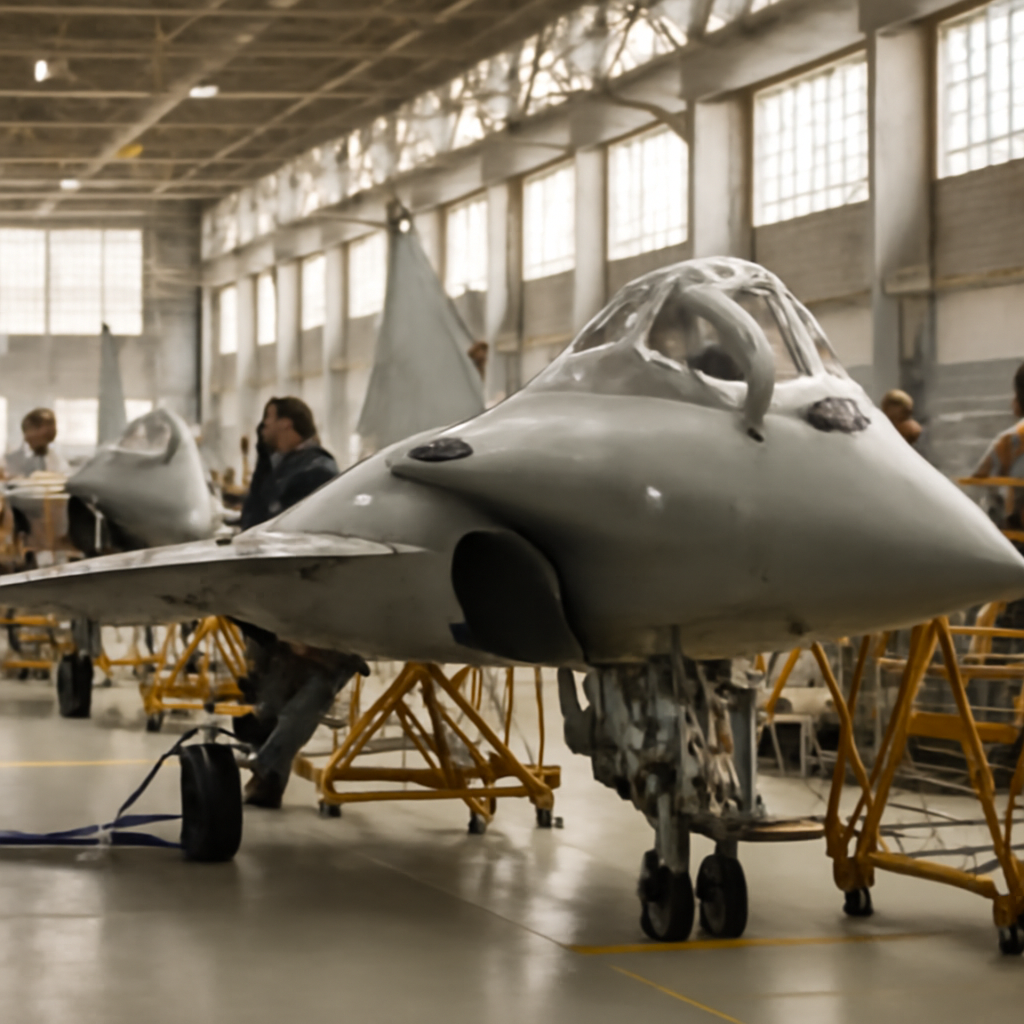
The proposal divides the 114-aircraft buy into 20 Rafales delivered in flyaway condition from France and 94 assembled in India. The fleet would include a mix of aircraft built to the current F4 standard and the forthcoming F5 configuration. The proposal’s total value has been estimated at roughly Rs 3.25 trillion (about $34.18 billion), with approximately Rs 1.6 trillion (about $16.8 billion) reportedly flowing to Indian industry. A separate $39 billion figure has circulated but appears to restate the Indian industrial share rather than the contract total. Tata and Larsen & Toubro are identified as the principal Indian industrial partners on the bid.

The cyber insurance questionnaire just landed. Now what?
SOC 2, HIPAA, insurance renewals - someone has to own security strategy. Nubivance provides fractional CISO leadership without the full-time salary.
Get a security leadTechnology transfer, indigenous content and weapons sovereignty
Dassault’s offer includes proposals for transfer of technology covering the airframe, engine and avionics. Indian authorities expect indigenous content to reach 55%–60% once production arrangements are fully implemented. New Delhi has also stipulated that the Rafale must integrate domestic weapons and secure data links; variants of the Astra beyond-visual-range air-to-air missile (BVRAAM) are specifically identified for integration. The combination of a large in-country build share and explicit weapon-integration requirements reflects the government’s industrial-policy objective of channeling substantial programme value into domestic industry.
Software access deadlock: France’s limits and its counterproposal
India sought access to the Rafale’s software architecture to permit integration of indigenous weapons, electronic warfare systems and future upgrades without routing every change through the aircraft’s manufacturer. France declined to provide access to the systems governing the Thales RBE2 active electronically scanned array (AESA) radar, the Modular Data Processing Unit and the SPECTRA self‑protection suite, citing protection of intellectual property and security implications from India’s continued operation of a large Russian-origin equipment inventory. Paris instead proposed providing controlled software interfaces; under that arrangement India could pursue integrations, although Dassault would remain the integrating authority for each new weapon. France requested additional time, until mid‑August 2026, to submit its formal response to the Letter of Request; pricing negotiations are expected to begin after that filing, with a contract targeted for signature in late 2026 or early 2027.
MRFA’s shape: a known aircraft, a narrowed contest, and Russia’s continuing role
The MRFA process began as an open competition, but aircraft previously expected to contest it were not evaluated against the Rafale in this round. The Boeing F-15EX, Saab Gripen E/F, Lockheed Martin F-21 and Eurofighter Typhoon had all been considered prospective contenders. India has ruled out the F-35A amid trade friction with Washington and rejected the Korea Aerospace Industries KF-21 Boramae. Russia’s Sukhoi Su-57 remains the subject of a separate offer and continues to be active alongside the MRFA process. Indian reporting cited Operation Sindoor in May 2025 as having reinforced the case for a direct government-to-government acquisition rather than another open competition.
How the submission lands for the IAF, Indian industry, and Dassault
- The IAF: The service operates roughly 31 fighter squadrons against a sanctioned strength of 42.5 and already flies 36 Rafales with basing and support at Ambala and Hasimara. Choosing Rafale would lower induction risk by using an aircraft type already in service and by exploiting two established operating bases; Ambala in particular can accommodate two additional Rafale squadrons without new construction.
- Indian industry (Tata and Larsen & Toubro): The proposal channels a large portion of value to domestic firms—about Rs 1.6 trillion—and sets an indigenous-content target of 55%–60%, with technology transfer across airframe, engine and avionics. Indian firms will therefore be central to production, but the precise scope of in‑country capability will depend on how software and integration limits are resolved.
- Dassault and France: Paris has resisted full software access, citing intellectual-property and security concerns, and has offered controlled interfaces that keep Dassault as the integrating authority. That stance preserves manufacturer control over weapon integration while offering a technical path for Indian integrations within defined limits.
Dassault’s proposal is the focal point where three pressures converge: the IAF’s need to rebuild squadron strength rapidly, New Delhi’s demand for substantial domestic industrial return, and a legacy supplier relationship with Russia that remains relevant to future fighter choices. The dossier now sits with India’s acquisition authorities; the coming weeks — France’s mid‑August formal response, pricing talks and the targeted late‑2026/early‑2027 contract timetable — will decide whether controlled interfaces satisfy New Delhi’s requirements for weapons sovereignty or whether the software standoff will force further negotiation.
Source: https://quwa.org/india-defence-news/dassault-submits-its-114-rafale-bid-to-india/