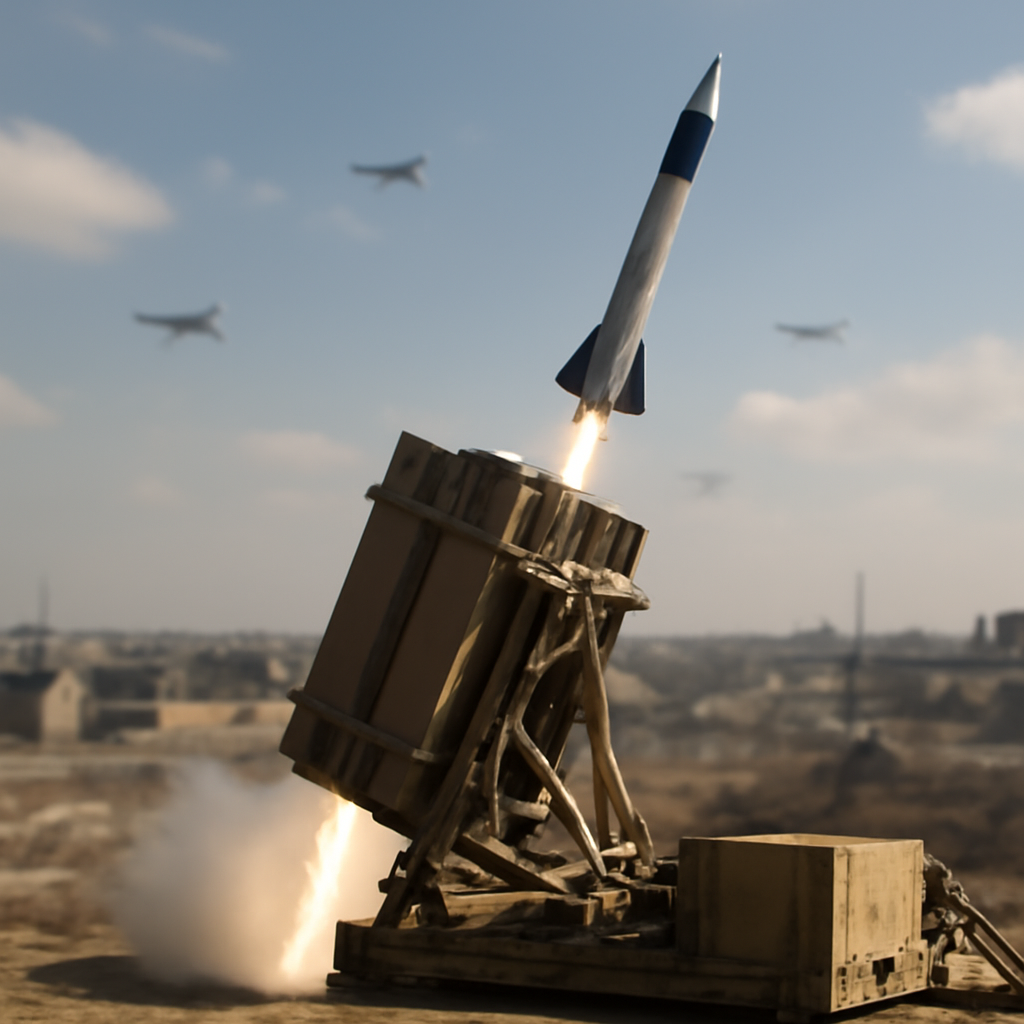
The Pentagon’s published procurement lead times are stark: 31 months for PAC-3 Missile Segment Enhancement (MSE) interceptors, 34 months for the most recent lot of THAAD interceptors, and 40 months for Tomahawk Block Va missiles.
How the calendar turns procurement into vulnerability
Those lead times are not abstract project-management metrics. The source material is explicit: if Congress enacts appropriations in December and the Pentagon places orders immediately, the first deliveries would arrive no earlier than roughly July 2029 for PAC-3 MSE, October 2029 for THAAD interceptors, and April 2030 for Tomahawk Block Va. If appropriations slide to March or later, every date shifts at least three months to the right. A dollar appropriated in December and a dollar appropriated in March may be identical on paper; for a production line waiting to expand, they are not the same at all.
Continuing resolutions compress options
With no apparent path for a supplemental or full appropriations bill by Oct. 1, the Pentagon will likely begin fiscal 2027 under a continuing resolution (CR). The piece explains why that matters: CRs typically preserve ongoing production but restrict new starts and increases in production rates. The White House specifically asked Congress to exempt several munitions from some CR restrictions — including PAC-3 MSE and Tomahawk — but neither the House nor the Senate version contains that anomaly language. As written, a CR would prevent the Department of Defense from executing planned FY 2027 quantity increases until Congress provides additional funding authority, creating months of delay.

The cyber insurance questionnaire just landed. Now what?
SOC 2, HIPAA, insurance renewals - someone has to own security strategy. Nubivance provides fractional CISO leadership without the full-time salary.
Get a security leadReconciliation, shortfalls, and political friction
The administration placed much of its munitions surge in a separate legislative vehicle. Of the original $350 billion FY 2027 reconciliation request, about $57 billion was allocated for procurement and research and development of munitions and interceptors. The House-passed budget resolution, by contrast, provides only $60 billion in reconciliation for defense — far short of the request — and the Senate had not moved it. If reconciliation stalls or proves insufficient to carry munitions funding, the alternatives are to squeeze those requirements into an already full base budget or to seek an FY 2027 supplemental, both of which the piece calls politically fraught.
Industrial-base funding and the procurement clock
The defense request also included $92 billion for industrial-base investments intended to expand capacity, diversify supply chains, and pre-purchase long‑lead parts. The article notes that much of that work is already planned and that framework agreements with industry "set the stage for this surge," but it also says the Department of Defense has not been especially transparent about how the $92 billion would support specific weapons programs. Every investment and production-line expansion takes time, and — crucially — the procurement clock does not start until Congress provides funding and authority.
What this means for the military, Congress, and industry
- The military (combatant commands and acquisition planners) will be forced to balance urgent operational needs against the hard schedules of production lines; orders placed in FY 2027 will not generate deliveries until 2029 at the earliest.
- Congress will confront a choice between political convenience and irreversible strategic cost: every month without funding and authority extends the window of vulnerability in ways a future Congress cannot undo.
- Defense contractors and supply-chain managers can expand capacity and pre-purchase parts, but those steps require funding now and still take months to yield more deliveries.
The article lays out three specific legislative actions Congress could take immediately to start closing the window of vulnerability: 1) add language to the final CR allowing critical munitions orders to proceed; 2) identify which reconciliation-funded munitions to move into regular appropriations or a supplemental; and 3) require DoD to publish a crosswalk connecting industrial‑base investments to specific programs. Those are concrete measures that address both the cash and the clock of procurement.
Two realities underpin the recommendation: money can be appropriated later, but time cannot be bought back; and the political calendar is misaligned with production calendars. The weapons at issue, the piece notes, will not arrive until after President Trump leaves office — a separation that may make delay politically easy to discount but strategically costly. Congress can debate priorities and amounts; what it cannot do after the fact is recover the months that slip away while production lines wait to expand.