"failed to meet launch criteria," official statements said, as China abruptly postponed its Chang’e‑7 lunar launch that had been shifted twice and then delayed indefinitely. The short bulletin obscures a larger strategic contest: who establishes practical footholds and the rules on the Moon first.
Chang’e‑7: hardware, objectives, and partners
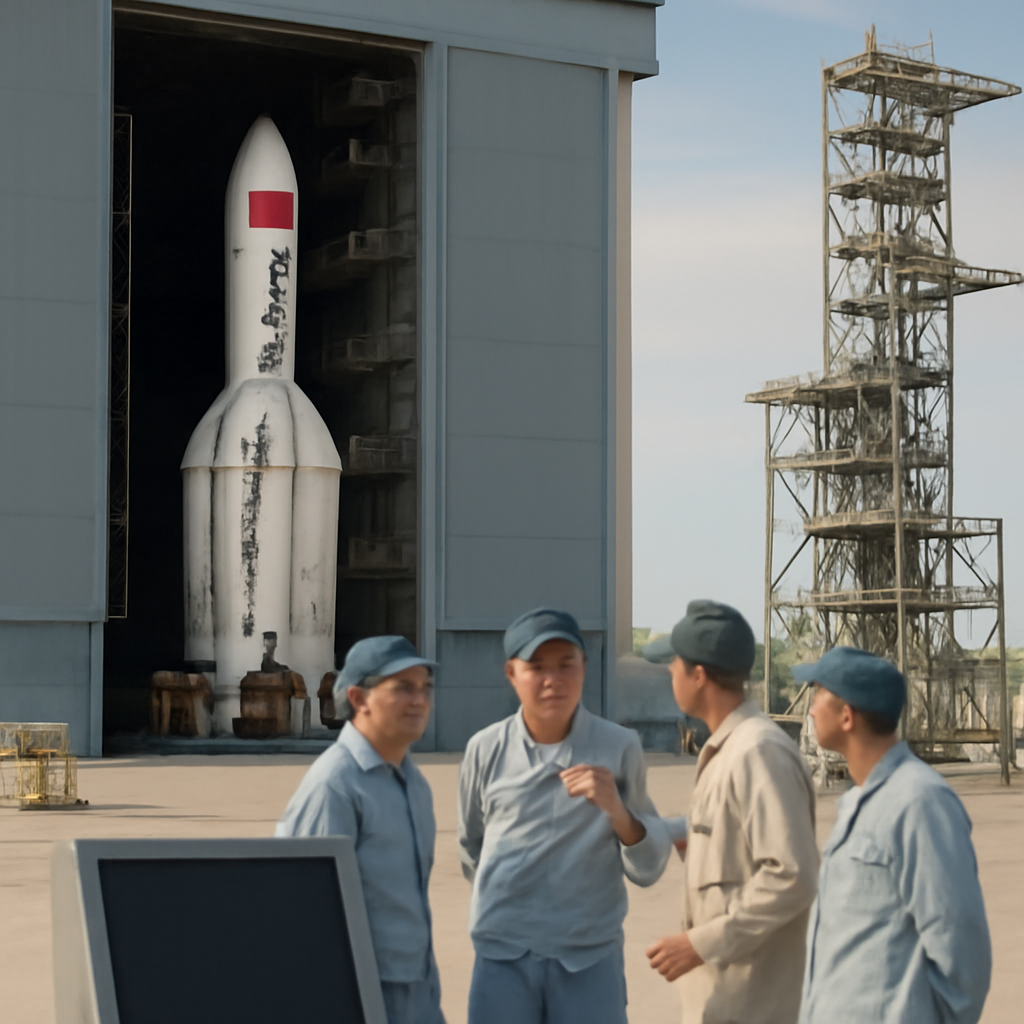
The uncrewed Chang’e‑7 mission was built around a multi‑component architecture: an orbiter, a lander, a small hopping probe and a rover, all to ride a Long March 5 rocket to a landing site near the southeast ridge of the Shackleton crater on the lunar south pole. Its primary scientific objective was to search the lunar surface for water ice and to assess the area’s suitability for a planned lunar research base.
The mission also carried international experiments. Six partners were named in the plan, including Russia and Egypt, alongside several US allies and partners: Bahrain, Italy, Thailand and Switzerland, plus a Hawaii‑based non‑government organisation. Those international contributions are explicitly tied to China’s broader effort at space diplomacy.
Why the launch slipped: official line and reported causes
Chang’e‑7 had been scheduled for 23 August, then rescheduled for the following day before being postponed indefinitely. Some outlets reported poor weather as the cause; official statements instead offered the terse explanation that the expedition “failed to meet launch criteria.” No new launch date has been provided.
The immediate operational reason for the postponement remains unspecified in the public statements, but the delay raises consequential questions about sequencing: whether China will return to the lunar surface before the United States, and how follow‑on missions and international cooperation will be affected.

Audit-ready is a season. It shouldn't be.
Evidence in spreadsheets, controls drifting between audits, frameworks multiplying on flat headcount. Nubivance runs continuous compliance on Rapid7 Cyber GRC - SOC 2, HIPAA, ISO 27001, PCI, CMMC.
End the scrambleStrategic stakes: water ice, bases and the shaping of norms
Water ice is central to the mission’s strategic promise. If Chang’e‑7 confirms accessible ice, the source material notes, that ice could be converted into drinking water and oxygen for human habitation, or split into hydrogen and oxygen to produce rocket fuel. Those capabilities would materially lower the cost and increase the sustainability of sustained human activity on the Moon and could enable a lunar base to serve as a staging point for interplanetary missions.
China and Russia announced in 2021 plans for a crewed lunar base called the International Lunar Research Station (ILRS), to be led by the China National Space Administration and Roscosmos. The source suggests that first‑mover control of resource mapping and environmental study will give the leader leverage in framing technical norms and regulatory expectations for lunar activity—particularly because the Outer Space Treaty of 1967 bars sovereignty claims but does not explicitly govern resource mining.
By including multiple foreign partners in Chang’e‑7, the analysis argues, China is pursuing soft power and legitimacy that could bolster Beijing’s position if future lunar projects raise questions about resource utilisation.
Timing, follow‑ons, and the US program
The postponement complicates a tightly packed timeline. China plans a follow‑on mission, Chang’e‑8, slated for 2028, but it is unclear how the current delay will affect that schedule. The source contrasts China’s cadence with interruptions in US efforts: NASA’s Viper program—designed to pursue similar objectives—was originally meant to launch in 2024 but is now planned for 2027 at the earliest. NASA’s crewed Artemis IV and V missions are currently planned for early and late 2028, respectively.
The report acknowledges that the United States retains considerable advantages established by earlier lunar exploration, but it also warns that China could still gain a crucial edge if it returns to the lunar surface first. Even accounting for Chang’e‑7’s postponement, the assessment portrays China as having an operational momentum that the United States must respond to.
What this means for policymakers, the China National Space Administration, and partner nations
- Policymakers and regulators: Officials charged with space policy will be watching how a confirmed discovery of water ice and subsequent Chinese activity could influence international standards for resource use—especially given the Outer Space Treaty’s silence on mining. They will need to weigh diplomatic and normative responses alongside mission timelines.
- The China National Space Administration and Roscosmos: CNSA and Roscosmos will have to manage both technical follow‑ups—such as keeping Chang’e‑8 on schedule—and the diplomatic framing of their lunar work as they shepherd international partners’ experiments and seek legitimacy for the ILRS concept.
- Partner nations and NGOs (Bahrain, Italy, Thailand, Switzerland, Egypt and the Hawaii‑based NGO): These contributors will be alert to how participation affects their scientific returns and diplomatic positioning. Their experiments aboard Chang’e‑7 tie them to the mission’s outcomes and to any subsequent conversations about norms governing lunar resource utilisation.
The Chang’e‑7 postponement is a pause, not a reset. The mission’s stated objectives—resource detection, environmental mapping and base‑site assessment—carry implications that extend beyond a single launch window. Whether the delay becomes a momentary setback or a strategic breathing space will depend on two concrete follow‑ups the source highlights: China’s ability to resume and complete the mission before US programs return to full cadence, and whether confirmed discoveries of water ice will be translated into operational capability for the ILRS and future interplanetary ambitions.