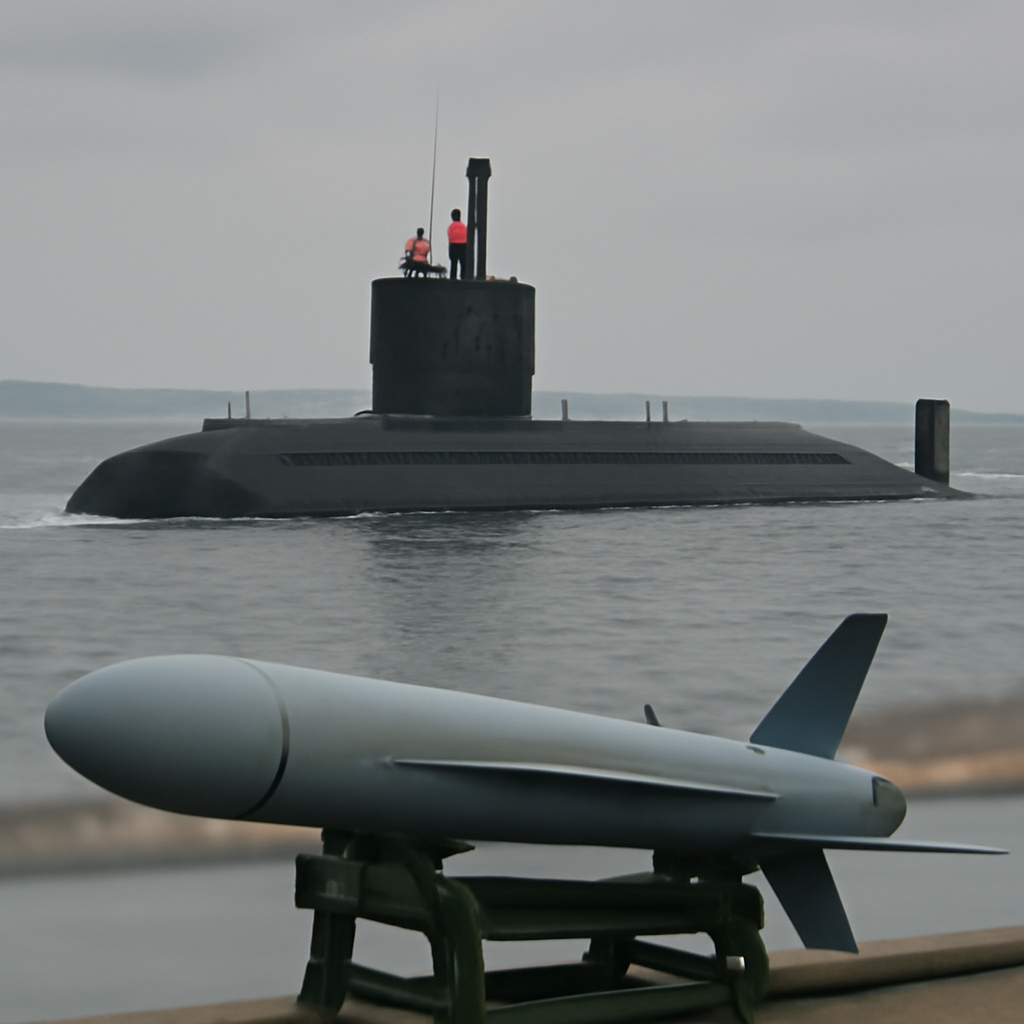
"China’s sustained higher defense spending has altered the military balance in the region," The Diplomat observed — a compact, consequential judgment that poses a simple but unsettling question: when a government frames its posture as defensive while its budget climbs persistently, who reassesses strategy, and how?
What The Diplomat reported
The Diplomat’s reporting draws attention to a single, stark claim: China has maintained higher defense spending over time, and that trend has changed the military balance in the surrounding region. The characterization links two discrete facts presented by the publication — the persistence of increased defense outlays and an observable shift in regional balance — without providing granular figures or timelines in the passage cited here.
What that combination implies
Viewed together, the report’s claim raises several implications even absent additional data. Sustained increases in defense budgets are, by definition, not one-off adjustments; they reflect an ongoing allocation of resources to military capacity. An altered military balance, meanwhile, suggests relative shifts in capabilities, posture, or deterrence relationships among regional actors. The Diplomat’s formulation therefore frames a policy paradox: an assertedly defensive stance coupled with a long-term expansion of military funding that coincides with measurable regional effects.

Audit-ready is a season. It shouldn't be.
Evidence in spreadsheets, controls drifting between audits, frameworks multiplying on flat headcount. Nubivance runs continuous compliance on Rapid7 Cyber GRC - SOC 2, HIPAA, ISO 27001, PCI, CMMC.
End the scrambleWhy this matters to different audiences
- Policymakers: For those charged with crafting defense and diplomatic strategies, The Diplomat’s observation is a signal to reassess assumptions about regional equilibrium and planning horizons. A sustained rise in another actor’s defense spending that alters balance can require changes in alliance management, contingency planning, and resource prioritization.
- Technologists and strategists: Engineers, procurement planners, and analysts must weigh how persistent funding trajectories affect the types of systems likely to be developed, fielded, or emphasized. Even without numerical specifics, the notion of a sustained budgetary trend points to continued programmatic investment that shapes research, acquisition, and deployment choices.
- Civil society and ordinary users: Shifts in the military balance can influence national discourse, economic planning, and perceptions of security. The Diplomat’s wording underlines that budgetary decisions have consequences that ripple beyond abstract line items to affect everyday stability.
- Adversaries and competitors: For actors monitoring the region, the report’s conclusion is a tactical input: sustained higher spending that changes balance can be interpreted as an opening, a deterrent, or a prompt to adjust capabilities and posture in response.
Reading the report critically
The Diplomat’s statement is concise and consequential, but it is also limited in scope as quoted here: it asserts a causal and temporal link — sustained higher spending and an altered balance — without supplying the supporting details within the excerpt provided. That invites two prudent practices for readers: first, to treat the claim seriously as a prompt for further inquiry; second, to seek corroborating evidence and context where available before drawing detailed judgments about magnitude, sectors affected, or specific policy responses.
As a starting point, the report accomplishes what strong reporting should: it highlights a trend and its strategic significance. From there, analysts and decision-makers must follow the thread to the underlying data, programmatic developments, and regional reactions that would substantiate and specify The Diplomat’s conclusion.
Ultimately, the tension the publication frames — between a defensive policy label and a persistent rise in military spending that shifts regional balance — is less a closed verdict than an invitation. It asks observers to watch budgets as both indicators and instruments of policy: when spending patterns and declared intent diverge, what story will the facts tell next?