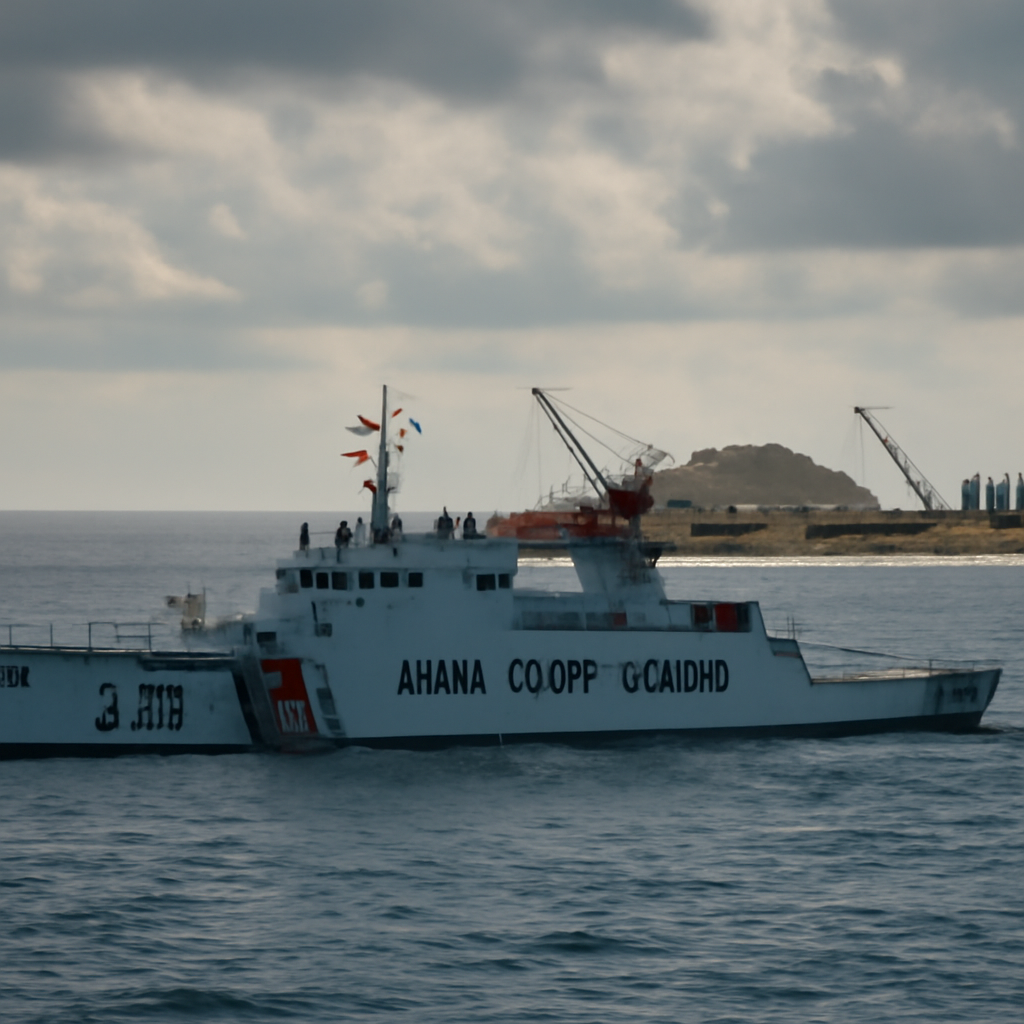
Around Scarborough Shoal, 933 Chinese coast guard ship‑days had been recorded by mid‑2026 — already equivalent to the total for all of 2025 and putting activity on track to double.
Antelope Reef island‑building resumed
The article reports that China has resumed large‑scale island‑building at Antelope Reef. Historically, the piece notes, China has followed island‑building with militarisation; the resumption of construction therefore carries significance beyond the physical works themselves. The author warns that these developments are part of a broader strategy of regional dominance that directly affects the waters immediately to Australia’s north.
Coast guard and maritime militia activity at Scarborough Shoal and the Spratlys
The story documents a marked intensification of Chinese coast guard and maritime militia operations across the South China Sea. It cites two illustrative metrics: a record daily average of 241 maritime militia vessels in 2025, and the 933 coast guard ship‑days at Scarborough Shoal by mid‑2026. The piece ties those numbers to rising operational aggression: during July, ahead of and during the Association of Southeast Asian Nations foreign ministers’ meetings in Manila, incidents occurred around Scarborough Shoal and Second Thomas Shoal in which Chinese coast guard personnel used water cannon and, in one case, struck a Philippine sailor with a wooden baton.

This site is the portfolio.
OSINTSights runs on Cloudflare Workers, D1, R2, and Vectorize, with an AI pipeline on Hetzner ARM. Nubivance designed, built, and operates it. We do the same for clients.
See what we buildCoast guard operations east of Taiwan and expanded jurisdictional claims
The article reports a geographic widening of China’s maritime campaign: in June, Chinese coast guard vessels operated east of Taiwan and for the first time queried commercial ships about their origins and destinations while asserting Chinese jurisdiction well outside China’s territorial sea. The piece frames this activity as raising “serious concerns for freedom of navigation” and as prompting fears that Beijing may be testing elements of a future quarantine of Taiwan.
Strategic context: missiles, militarised islands and Australia’s exposure
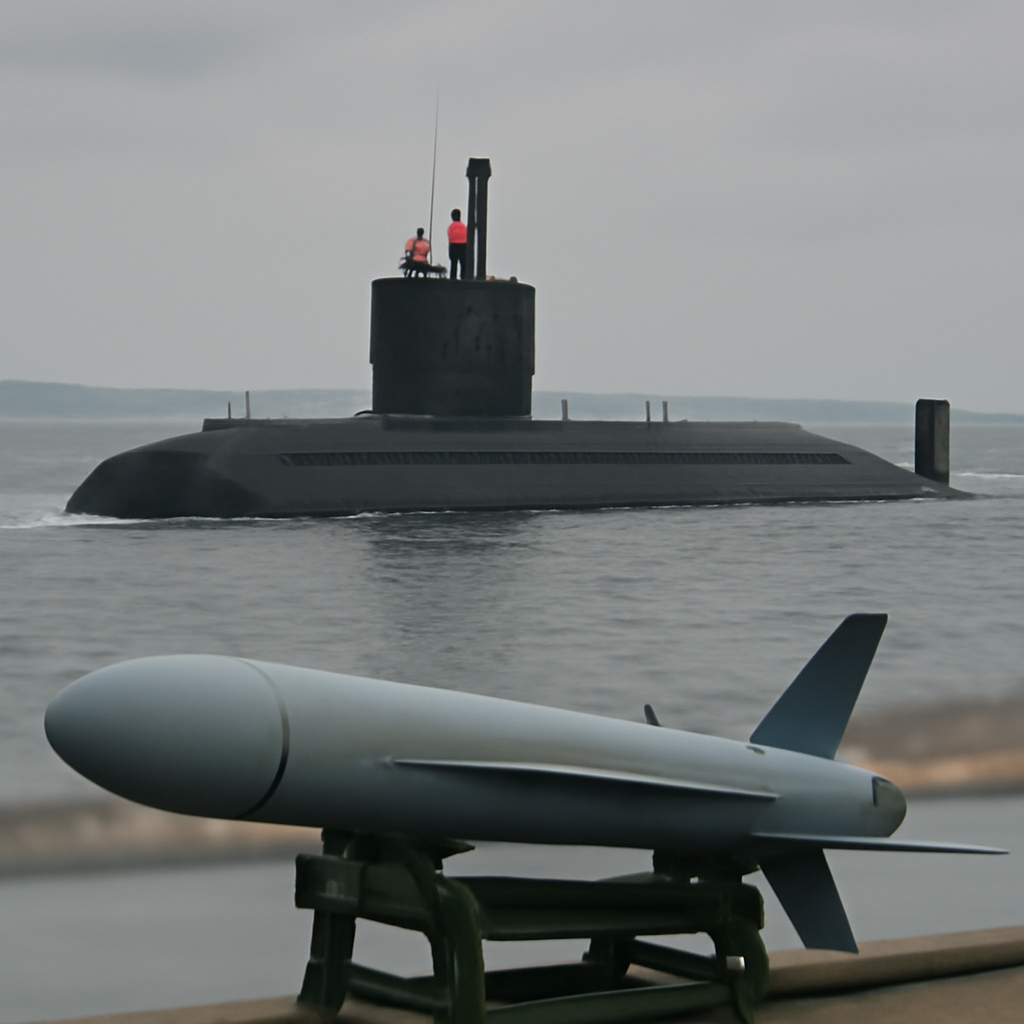
The author emphasises that the South China Sea is not a remote concern for Australia. The waters carry around two thirds of Australia’s trade, and the article warns that advances in long‑range military capabilities have eroded the protection previously afforded by distance. It cites a recent submarine‑launched ballistic missile test into the Pacific as demonstration that submarines now form part of a longer‑range force projection. Heavily militarised artificial islands in the Spratlys are singled out as extending China’s ability to project power further south, and the piece cautions that these bases already in the South China Sea have strategic significance even as discussions continue about future bases in the Pacific.
Australia's diplomatic and material response
The article records steps the Australian government has taken in response to the intensifying maritime campaign. Foreign Minister Penny Wong used the ASEAN foreign ministers’ meetings to warn about China’s aggression and destabilising conduct following dangerous encounters at sea. Australia has also increased support for the Philippine Coast Guard, including the provision this year of uncrewed aerial vehicles and uncrewed underwater vehicles, and has maintained a regular naval presence in the region. The author notes, however, that Australia’s limited number of ships constrains what these deployments can achieve: a single ship can demonstrate presence but cannot provide a sustained response.
What this means for the Philippine Coast Guard, Australian policymakers, and commercial shipping
- Philippine Coast Guard: the reported incidents — including the physical confrontation that struck a Philippine sailor — and the record maritime militia presence underline why the service is a recipient of Australian material support such as UAVs and UUVs this year.
- Australian policymakers and defence planners: the article argues that attention must remain focused on the South China Sea even as global crises compete for resources and public attention, and notes that debates over nuclear‑powered submarines, defence spending and national resilience are occurring against this shifting regional backdrop.
- Commercial shipping and the public: coast guard operations east of Taiwan that request origins and destinations while asserting jurisdiction are presented as direct challenges to freedom of navigation and as a development that merchant mariners and the Australian public should note, given the volume of trade transiting these waters.
The central caution of the piece is straightforward: international crises will continue to command attention, but the facts at sea are changing in ways that matter to Australia’s security. Australians, the author argues, need “a much clearer explanation of what is changing in our region and why it matters” — a call for clearer public communication at a time when Chinese maritime activity, island‑building and the projection of long‑range forces are intensifying.
Original story: https://www.aspistrategist.org.au/australia-must-not-be-distracted-as-china-ramps-up-in-the-south-china-sea/