"[The China Coast Guard was] conducting patrols in accordance with the law," said Foreign Ministry spokesperson Lin Jian on June 9, 2026 — a short, firm line that captures a larger shift in the waters south of Yonaguni Island.
What happened near Yonaguni Island
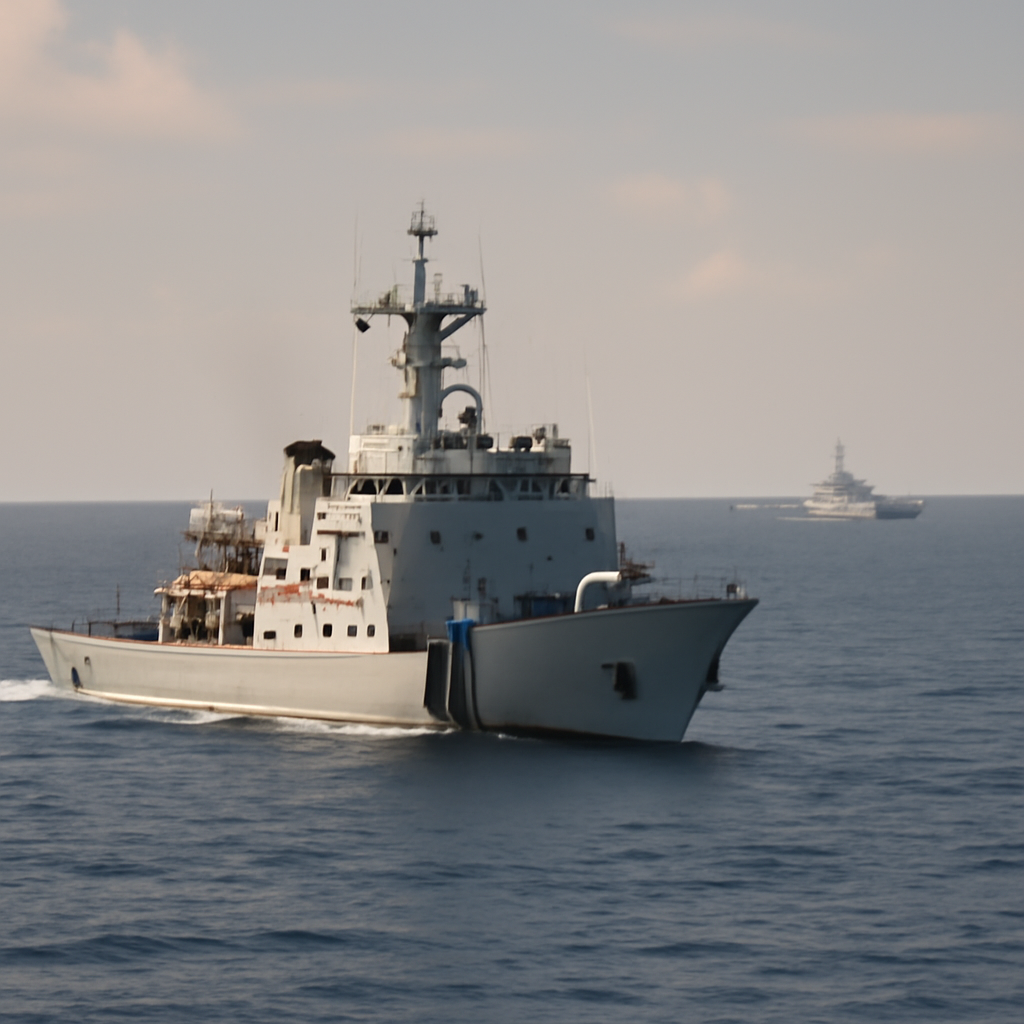
On June 9, 2026, Chief Cabinet Secretary Kihara Minoru told reporters that a China Coast Guard (CCG) vessel had been detected by a Japan Coast Guard (JCG) patrol vessel inside Japan’s exclusive economic zone (EEZ) south of Yonaguni Island in Okinawa Prefecture. The JCG queried the CCG vessel; the CCG replied it was conducting a "routine patrol" and asserted that China was exercising jurisdiction over the area.
Chinese public statements and the stated rationale
At a regular press briefing the same day, Lin Jian reiterated the Chinese position that the CCG was acting legally and framed Japanese and Philippine actions as the provocation. Lin said that "Japan and the Philippines bypassing China to initiate the so-called maritime delimitation talks constitutes a severe violation of UNCLOS and other international laws and basic norms governing international relations. It also seriously infringes on China’s maritime rights and interests. China will by no means accept this." The Diplomat report cites those comments as Beijing’s public rationale for the CCG presence.

Audit-ready is a season. It shouldn't be.
Evidence in spreadsheets, controls drifting between audits, frameworks multiplying on flat headcount. Nubivance runs continuous compliance on Rapid7 Cyber GRC - SOC 2, HIPAA, ISO 27001, PCI, CMMC.
End the scrambleFrom asserted claims to concrete activity: MSR and patrols
The reporting says China has long made maritime claims not grounded in the United Nations Convention on the Law of the Sea (UNCLOS). Since June 2026, Beijing has been conducting what it calls "marine scientific research" (MSR) and patrols in Japanese waters south of Yonaguni Island and east of Taiwan. Observers in the account characterize this as a transition from verbal or cartographic claims to tangible activities — "a gradual accumulation of facts on the water," comparable in pattern to developments previously seen in the South China Sea. The report also asserts that the commencement of negotiations to delimit the maritime boundary between Japan and the Philippines provided China with an "excuse" to advance to this new phase.
UNCLOS obligations the report highlights
The source walks through the relevant UNCLOS passages cited in the Japanese analysis. It notes that an EEZ grants coastal states sovereign rights and jurisdiction over specific matters — notably natural resources and marine scientific research — under Article 56(1). At the same time, Article 58(1) preserves "freedoms of navigation and overflight" within the EEZ, and equates the freedoms of ships, including government vessels, with the "freedom of the high seas" in Article 87(1). Article 58(3) adds that states exercising rights in the EEZ must have "due regard to the rights and duties of the coastal State."
The report emphasizes two legal frictions: first, Chinese MSR in Japan’s EEZ without Japanese consent is characterized as a violation of UNCLOS and a breach of international law; second, CCG patrols are more legally ambiguous. Government vessels retain enforcement jurisdiction over their own flagged vessels on the high seas, but when operating inside another state's EEZ they are obliged to show "due regard" — a term the account describes as deliberately flexible. The report lists explicit examples of actions that would fail to show "due regard," including obstructing a coastal state's exploration, development, conservation, or management of natural resources, and obstructing the creation or use of artificial islands, installations, and structures.
How Japan, the Philippines, and the Japan Coast Guard are implicated
- Japan: The account urges Tokyo to "carefully examine, analyze, and evaluate" the specific content and purpose of CCG patrols and the Chinese domestic laws Beijing claims to enforce, and then to take "coherent measures" to address CCG activity in the relevant maritime areas.
- The Philippines: The report identifies the start of Japan–Philippines maritime delimitation negotiations as a proximate political development that Beijing cited in justifying its patrols and MSR, implying Manila's diplomatic choices are a factor Beijing has invoked publicly.
- Japan Coast Guard: The JCG is named as the detecting authority; the incident underscores its frontline role in querying foreign vessels, documenting interactions, and providing the factual basis for Japan's diplomatic and legal review.
The facts reported here describe a narrow but consequential escalation: Chinese government vessels operating inside waters Japan treats as its EEZ, Beijing asserting legal rights, and Tokyo urged to translate observation into legal and policy response. The account closes with a clear instruction — Japan must analyze the patrols' content and the Chinese laws cited and then "take coherent measures." How Tokyo chooses to define "coherent measures," and how Beijing responds on the water, are the immediate, open questions left by the record.
Source: The Diplomat — China Coast Guard Exercises ‘Jurisdiction’ in Japan’s Exclusive Economic Zone