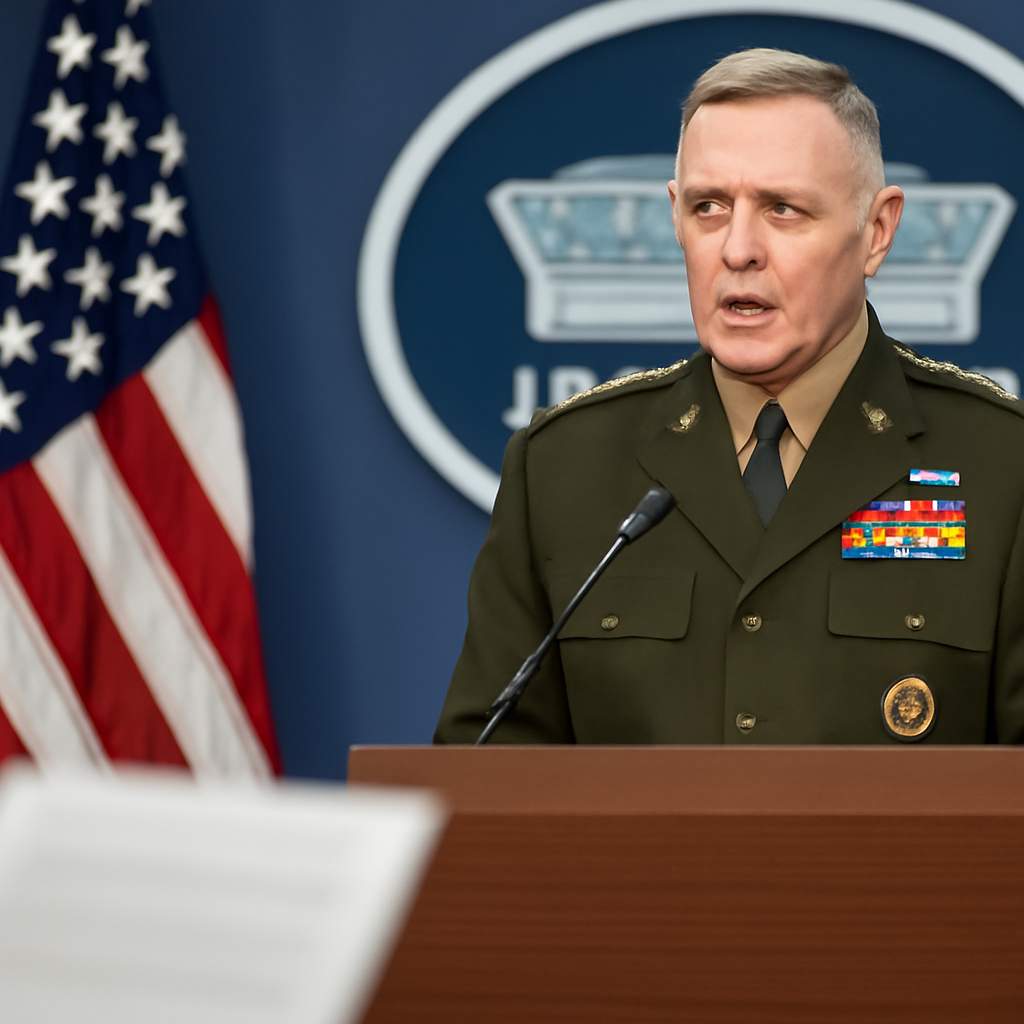
“The belief [recruits] have in civilian leadership and military leadership,” Defense Secretary Pete Hegseth said, crediting that confidence for recent recruiting successes. That claim sits beside sweeping personnel moves that, critics say, have reshaped promotion pathways and narrowed who can rise to lead the force.
Pete Hegseth’s campaign to reshape promotions
Since his January 2025 appointment, Defense Secretary Pete Hegseth has fired or blocked the promotions of more than 80 admirals and generals, often invoking opposition to so-called “woke” diversity efforts. Earlier in August 2026 he blocked the promotions of four Army officers. Officials say his actions have included efforts to restore tributes to Confederate soldiers and explicit attacks on military diversity.
More than half of the officers removed have been women or Black officers, in an officer corps that the source describes as 79% male and 74% white. Those personnel moves, the reporting says, have both concentrated senior leadership and altered perceptions of the promotion system that is supposed to be based on merit and insulated from partisan politics.
Anecdotes and institutional consequences
The personnel actions have been both procedural and personal. One officer had his name pulled from a promotion list after officials incorrectly believed he had allowed a mentorship group for female paratroopers to exist in his unit. Another officer faced a promotion block after having written a graduate-school paper about the impact of political polarization on recruiting. Those two examples are cited alongside broader allegations that the targeting of particular officers appears to violate military rules meant to protect against politicization of the officer corps and has undermined faith in the promotion system.
Politically and administratively, the consequences have been tangible. Dan Driscoll resigned as secretary of the Army on Aug. 31, 2026; the reporting says his departure was motivated, at least in part, by frustration with Hegseth. Driscoll’s exit leaves the Army without a Senate-confirmed civilian leader six months into the war with Iran, described in the source as the service’s busiest period since the wars in Iraq and Afghanistan.

The cyber insurance questionnaire just landed. Now what?
SOC 2, HIPAA, insurance renewals - someone has to own security strategy. Nubivance provides fractional CISO leadership without the full-time salary.
Get a security leadRecruiting results and what’s driving them
The Army exceeded its recruiting goal of 60,500 new enlistees in fiscal year 2025, and the service had already hit its targets for fiscal year 2026. The reporting notes that 2026 marks the third straight year that every active-duty military service met its recruiting goals.
Hegseth attributes that success to recruits’ confidence in civilian and military leadership; a Pentagon spokesperson told reporters, “Americans everywhere are prouder than ever to serve.” The author of the piece, writing from years of study and a book on diversity and military recruiting, argues a different driver: recruitment, she says, is driven primarily by market factors and need.
According to market research cited in the source, the top motivators for young people to enlist are making money, paying for education, travel, work experience and medical benefits. These “occupational appeals,” a term attributed to military sociologist Charles C. Moskos in the source, frame enlistment as an economic decision rather than as a statement of political or cultural alignment.
Demographics, the "brass ceiling," and combat losses
The source describes a widening “brass ceiling” — limited promotion opportunities for women and Black service members — and notes that senior leadership remains overwhelmingly white and male: all five service chiefs and nine in 10 combatant commanders are white men, and this year the lowest percentage of women in 25 years were nominated to the ranks of general and admiral.
That mismatch matters, the reporting argues, because the officer corps is expected to reflect the force it commands and the nation it serves. The enlisted force, the source says, is 34% identifying with a racial minority group and 17% women. By purging leaders perceived to support opportunities for service members other than white men, the source warns, the department risks creating an environment more vulnerable to racial, sexual and gender discrimination and harassment.
The human stakes are underscored by combat casualties: about half of the 18 service members killed in the Iran war between February and August were women and people of color, the source reports.
What this means for active-duty service members, Army leadership, and recruits
- Active-duty service members: Those serving may see fewer visible pathways to senior leadership if promotion lists continue to exclude women and Black officers; the reporting links that narrowing to reduced trust in a merit-based promotion system and to a greater risk of discrimination within units.
- Army leadership and policymakers: The resignation of the secretary of the Army and the cited personnel purges complicate civilian oversight and leave a top civilian post vacant during an active war with Iran — a reality the source explicitly highlights.
- Recruits and the enlisted force: Recruiting targets have been met for three straight years across services, driven, the source says, by economic and occupational incentives. The composition of the enlisted ranks may therefore remain diverse even as the officer promotion pipeline narrows.
The reporting presents a force at a crossroads: recruiting remains strong by conventional metrics, yet the pathway to lead that force appears to be narrowing. The result, as framed in the source, is a military whose leadership may no longer resemble the people who shoulder combat risk — a gap that the author warns carries operational, moral and social costs.
https://www.defenseone.com/ideas/2026/09/pete-hegseth-military-brass-ceiling/416082/