“More than 19,000 companies have been designated since 2019.”
ASPI’s China Little Giants Tracker and what it reveals
The Australian Strategic Policy Institute (ASPI) has compiled a searchable China Little Giants Tracker that reconstructs the state-directed lists Beijing has been issuing since 2019. ASPI says it compiled more than 300 separate announcements to create a full list of over 19,000 designated firms, linked each company to corporate-registry data and to patents drawn from a dataset of more than 2 million filings, and mapped every firm against the technology areas in ASPI’s Critical Technology Tracker and institutions in its China Defence Universities Tracker.
What designation means in practice
“Little Giant” (小巨人) is a label awarded under a program designed to reduce China’s dependency on Western technology while deepening other countries’ dependence on Chinese suppliers. Designation carries a package of supports — tax concessions, credit support, smoother access to capital markets, introductions to local industry and research hubs, reduced certification fees and promotion at trade fairs — administered mainly at provincial and municipal level. More than 19,000 companies have received the label across seven national batches; designation is valid for three years, after which the Ministry of Industry and Information Technology (MIIT) reviews it and it can lapse.

Audit-ready is a season. It shouldn't be.
Evidence in spreadsheets, controls drifting between audits, frameworks multiplying on flat headcount. Nubivance runs continuous compliance on Rapid7 Cyber GRC - SOC 2, HIPAA, ISO 27001, PCI, CMMC.
End the scrambleSwiwin Turbojet: performance figures, military links, and export controls
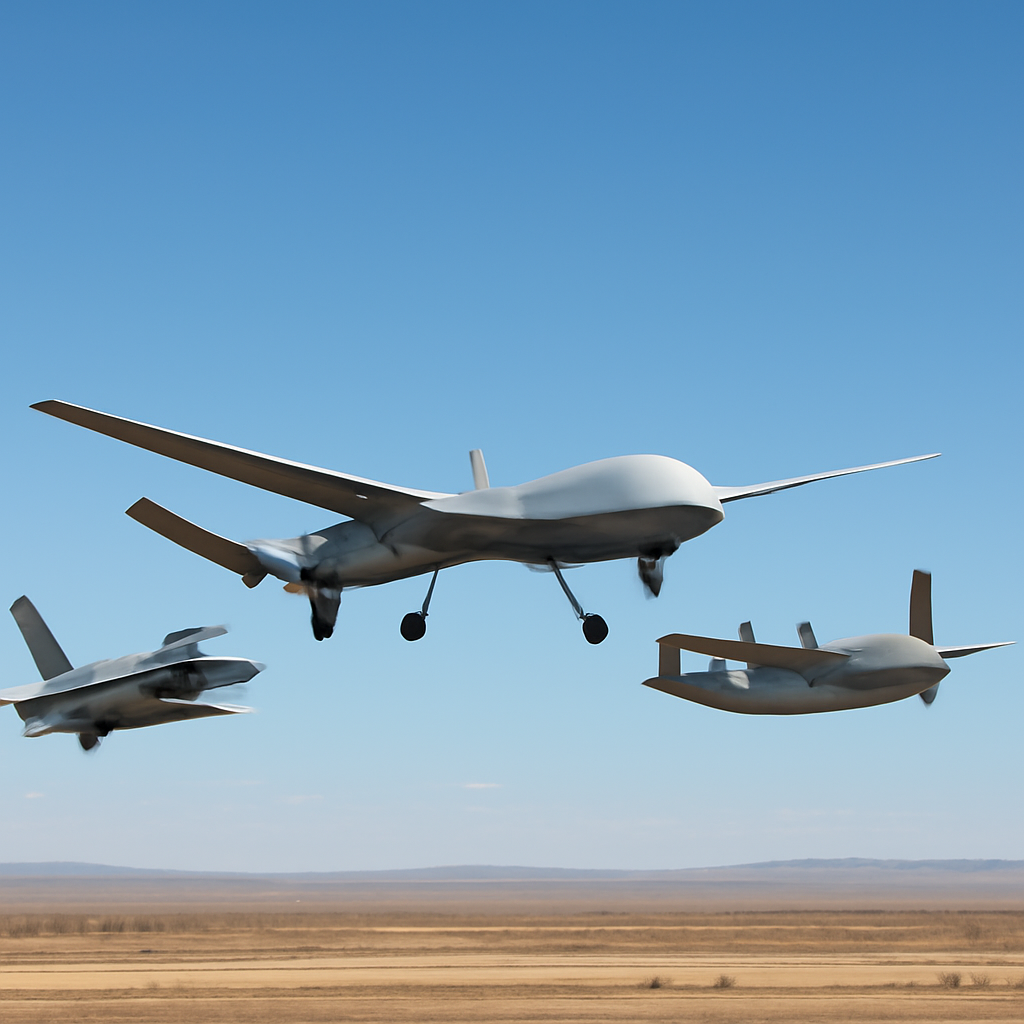
ASPI highlights Baoding Xuanyun Turbojet Power Equipment R&D, trading as Swiwin Turbojet, as a Little Giant with clear defence links. Ukrainian military intelligence identified a Swiwin engine in a Russian cruise missile in May 2025; Swiwin was named a Little Giant in October 2025. ASPI reports the SW800Pro produces 785 newtons (176 lb) of thrust from a 207 mm diameter, 8.4 kg unit with maximum fuel consumption of 1,850 grams per minute, a specific fuel consumption of 0.14 kg per newton per hour at maximum thrust — numbers that place the engine in the performance band addressed by dual‑use control lists.
ASPI notes Item 9A101 of Australia’s Defence and Strategic Goods List 2024 covers turbojet engines above defined thrust and below fuel‑consumption thresholds; equivalent entries appear in other control lists. Whether a specific unit falls within those parameters is a technical determination for regulators. Swiwin, the Tracker shows, is not on US restricted‑party lists nor on Australian, European or British sanctions lists, and it has not been designated by the US Entity List — yet open‑source imagery and reporting have associated its products with Russian munitions, including the S8000 Banderol cruise missile and a UMPB‑5R glide bomb, and reporting suggests smaller Swiwin engines were acquired for study that may have informed drone powerplants.
Little Giants woven into consumer products and household networks
Not all Little Giants make hardware that is obviously military. ASPI profiles Allpowers Industrial International, designated in 2024, which makes portable solar and energy‑storage devices and serves customers in the US, EU, Britain, Japan, Australia, Ukraine and Russia. Its products connect to a company‑operated cloud service that supports remote monitoring, control and firmware updates — a live, manufacturer‑controlled channel into devices installed in Western homes. ASPI notes EcoFlow and Bluetti are also Little Giants in the same segment, meaning exposure can accumulate across a market segment as distinct vendors each maintain remote access to distributed fleets of consumer energy systems.
Complex ownership, export‑controls policy, and forced‑labour risk
ASPI documents cases where corporate structure and regulatory tools intersect. Beijing Leike Defense Technology has five wholly owned subsidiaries designated as Little Giants; in 2024 the US Department of Commerce added one subsidiary, Xi’an Hengda Microwave Technology Development, to the BIS Entity List for supporting a high‑altitude balloon that overflew the US in February 2023, and Leike itself was included in that action. ASPI points out that under the BIS ‘affiliates rule’ — due to take effect in November 2026 after a year‑long suspension — Entity List restrictions will extend automatically to any company at least 50 percent owned by a listed entity, which would capture Leike’s majority‑owned subsidiaries.
Human‑rights and supply‑chain concerns also appear. Urumqi Yaou Rare Metal (a state‑owned lithium producer) was designated a Little Giant in 2023; Chinese state media reports it accounts for around a fifth of China’s lithium‑metal capacity. A 2022 Helena Kennedy Centre report identifies the company and its corporate group as implicated in state‑sponsored labour‑transfer programs. ASPI cites shipping records showing FMC’s lithium division imported lithium from Urumqi Yaou in 2018; a New York Times investigation in 2022 indicated the commercial relationship between Livent (spun out of FMC) and Xinjiang Nonferrous, Urumqi Yaou’s ultimate parent, continued, and notes Livent supplied Tesla with lithium in that period. In 2024, the US Department of Homeland Security added Xinjiang Nonferrous Metals Industry Group to its Uyghur Forced Labor Prevention Act Entity List.
What this means for technologists, policymakers, and procurement leaders
- Technologists and security teams: Treat Little Giant designation as a leading indicator linked to patent activity and institutional networks; watch for devices that retain manufacturer control via cloud services and for components that travel several layers into assemblies.
- Policymakers and regulators: Use designation lists to inform investment screening and export‑control technical determinations, and prepare for the operational effects of the BIS affiliates rule in November 2026 on majority‑owned subsidiaries.
- Procurement leaders and buyers: Recognise that small suppliers designated by Beijing can be several steps behind visible brands in supply chains; due diligence should include ownership, patent footprints and ties to defence universities identified in linked trackers.
The Little Giants program is, ASPI concludes, a deliberate industrial policy that moves Beijing’s strategic priorities into thousands of small firms. The Tracker does not blacklist companies; it surfaces who Beijing has chosen to build and where those firms sit in patent and corporate networks — giving governments and companies a chance to act while decisions still matter.